Ine of Wessex ruled from 688 to 726, a span long enough to leave fingerprints on law, war, religion, and the slow hard work of state formation. He does not get the popular glow of Alfred the Great, yet without Ine there is no mature Wessex for Alfred to inherit. When I return to Ine, I am struck by how practical his kingship feels. Less legend, more scaffolding. He built systems that lasted.
Overview and Historical Context
Ine came to the throne during a messy moment in early Anglo Saxon politics. Wessex was expanding westward into British territory while also competing with Mercia for dominance in southern England. Kingship at this point was not ceremonial. It was personal, itinerant, and deeply tied to the king’s ability to reward followers, punish rivals, and keep the peace through force or compensation.
Ine’s reign stands out because he balanced conquest with consolidation. He fought wars, but he also codified law, strengthened royal authority, and aligned the kingdom closely with the Church. This was kingship with a long view.
Arms and Armour of Ine’s Wessex
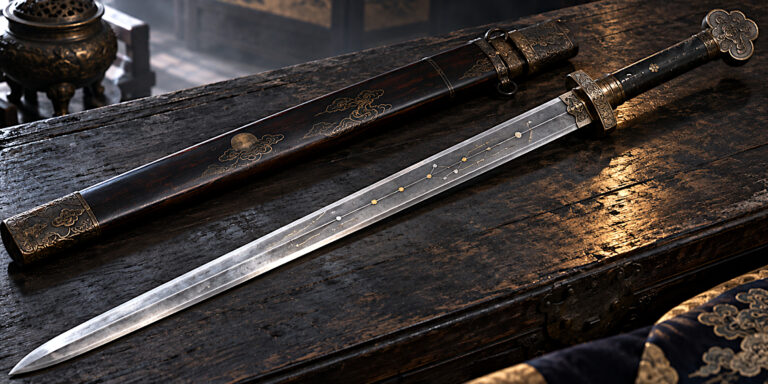
There is no surviving sword that can be securely labelled as Ine’s, and that absence itself tells us something. Power in his world was not about personal regalia preserved in glass cases. It was about armed followings and visible readiness for violence.
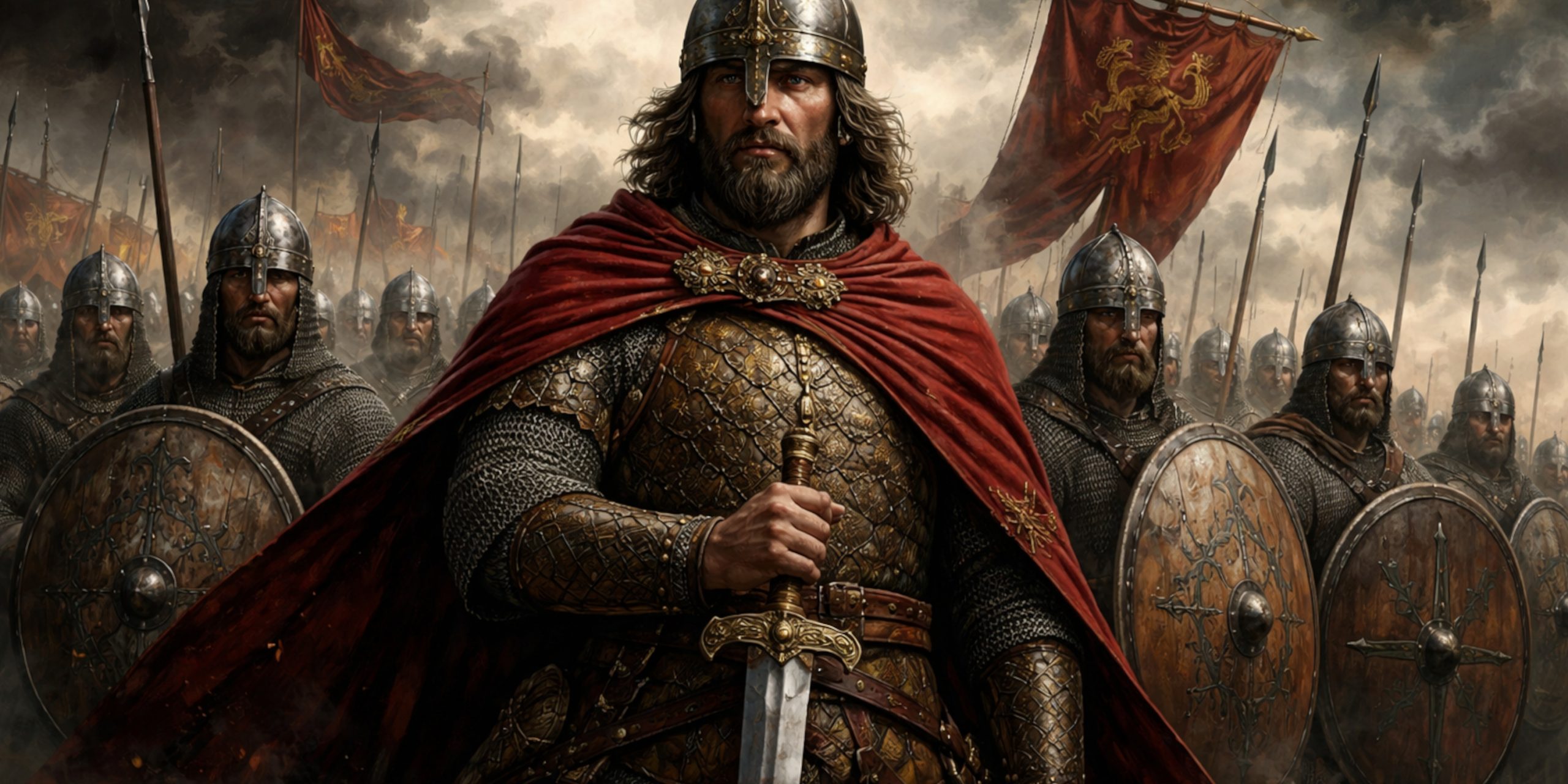
A West Saxon warrior of Ine’s time would have been equipped in a recognisable early medieval kit. Pattern welded swords were the prestige weapon, long, double edged, and costly. Many fighting men relied on spears, which were cheaper, versatile, and lethal in formation or single combat. Shields were round, wooden, and bossed with iron, essential both offensively and defensively.
Mail armour existed but was rare and expensive. Most warriors relied on layered clothing, shields, and experience. Helmets were uncommon, though not unknown, and likely limited to elite retainers.
Ine’s military power rested on his ability to muster such men and keep them loyal. Law codes helped with that. So did land grants and plunder.
Battles and Military Acumen
Ine was a fighting king, though not a reckless one. His campaigns focused on securing borders and asserting dominance rather than chasing distant glory.
The most significant conflict of his reign was against the Kingdom of Dumnonia in the west. Ine pressed Wessex deep into what is now Devon and Somerset, continuing a long, grinding expansion rather than a single decisive conquest. This was frontier warfare, seasonal, brutal, and politically sensitive, involving British populations who were not simply wiped away but absorbed and managed.
He also fought against Sussex and Kent, enforcing West Saxon authority when rivals grew too confident. His military judgement shows in restraint. He did not overextend. He consolidated gains, fortified influence, and used law as a weapon as sharp as any spear.
What impresses me most is how little bravado there is in the record. Ine fought because kings had to fight. He ruled because someone had to hold things together afterwards.
Law, Authority, and the King Behind the Sword
Ine’s law code is his greatest legacy. Issued with the support of bishops, it blends Germanic custom with Christian ethics. Compensation tariffs sit beside moral expectations. Church property is protected. Royal authority is asserted without sounding tyrannical.
Reading these laws, you sense a ruler deeply concerned with order. This is not a king chasing fame in song. This is a man trying to stop feuds from spiralling and to ensure that justice flows through recognised channels rather than private revenge.
From a historian’s point of view, Ine feels modern in the most unglamorous way. He understood that stable rule depends on predictability.
Religion, Abdication, and Rome
Ine was closely allied with the Church and eventually did something extraordinary for an Anglo Saxon king. He abdicated.
In 726, Ine stepped down and travelled to Rome, where he died shortly afterwards. Abdication was rare and risky. It suggests either deep piety, political exhaustion, or confidence that his work was done. Perhaps all three.
To me, it reads as the final act of a ruler who believed kingship was a duty, not an identity.
Archaeology and Material Evidence
Direct archaeological evidence tied specifically to Ine is limited, which is typical for the period. No palace foundations bear his name. No hoard announces itself as royal.
What we do have is context. Settlement archaeology across Wessex shows increasing organisation during his reign. Coinage becomes more regularised. Church sites expand. Landholding patterns stabilise. These are indirect signs, but they matter.
Recent archaeological work in Somerset and the upper Thames region continues to refine our understanding of early West Saxon administration. Each new excavation adds texture to the world Ine governed, even if it never hands us a labelled artefact.
Where to See Artefacts from Ine’s World
While nothing can be confidently attributed to Ine personally, several collections help bring his era into focus.
The British Museum holds early Anglo Saxon weapons, jewellery, and coins that reflect elite culture during his reign. The Ashmolean Museum in Oxford has material from Wessex heartlands, including arms and ecclesiastical objects. Local museums in Winchester, the later West Saxon capital, provide valuable regional context, even if they postdate Ine slightly.
Standing before these objects, you are not meeting Ine the man. You are meeting the system he helped stabilise.
Takeaway from a Historian
Ine of Wessex is easy to overlook because he does not fit the heroic mould. No burning ships. No last stands. No legendary sword with a name.
Yet he matters deeply. He shaped Wessex into something durable. He understood that power needed rules, that conquest needed administration, and that kingship was as much about restraint as force.
If Alfred is the symbol of Wessex, Ine is its foundation. Quiet. Necessary. Underrated.