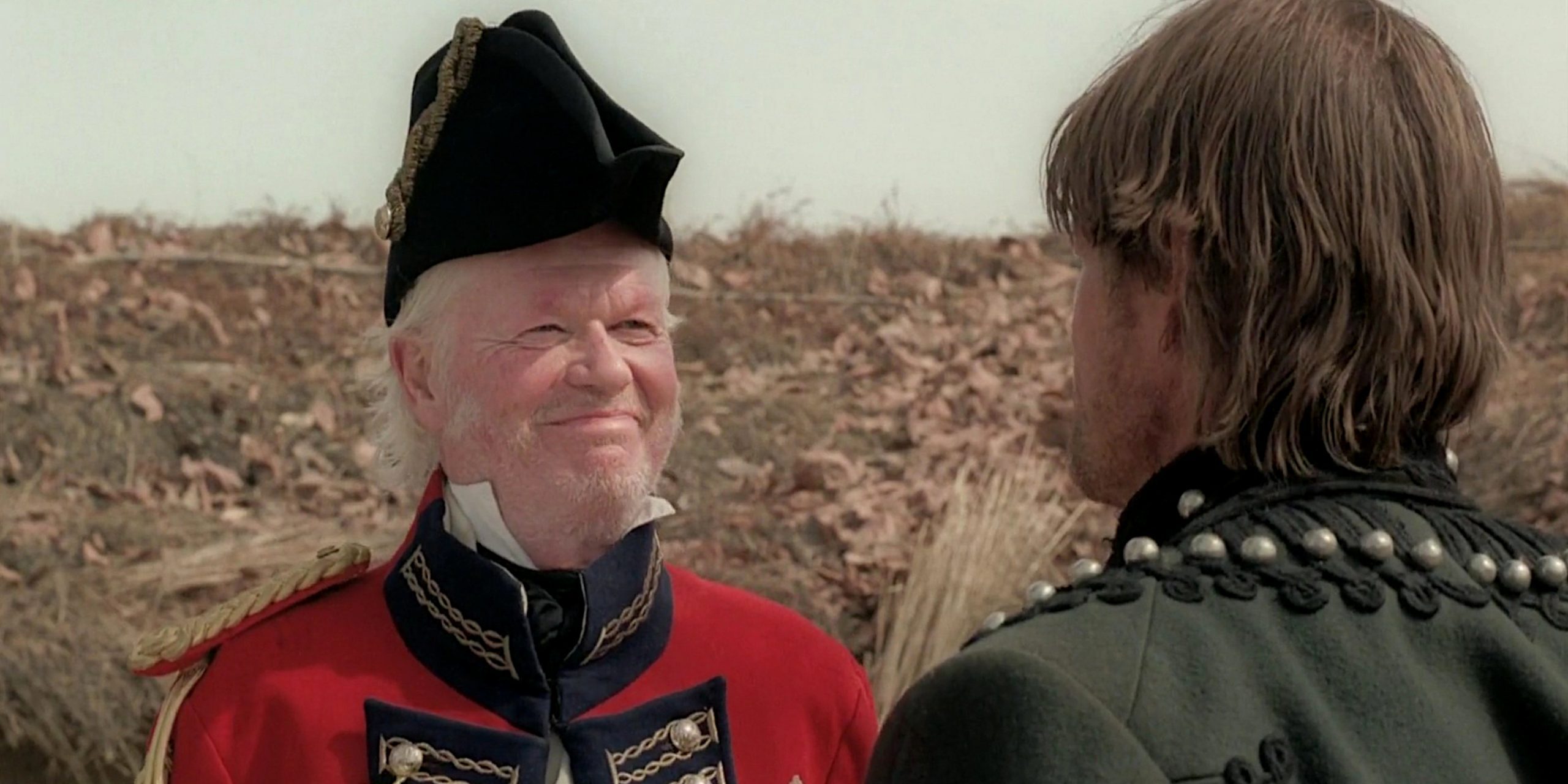
One of the quiet strengths of Sharpe is how seriously it takes its villains. They are not just obstacles to be cut down between battles. They shape Richard Sharpe’s rise, test his loyalty to the army, and expose the rot that sits beneath the uniforms and medals. Watching the series now, what lands hardest is how believable these antagonists still feel. They are petty, cruel, cowardly, or chillingly competent. Often all at once.
Below are the villains who mattered most, and why Sharpe would be a far flatter story without them.
Obadiah Hakeswill

Hakeswill is the nightmare version of military authority. He wears the uniform like a disguise and uses the system to shield his sadism.
Why he mattered
- He represents corruption at ground level, the kind that ordinary soldiers actually fear.
- His obsession with Sharpe makes their rivalry feel personal rather than ideological.
- He shows how the army’s discipline could be weaponised by the wrong man.
Hakeswill works because he is not grand. He is small, vicious, and relentless. That makes him harder to shake and far more disturbing. Every time he appears, the tension spikes, because you know the rules will not save anyone.
Colonel Henry Simmerson
If Hakeswill is cruelty, Simmerson is incompetence dressed as rank. He fails upwards and everyone beneath him pays the price.
Why he mattered
- He exposes the class divide at the heart of the British Army.
- His blunders cost lives, not just pride.
- He gives Sharpe a clear enemy within his own side.
Simmerson is infuriating because he is so plausible. Many viewers recognise him instantly. He is the officer who should never be in charge but always is. Sharpe’s contempt for him feels earned, and watching Simmerson escape consequences again and again is part of what fuels the series’ anger.
Pierre Ducos
Ducos is the thinking man’s villain. Where others rage or bluster, he calculates.
Why he mattered
- He gives the French side a human face beyond battlefield formations.
- His rivalry with Sharpe is strategic rather than emotional.
- He shows that intelligence and manipulation can be as deadly as cavalry.
Ducos elevates the show by reminding us that war is not just won with muskets. He treats Sharpe as a problem to be solved, not an enemy to hate. That cold respect makes their encounters sharper, and far more interesting.
Lord Fenner
Fenner embodies privilege weaponised. He believes the world owes him obedience, and he is prepared to destroy anyone who challenges that idea.
Why he mattered
- He links political power to battlefield injustice.
- His crimes show how rank can bury the truth.
- He forces Sharpe into moral choices, not just military ones.
Fenner is unsettling because he operates above the battlefield. Sharpe can defeat him tactically, but never fully escape his influence. That imbalance makes Fenner feel dangerous even when he is off screen.
Sergeant Patrick Harper as a Moral Counterpoint
Harper is not a villain, but he matters here because the villains are defined by contrast with him.
Why this contrast matters
- Harper represents loyalty earned, not enforced.
- He highlights how leadership should work at every level.
- His presence makes corrupt authority look even uglier.
The villains land harder because characters like Harper exist. The show constantly asks what kind of power deserves respect, and the answer is rarely found in rank alone.
Takeaway
What makes these antagonists endure is that none of them feel like inventions. They feel observed. Sharpe does not fight evil in the abstract. He fights systems, egos, and men who thrive when no one is watching closely enough.
That is why revisiting the series still hits. The battles are exciting, but the villains are what give them weight. Without Hakeswill, Simmerson, Ducos, and Fenner, Sharpe would just be a capable soldier winning fights. With them, he becomes a man pushing uphill against the army, society, and history itself.