The Tower of Ghenjei is one of those Wheel of Time locations that quietly messes with your head long after you first read it. It looks simple enough on the surface, a strange redstone doorway that should probably come with a warning sign. Step inside though, and you are dealing with beings who treat reality like a contract written in invisible ink.
This is a place where bargains matter, words are weapons, and curiosity is actively dangerous. Which, frankly, makes it one of the most Jordan things imaginable.
What Is the Tower of Ghenjei?
The Tower of Ghenjei is a mysterious structure located beyond the stone doorways linked to the worlds of the Aelfinn and Eelfinn. It is not fully part of the human world, and not fully part of theirs either. Think of it as a border crossing where the laws of reality get quietly rewritten.
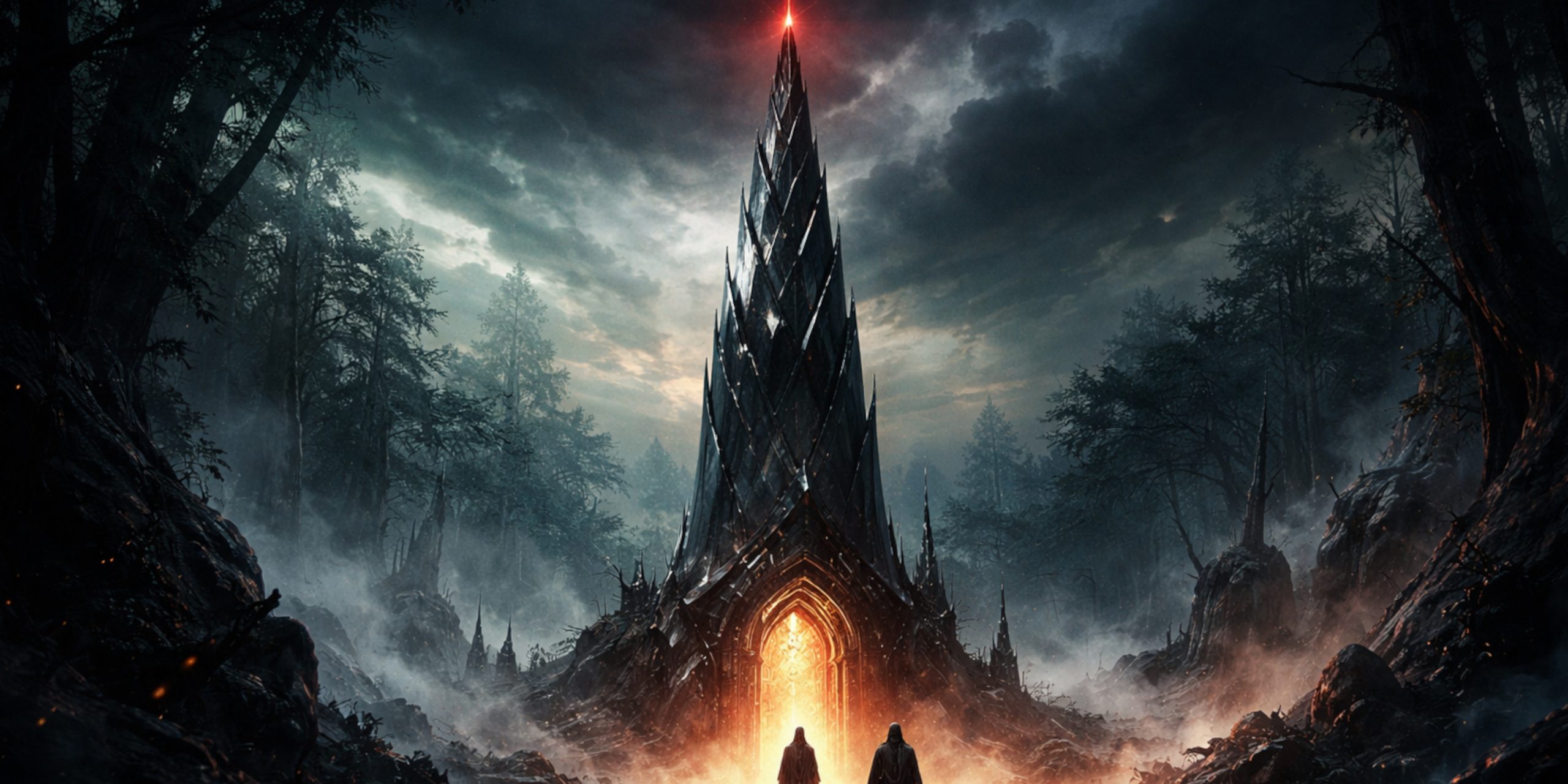
Physically, it is described as a tall, slender tower made of smooth redstone, with sharp angles that feel wrong to human eyes. Spatial logic inside the tower is unreliable. Corridors stretch or shorten. Sound behaves oddly. Time feels flexible in ways that only become obvious once you leave.
What makes the tower truly dangerous is not the architecture. It is the deal you make just by entering.
Who Are the Aelfinn and the Eelfinn?
The Aelfinn and Eelfinn are ancient, non human beings who exist in parallel worlds accessible through ter’angreal doorways.
They are not the same, and confusing them is a fast route to a bad outcome.
The Aelfinn
- Known for answering questions
- Appear tall, foxlike, and unsettlingly graceful
- Speak in riddles and half truths
- Feed on emotion, particularly curiosity and fear
The Eelfinn
- Known for granting wishes
- Appear serpentine or eel like, depending on perspective
- Exact payment for every gift
- Feed on pain, sensation, and life force
Neither group lies outright. They simply exploit human assumptions with professional enthusiasm.
The Rules of Their World
The Aelfinn and Eelfinn operate under rigid rules, which is the only reason humans survive encounters with them at all. The problem is that these rules were not written for human benefit.
Key rules include:
- You must ask your questions or wishes clearly
- You are limited in number, traditionally three
- You will pay a price, whether you understand it or not
- The interpretation always favours them
They treat bargains as sacred. They treat human intent as optional.
This is not chaos. It is predatory order.
The Tower as a Trap, Not a Gateway
The Tower of Ghenjei is often mistaken for a neutral meeting place. It is not.
By the time characters reach the tower itself, they are no longer dealing with simple exchanges. They are entering the heart of Eelfinn territory, where escape is neither guaranteed nor expected.
Inside the tower:
- Gravity behaves inconsistently
- Hallways shift after you pass through them
- Sounds echo before they are made
- Fear feels amplified, almost harvested
The tower exists to contain, confuse, and consume. Any deal made here comes with a heavier cost.
Mat Cauthon and the Price of Survival
Mat’s second encounter with the Eelfinn is the clearest look we get at the tower’s true nature.
He enters the Tower of Ghenjei with very specific demands and very limited patience, which may be the only reason he survives. Even then, the cost is brutal.
Mat leaves with:
- The memories of dead men
- The ashandarei, a weapon tied to ancient power
- A noose scar around his neck that never fades
What he loses is harder to quantify, but the implication is clear. The Eelfinn took more than they gave. They always do.
Why the Aelfinn and Eelfinn Feel So Unsettling
Part of what makes these beings effective is that they do not feel evil in a traditional sense. They are transactional.
They do not hate humans. They value them, as resources.
Their world runs on:
- Precision language
- Emotional extraction
- Long term consequences rather than immediate harm
They are closer to lawyers crossed with predators than monsters. Which is honestly worse.
Themes the Tower of Ghenjei Reinforces
Jordan uses the Tower of Ghenjei to quietly underline several core themes of The Wheel of Time.
- Knowledge has a cost
- Shortcuts are rarely free
- Cleverness is not the same as wisdom
- Power gained without understanding comes with hidden debt
The tower punishes arrogance, but it also punishes curiosity. The only winning move is not to play, and humans keep playing anyway.
Takeaway
Even after the main encounters, the Tower of Ghenjei hangs over the series as a reminder that not all dangers wear armour or carry swords.
It represents:
- The limits of human control
- The danger of believing you can outthink ancient systems
- The idea that some knowledge is actively hostile
In a world full of prophecies, channelers, and armies, the Tower of Ghenjei stands out as something colder and more precise.
It does not rage. It calculates.
And that makes it unforgettable.