Origins and Purpose
The Teutonic Knights began life in the late 12th century as a modest hospital brotherhood in Acre. Their original task was practical and pious, tending to sick and wounded German pilgrims during the Crusades. As often happened in the medieval world, charity did not remain unarmed for long. By 1198 the order had taken on a fully militarised role, blending monastic discipline with the business of war.
What set the Teutonic Knights apart was their organisational seriousness. They were administrators as much as fighters, more comfortable with charters and supply chains than with romantic gestures. When the Crusader states collapsed, the order reinvented itself with remarkable efficiency, shifting its focus north and east into the Baltic.
The Baltic Crusades and Territorial State
Invited into Prussia in the early 13th century, the Teutonic Knights embarked on a long and often brutal campaign against pagan Baltic peoples. Conversion came at sword point, usually followed by castles, taxes, and German settlers. By the mid 14th century the order ruled a powerful monastic state stretching along the southern Baltic coast.
This was crusading as colonisation. The order’s castles were not just military strongpoints but administrative hubs, storing grain, records, and authority. Malbork Castle remains the clearest symbol of this system, part fortress, part monastery, part bureaucratic machine.
The high point of Teutonic power came before the Battle of Grunwald in 1410. After that defeat, the order never fully recovered, though it lingered on in various forms for centuries. Medieval institutions were nothing if not stubborn.
Organisation and Daily Life
The order followed a strict hierarchy. At the top sat the Grand Master, supported by senior officers who oversaw military, financial, and spiritual matters. Knights were bound by vows of poverty, chastity, and obedience, though the interpretation of poverty became increasingly flexible as the order grew wealthy.
Daily life balanced prayer, training, and administration. Silence, fasting, and ritual sat alongside drilling and armour maintenance. It was less chivalric adventure and more disciplined routine. Anyone expecting troubadours and courtly flirtation would have been disappointed.
Arms and Armour
Teutonic Knights were heavily equipped by contemporary standards, reflecting their wealth and logistical reach.
Armour
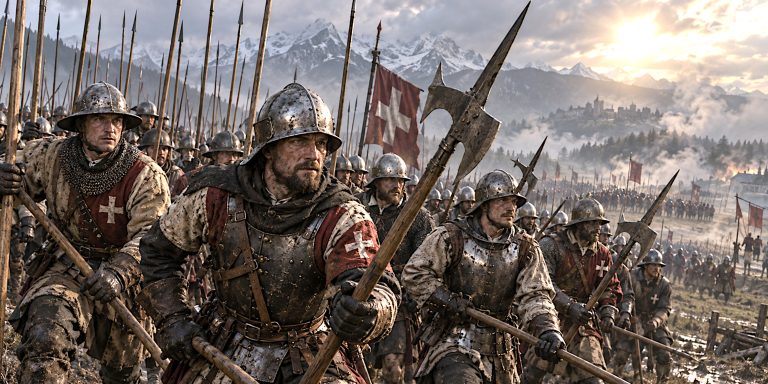
- Mail hauberks in the early period, later reinforced with plate elements such as breastplates and arm defences
- Great helms in the 13th century, evolving into bascinets with visors by the 14th
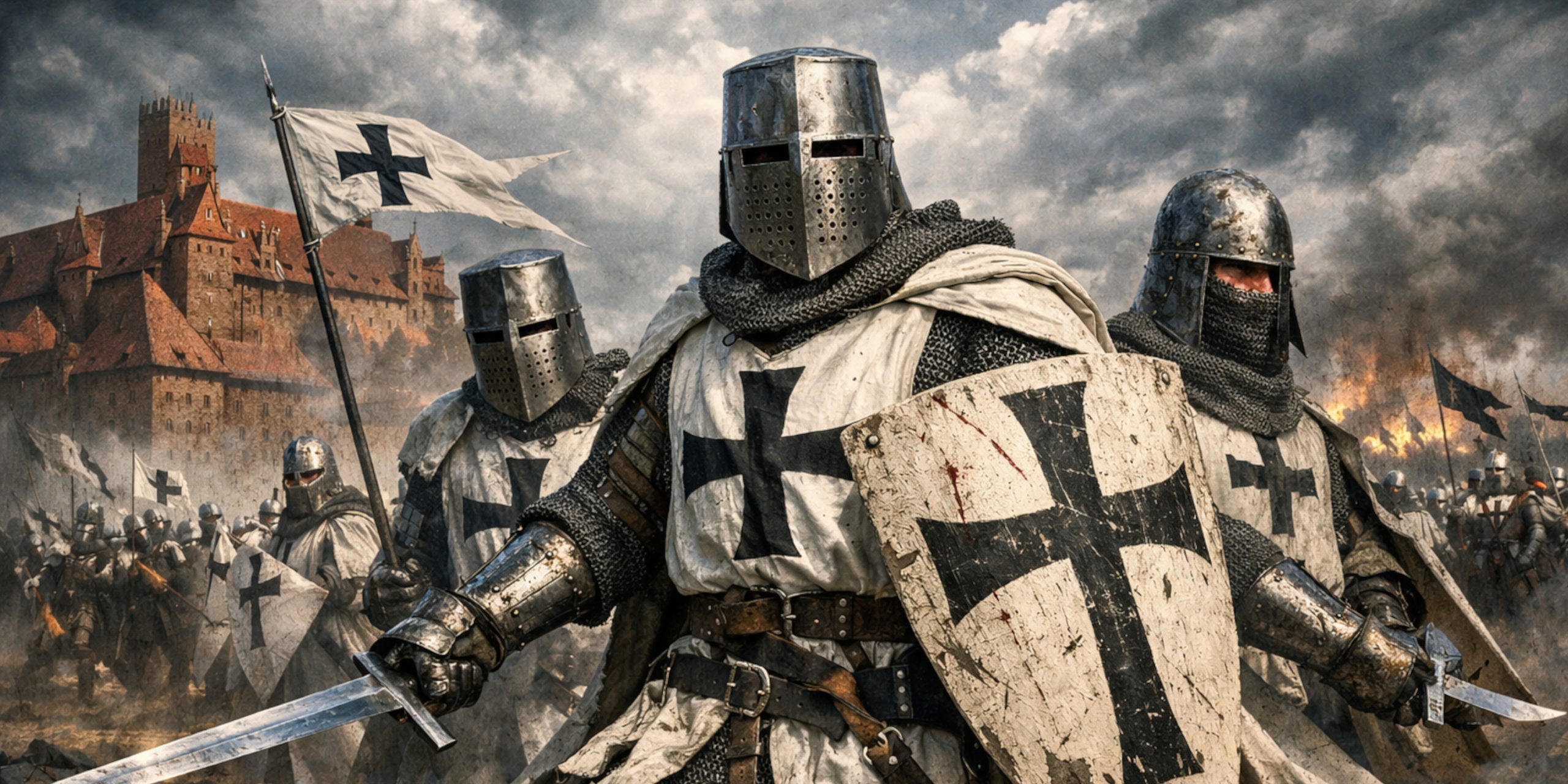
- White surcoats bearing the black cross, practical for identification and excellent for branding
Primary Weapons
- Arming swords with straight, double edged blades suited to cut and thrust
- Longswords, particularly in the 14th and early 15th centuries, allowing two handed use against armoured opponents
- Falchions, favoured by some infantry and sergeants for their chopping power
Secondary Weapons
- Daggers such as rondels for close work
- Lances for mounted combat
- Maces and war hammers, increasingly important as armour improved
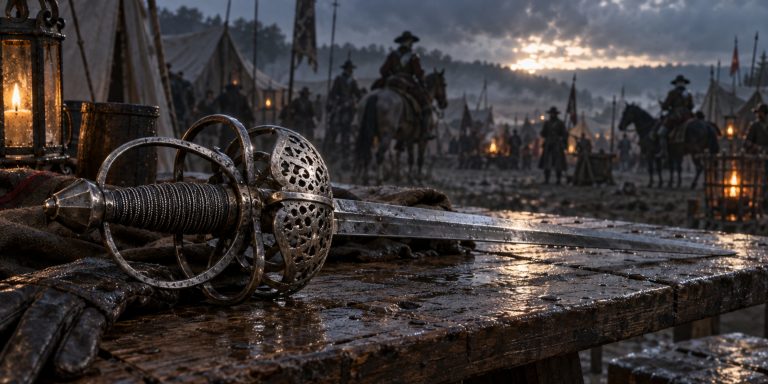
The swords themselves were conventional rather than exotic. This was not an order chasing novelty. Reliability mattered more than flair, a theme that runs through their entire history.
Major Battles and Military Reputation
The Teutonic Knights earned a reputation for discipline and coordination. Their forces combined heavy cavalry with infantry, crossbowmen, and auxiliaries drawn from subject populations.
Key engagements include:
- The long conquest of Prussia in the 13th century
- Repeated wars against Lithuania, one of the last pagan states in Europe
- The Battle of Grunwald in 1410, a catastrophic defeat against Polish and Lithuanian forces
Grunwald exposed the limits of the order’s rigidity. Faced with a flexible coalition army, their strengths became weaknesses. Heavy cavalry could not always solve strategic problems, no matter how impressive the charge looked on parchment.
Archaeology and Material Evidence
Archaeology has been kind to the Teutonic Knights, largely because they built in brick and expected their work to last. Castle sites across modern Poland and the Baltic region continue to produce finds.
Notable discoveries include:
- Weapon fragments from battlefield contexts, including sword blades and arrowheads
- Seals, coins, and administrative objects that underline the order’s bureaucratic nature
- Everyday items such as cooking tools and clothing fasteners, reminding us that crusading states still had to eat
Malbork Castle itself is a standing archaeological document, revealing how military architecture, storage, and monastic life were integrated under one roof. It is hard not to admire the planning, even when questioning the purpose.
Contemporary Voices
Medieval writers did not lack opinions about the Teutonic Knights.
Peter of Dusburg, a chronicler within the order, praised their mission as divinely sanctioned, describing their wars as necessary acts of faith rather than conquest.
By contrast, Polish chronicler Jan Długosz was less forgiving, portraying the knights as arrogant and overreaching, more interested in land than salvation.
Both views contain truth. The order believed sincerely in its cause, and it also built a state through force. Medieval history rarely offers clean moral lines.
Decline and Legacy
After Grunwald, internal strain and external pressure eroded the Teutonic state. Eventually, the order secularised much of its territory, while the religious institution survived in reduced form.
Their legacy is complicated. They left behind castles, towns, and administrative systems that shaped eastern Europe for centuries. They also left scars, remembered differently depending on which side of the border you stand.
As a historian, I find them less romantic than popular culture suggests, and more interesting for it. They were not knights chasing glory but managers of violence, convinced that order and obedience could remake the world. Sometimes it worked. Often it did not.