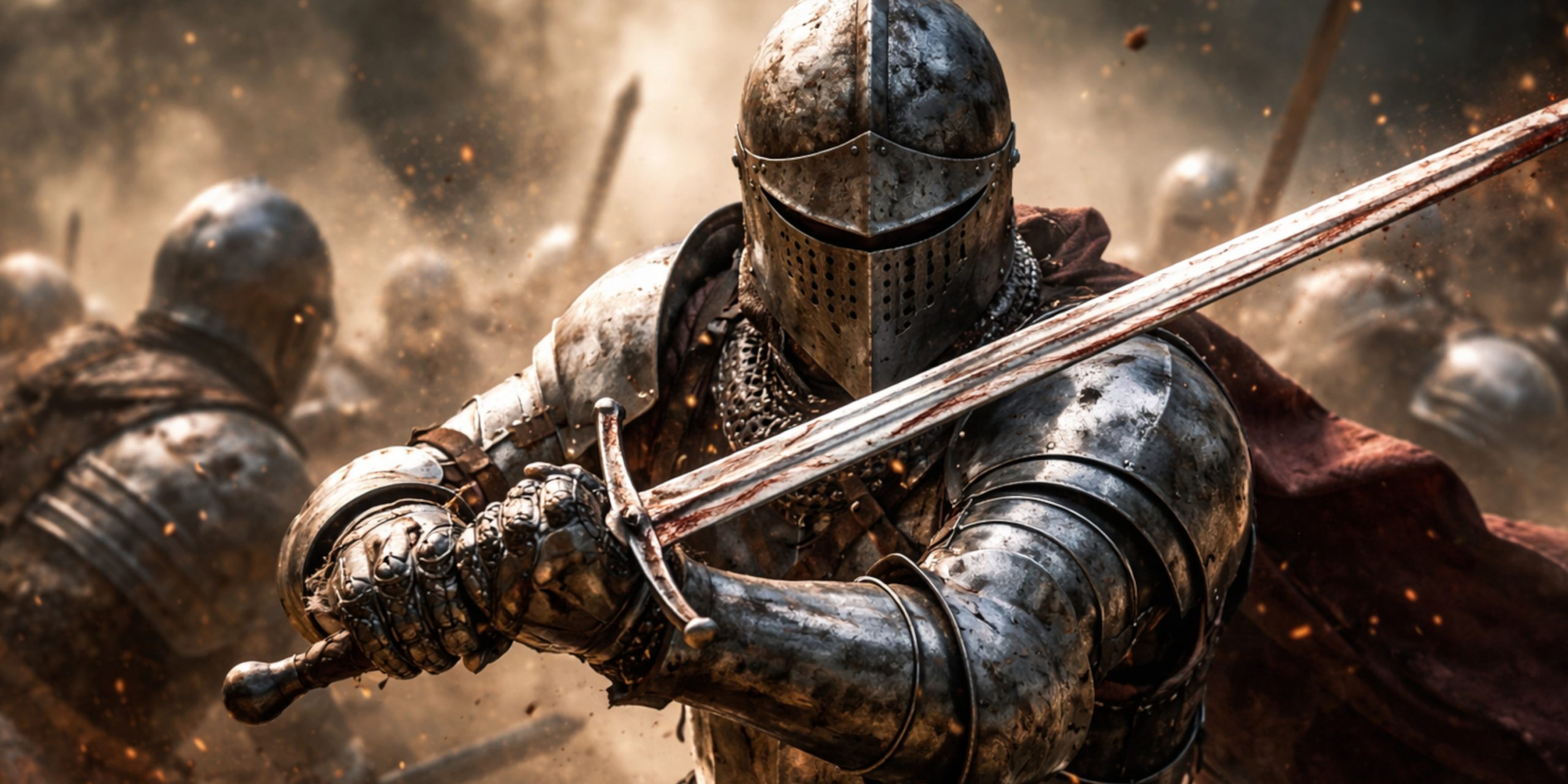
1. It was built for control, not brute force
The longsword gets a reputation as a heavy hitter, but that misses the point. Most examples sit comfortably around one and a half kilos. What matters is balance. With two hands on the grip, the weapon responds like an extension of the arms. Direction changes come quickly, recovery is fast, and the fencer keeps initiative. Medieval smiths understood ergonomics long before anyone coined the term.
2. Two hands changed everything
A single-handed sword is honest. A two-handed sword is persuasive. The longsword’s grip allows leverage for binds, winding, and subtle pressure that decides fights before the cut even lands. Once blades meet, strength matters less than structure. This is why the longsword thrives in close measure where many weapons panic.
3. Half-swording made armour nervous
One hand on the grip, the other on the blade. It sounds reckless until you try it. Half-swording turns the longsword into a short spear, perfect for probing gaps at the armpit, visor, or groin. Against plate armour, cuts are a waste of energy. Precision wins. Medieval fighters knew this, and they trained for it obsessively.
4. It worked just as well in armour as out of it
Few weapons transition so cleanly between contexts. In unarmoured fights, the longsword cuts and thrusts with authority. In armoured combat, it grapples, hooks, and stabs with grim efficiency. This versatility made it ideal for the messy reality of medieval warfare, where you rarely knew what the next opponent would be wearing.
5. The point was often deadlier than the edge
Popular imagination loves cleaving blows. Medieval fencing texts quietly prefer the thrust. A well-aligned point slips through mail rings, finds joints in plate, and ends fights quickly. The longsword’s tapered blade and acute tip reflect this reality. It was designed to finish matters, not perform for an audience.
6. The crossguard was a weapon in its own right
That simple bar is doing more work than it gets credit for. Crossguards trap blades, strike faces, wrench wrists, and help control distance. In close play, a quick punch with the guard can stun or break teeth. Elegant? No. Effective? Very.
7. Training systems were brutally practical
The longsword came with a serious education. Masters like Fiore dei Liberi and Johannes Liechtenauer taught systems built around timing, leverage, and decision-making under pressure. These were not dances or rituals. They were survival manuals written by men who expected their students to bleed if they got it wrong.
8. It punished mistakes instantly
Poor footwork, lazy guards, overcommitted cuts. The longsword exposes all of them. Its reach and responsiveness mean errors are met with sharp consequences. This is why experienced fighters respect it. The weapon does not forgive sloppiness, and neither did medieval opponents.
9. It dominated the civilian duel as well as the battlefield
Longswords were not only tools of war. They featured heavily in judicial duels and private combat between the armed classes. In these settings, reliability mattered more than spectacle. The longsword delivered consistent results, which is why it remained popular even as armour and tactics evolved.
10. It endured because it worked
Weapons fall out of favour when better ideas replace them. The longsword stuck around for centuries because it answered too many problems too well. It cut, thrust, grappled, controlled space, and adapted to armour. From a historian’s perspective, that staying power says more than any romantic legend ever could.
If there is a single reason the longsword earns its reputation, it is this. It was designed by people who expected violence to be personal, chaotic, and unforgiving. The weapon met those expectations calmly and efficiently. Medieval fighters trusted it with their lives, which is usually the clearest endorsement history offers.
Watch the documenentary: