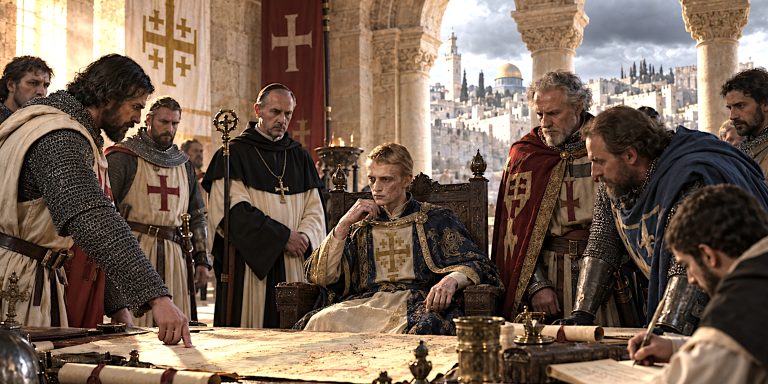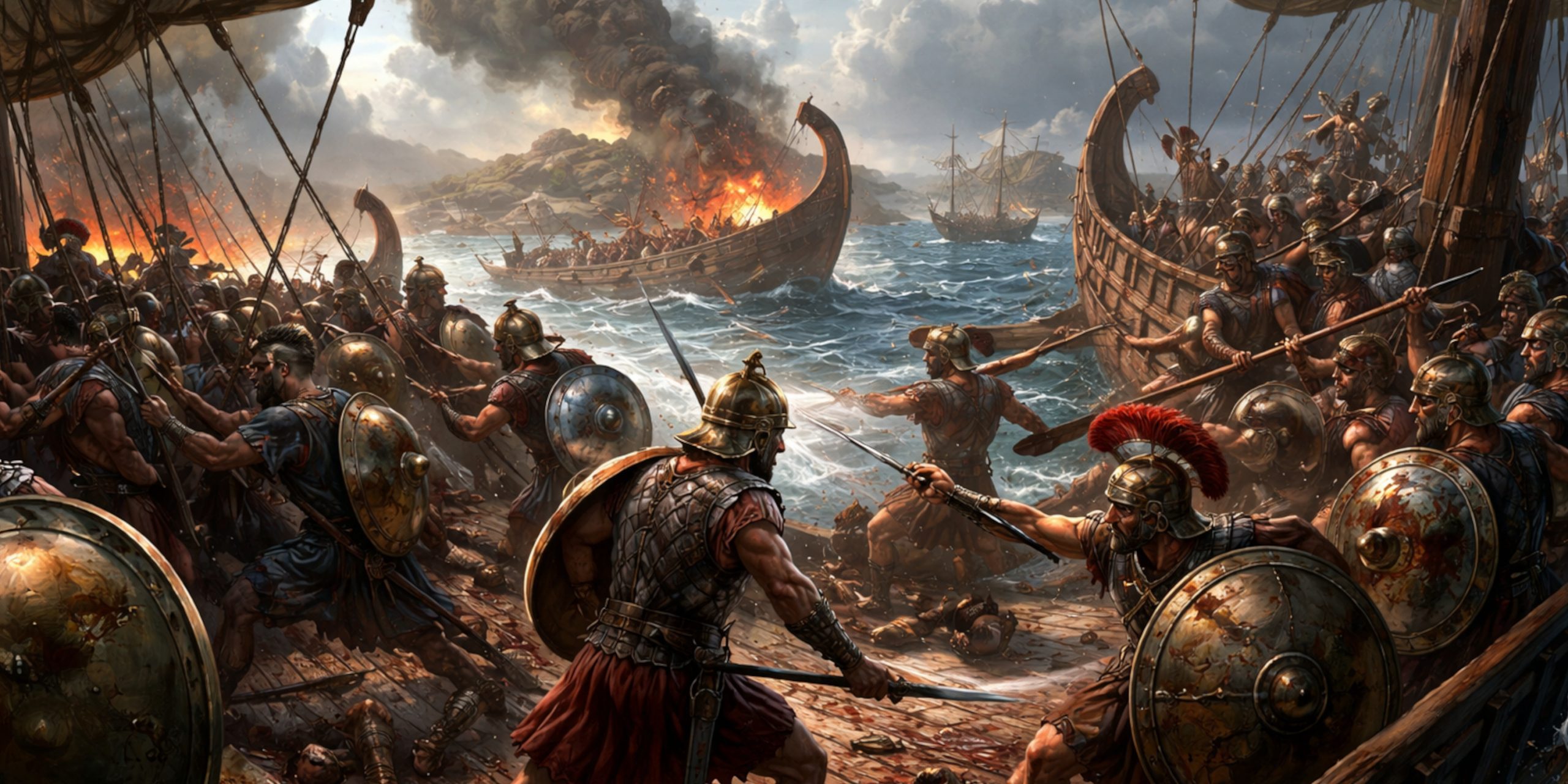
The Battle of Delos sits at a turning point in Hellenistic naval warfare. It was fought off the sacred island of Delos during the Chremonidean War and it quietly reshaped power in the Aegean. Ancient writers give us no tidy blow by blow narrative, which makes this engagement a historian’s puzzle. What we can say with confidence is that Macedon emerged as the dominant naval force, and Ptolemaic sea power never fully recovered.
Historical Background
The mid third century BC saw the Aegean become a chessboard of fleets. Antigonus Gonatas of Macedon faced a hostile coalition backed by Ptolemy II Philadelphus of Egypt. Athens and Sparta hoped Egyptian money and ships would break Macedonian control of Greece. Delos mattered because it was both sacred ground and a strategic naval hub. Control of its waters meant influence over the Cyclades and the trade routes threading through them.
Forces
Precise numbers do not survive, but the balance of forces is clear enough from later summaries.
Macedonian Fleet
- Commanded by Antigonus Gonatas
- Core strength drawn from Macedon and allied island contingents
- Ships likely included heavier polyremes alongside triremes
Ptolemaic Fleet
- Operating under royal admirals loyal to Ptolemy II
- Traditionally strong in fast triremes and quadriremes
- Crewed by a mix of Egyptians, Greeks, and mercenaries
If the Ptolemies expected another easy demonstration of sea power, Delos disabused them of that notion.
Commanders and Leadership
| Side | Leader | Role |
|---|---|---|
| Macedon | Antigonus Gonatas | Overall command and strategic direction |
| Ptolemaic Egypt | Ptolemy II Philadelphus | Supreme authority, fleet led by appointed admirals |
Antigonus was no romantic sea captain, but he understood logistics and morale. He treated fleets as instruments of state, not prestige projects. That difference mattered.
Arms and Armour
Naval battles were decided by hulls and oars, yet boarding actions still turned on personal weapons.
Common Equipment
- Bronze helmets of Phrygian and Attic types
- Linen cuirasses and muscle cuirasses for officers
- Large round hoplite shields for marines
Swords in Use
- Xiphos short swords favoured by Greek marines for close fighting
- Kopis or makhaira for slashing in cramped conditions
- Macedonian troops may also have carried shorter thrusting blades alongside spears
I always remind students that naval warfare was not bloodless manoeuvre. Once ships locked, it became an ugly infantry fight on wet timber.
The Battle
Ancient sources agree on the outcome, not the method. The Macedonian fleet defeated the Ptolemaic force in a decisive engagement off Delos. Whether Antigonus used superior formation, heavier ships, or simply better drilled crews remains debated. My suspicion leans toward discipline. Macedonian crews held formation while the Ptolemaic line broke under pressure.
Battle Timeline
| Phase | Events |
|---|---|
| Approach | Fleets converge near Delos, likely during summer campaigning |
| Engagement | Macedonian ships press the centre, forcing close combat |
| Collapse | Ptolemaic line breaks, ships captured or driven off |
| Aftermath | Macedon secures naval dominance in the Cyclades |
No dramatic last stand, no heroic duel. Just methodical victory.
Archaeology and Material Evidence
There is no confirmed wreck from the battle itself. What Delos offers instead is context.
- Harbour installations and anchor stones show heavy naval traffic
- Dedications and inscriptions from the period reflect shifting power after the battle
- Coinage changes suggest Macedonian influence tightening in the Aegean
Sometimes archaeology speaks in whispers rather than shouts.
Contemporary Voices
Our sources are fragmentary but telling.
“Antigonus held the sea, and with it the islands.”
Plutarch, paraphrasing Hellenistic tradition
“The power of Egypt was broken upon the waves.”
Later scholia summarising third century BC events
Neither is neutral, but both point in the same direction.
Consequences and Legacy
The defeat ended Ptolemaic naval supremacy in the Aegean. Macedon became the leading sea power among the Greek islands, and Athens lost its last realistic hope of liberation by foreign fleets. Delos itself continued as a sacred and commercial centre, though now under the shadow of Macedonian strength.
For all its obscurity, the Battle of Delos reminds us that history often turns not on famous fields, but on contested waters. It also proves that careful organisation beats lavish funding. A lesson governments keep relearning with admirable consistency.
Watch the documentary: