Few rulers unsettle the tidy categories of Egyptian history like Akhenaten. He reigned in the mid fourteenth century BCE and left behind a legacy that feels both intimate and abrasive. As a historian, I find him fascinating not because he conquered vast territories, but because he tried to rewire how power, belief, and kingship worked in one of the world’s most conservative civilisations. That alone takes nerve, or hubris, or both.
Akhenaten was born Amenhotep IV, heir to a stable empire built by soldier kings. Within a few years, he turned his back on that inheritance. Temples were sidelined, gods erased, art reshaped, and a new capital raised from desert dust. The shockwaves outlived him, mostly in the form of determined attempts to forget he ever existed.
Akhenaten and the Aten Revolution
Akhenaten’s defining act was the elevation of the Aten, the solar disk, above all other gods. This was not a gentle reform. Traditional cults, especially that of Amun, were stripped of wealth and visibility. Priesthoods that had rivalled royal power were suddenly irrelevant.
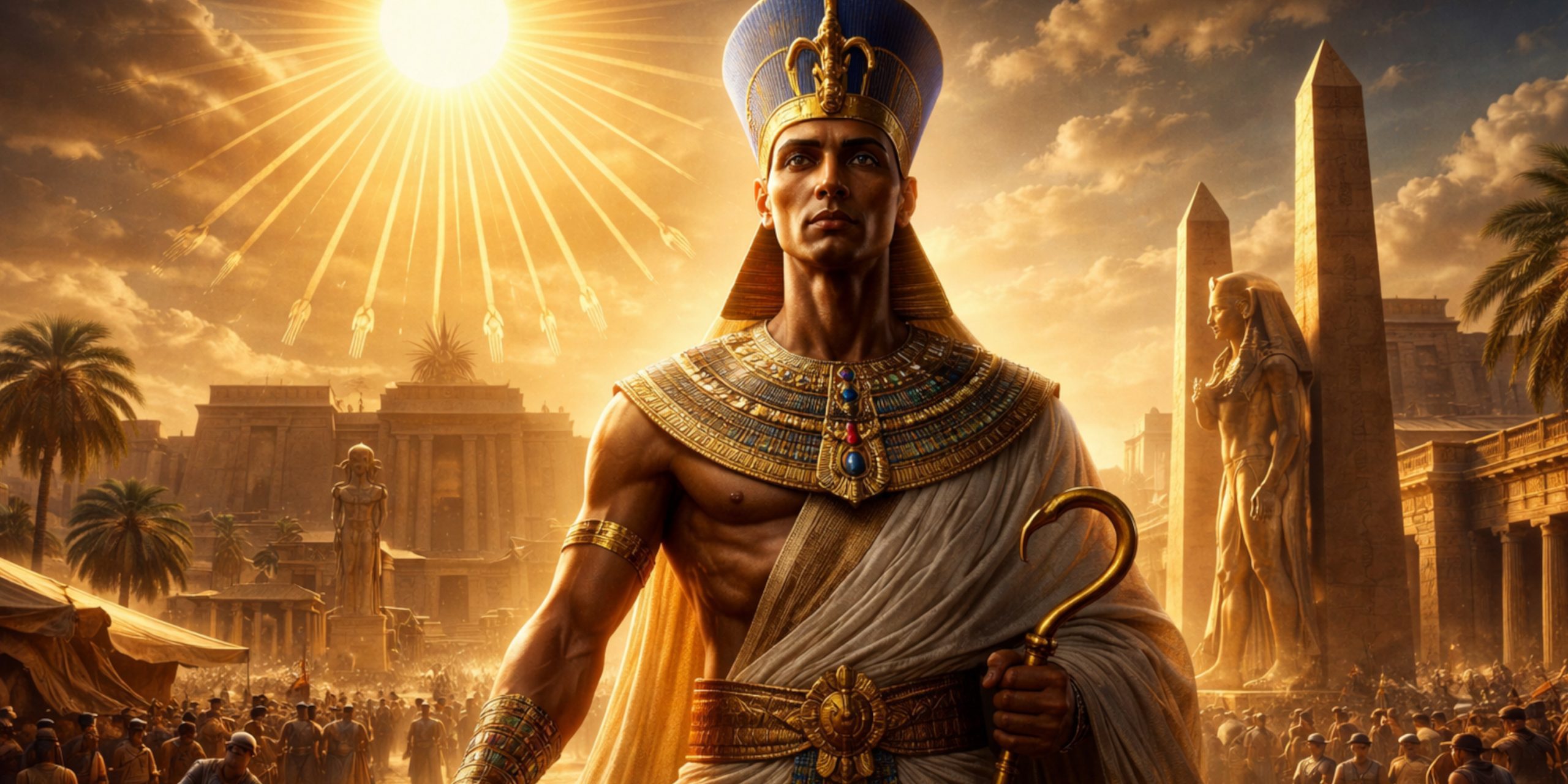
He changed his own name to honour the Aten and presented himself as the sole mediator between god and people. The Aten did not speak through oracles or temples. It shone, literally, through the king and his family. I suspect Akhenaten believed this sincerely, which makes the policy more unsettling, not less.
The religious shift came with a new visual language. Gods vanished from reliefs, replaced by sunlight ending in hands. The royal family appeared in moments of affection that feel almost intrusive. Egyptian art had always been symbolic. Akhenaten made it personal.
Founding Akhetaten, The City of Amarna
To house this new order, Akhenaten founded a capital at Akhetaten, known today as Amarna. It rose quickly and cheaply, built largely from mudbrick. Boundary stelae carved into surrounding cliffs spelled out the king’s intent with striking clarity. This was a city without old gods, old elites, or old compromises.
From an administrative point of view, the decision was risky. Moving the court disrupted supply lines and communication with Egypt’s provinces. Yet the city functioned, if briefly. Excavations show bakeries, workshops, villas, and palaces humming with activity. Amarna was not a retreat. It was a statement.
Arms and Armour Under Akhenaten
Despite his spiritual focus, Akhenaten ruled an empire that still relied on force. Egyptian arms during his reign followed New Kingdom norms.
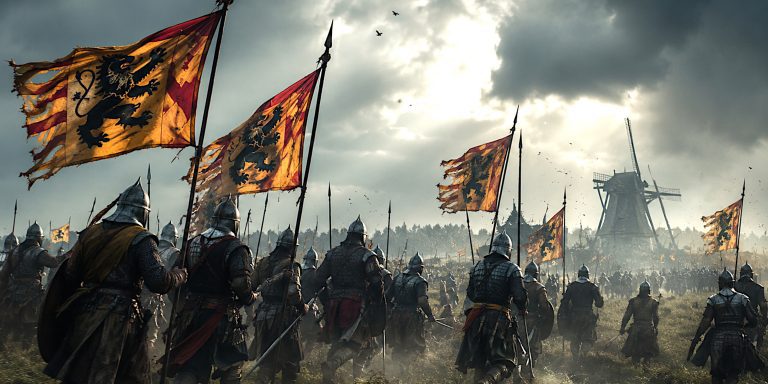
Infantry carried composite bows, spears with bronze heads, and short swords such as the khopesh. Shields were typically wooden with leather coverings, often curved for protection. Armour was limited. Linen corselets reinforced with scales appear in elite contexts, while helmets were rare outside chariot crews.
Chariots remained the prestige weapon. Lightweight frames, spoked wheels, and teams of horses allowed rapid movement and archery on the battlefield. Reliefs from earlier reigns glorify chariot warfare, and there is no evidence Akhenaten abandoned this military infrastructure. What changed was emphasis, not equipment.
Battles and Military Acumen
Akhenaten is often accused of neglecting the empire’s borders. The truth is quieter and more complex. The Amarna Letters, diplomatic tablets written in Akkadian, reveal a world of anxious vassals pleading for aid against rivals and raiders.
There is little evidence Akhenaten personally led campaigns. Unlike his father or successors, he does not appear as a warrior king in reliefs. Some territories in Syria and Canaan slipped from Egyptian influence during his reign, particularly under pressure from the Hittites.
Was this failure or calculation? I lean toward a strategic gamble that did not pay off. Akhenaten prioritised internal transformation over external dominance. For a few years, Egypt could afford that. Eventually, the margins tightened. His successors reverted to a more traditional balance of religion and force.
Daily Life and Health at Amarna
Skeletal evidence from Amarna cemeteries paints a sobering picture. Many residents suffered from malnutrition, joint stress, and disease. The speed of the city’s construction likely strained labourers and resources.
Akhenaten himself has been the subject of endless medical speculation. Elongated skull, narrow limbs, prominent hips. These features are exaggerated in art and do not necessarily reflect reality. Mummies from the period suggest he was physically normal by ancient standards. The art was ideology, not anatomy.
Where to See Artefacts From Akhenaten’s Reign
For those wanting to see the physical traces of this strange reign, several collections stand out.
The Ägyptisches Museum houses the famous bust of Nefertiti, arguably the most recognisable work of Amarna art. Relief fragments and talatat blocks from temples also survive there.
In Egypt, the Egyptian Museum holds statues, stelae, and everyday objects from Amarna, including boundary texts and household items.
The British Museum preserves several Amarna tablets and sculptural fragments, offering insight into diplomacy and administration during Akhenaten’s reign.
Latest Archaeology and Ongoing Research
Excavations at Amarna continue to refine our understanding of the city’s layout and population. Recent work has focused on suburban housing, industrial zones, and cemeteries beyond the elite core.
Analysis of diet, mobility, and trauma is reshaping views of labour and health in the city. Chemical studies of pigments show how radical Amarna art was in both style and technique. There is also renewed interest in how quickly the city was dismantled after Akhenaten’s death, with building blocks reused elsewhere almost immediately.
What strikes me is how human the evidence feels. This was not a failed experiment in abstraction. It was lived, endured, and then erased.
Legacy and Historical Reckoning
After Akhenaten’s death, the backlash was swift. His name was hacked from monuments. His city was abandoned. His religious reforms were reversed with near theatrical determination. To later Egyptians, he was dangerous, not misguided.
Yet history has been kinder. Akhenaten forces us to confront how fragile even the most stable systems can be when belief shifts at the top. He reminds us that power does not only express itself through conquest. Sometimes it expresses itself through an idea so disruptive that it cannot survive its creator.
As a historian, I cannot admire him without reservation. But I cannot ignore him either. And neither, it seems, can time.
Watch the documentary: