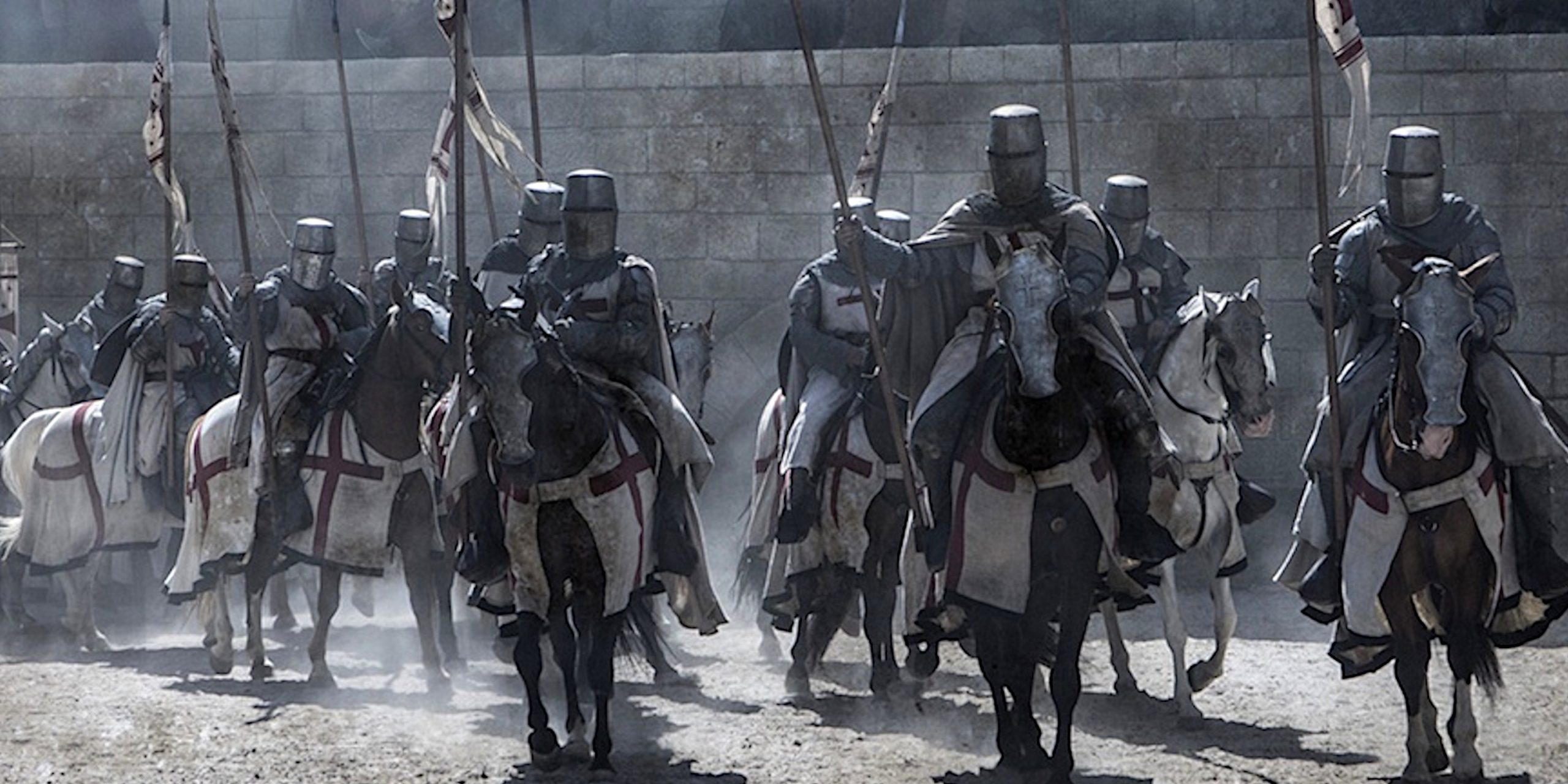
The appeal of Knightfall lives and dies on steel, mail, and the sense that these men genuinely expect to be stabbed for a living. The series promises gritty medieval authenticity, then filters it through modern television pacing and budget realities. As someone who spends far too much time staring at museum swords and manuscript marginalia, I went in hopeful, suspicious, and ready to nitpick. Here is how the armour and weapons actually hold up.
The Look and Feel of the Knights Templar
The show presents the Knights Templar as practical warriors first, monks second. Visually, that mostly works. The Templars wear layered kit that feels lived in rather than ceremonial. Mail hangs with weight, cloaks look heavy, and nothing appears freshly pulled from a costume rack.
Historically, Templars favoured function over flourish. Knightfall understands that instinct. The palette stays muted, with whites, greys, and iron tones dominating the screen. You do not see much pointless decoration, which is exactly right. These men were not trying to look fashionable. They were trying to stay alive.
That said, everyone is a bit cleaner and more symmetrical than reality would allow. Real medieval mail often sat unevenly and shifted constantly. Television needs faces visible and movement readable, so accuracy bends slightly. I can live with that.
Chainmail and Body Armour Accuracy
Chainmail is the backbone of Templar protection in the series, and it is one of Knightfall’s stronger points. Hauberks reach mid thigh, sleeves cover the arms properly, and the overall silhouette matches late 13th and early 14th century depictions.
You also see padded garments beneath the mail, usually gambesons. That detail matters. Mail without padding is a recipe for broken bones, and the show avoids that mistake. Helmets tend towards simple forms, with conical shapes and basic nasal protection appearing alongside later enclosed styles.
Plate armour is used sparingly, which is historically sensible for the period. When it does appear, it reads as transitional, not full fantasy knight. No one is clanking around like a walking tin cupboard, which is refreshing.
Templar Swords on Screen
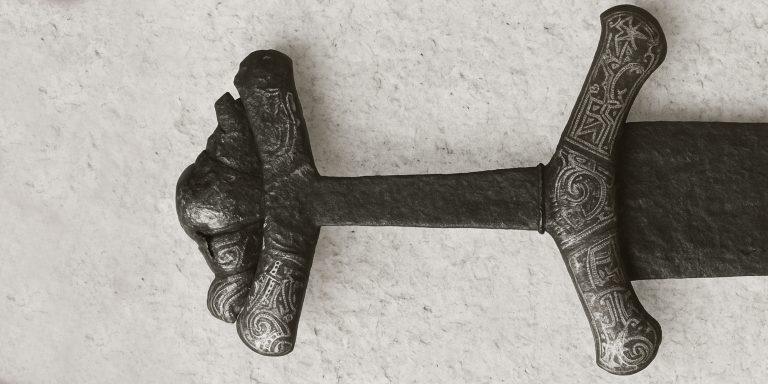
The swords in Knightfall are broadly convincing arming swords. Straight double edged blades, modest guards, and practical grips dominate. These are weapons designed for cutting and thrusting from horseback or on foot, not oversized hero props.
Blade length and proportions feel right. Nothing looks absurdly heavy, and the actors generally carry them with believable ease. One handed use with a shield is shown often, which aligns nicely with period fighting styles.
There are moments where choreography pushes things into modern action territory, with wide swings and dramatic pauses. That is television doing television things. Still, the swords themselves rarely break immersion, which is more than can be said for many medieval dramas.
Shields, Spears, and Secondary Weapons
Templar shields in the show are classic kite shapes, painted plainly and carried with purpose. They look battered, chipped, and reused, which fits the reality of a campaigning military order. A shield was a tool, not a status symbol.
Spears and lances appear frequently, especially in battle scenes, and that earns the show extra credit. Medieval warfare relied heavily on polearms, yet many series forget they exist. Knightfall does not. You see spears used for formation fighting and cavalry charges, which grounds the action nicely.
Daggers appear as sidearms and finishing weapons. They are practical and understated, which again feels right. No jewel encrusted nonsense.
Combat Style and Choreography
The fighting style leans towards gritty realism, though it is not immune to cinematic exaggeration. Armour absorbs blows when it should, shields matter, and fighters tire. That last part is important. Combat looks exhausting, not balletic.
Where the show slips is in one on one duels that go on longer than physics would allow. Real fights in armour were often short and brutal. Television prefers tension and reversals. I understand the compromise, even if my inner historian occasionally winces.
What Knightfall Gets Right and Where It Cheats
The biggest success is tone. Armour and weapons feel like working equipment, not cosplay. The Templars look uniform without looking identical, which suggests supply chains, repairs, and hand me down kit.
The main cheat lies in consistency. A few pieces of armour feel slightly too modern in cut, and some helmets seem chosen for actor visibility rather than strict accuracy. These are small sins, and they do not derail the experience.
If anything, the show could have leaned harder into dirt, wear, and asymmetry. Medieval warfare was messy. Everyone should look a bit worse for it.
Takeaway from a Weapon Nerd
Knightfall treats Templar armour and weapons with more respect than most historical dramas. It is not a documentary, but it clearly cares about getting the basics right. When I watch a battle scene and do not immediately start shouting at the screen about grips or blade length, that is a win.
For viewers who love history but still want drama, the series strikes a decent balance. For fellow armour obsessives, there is enough accuracy here to enjoy, argue about, and occasionally pause to squint at a helmet. Which, honestly, is half the fun.