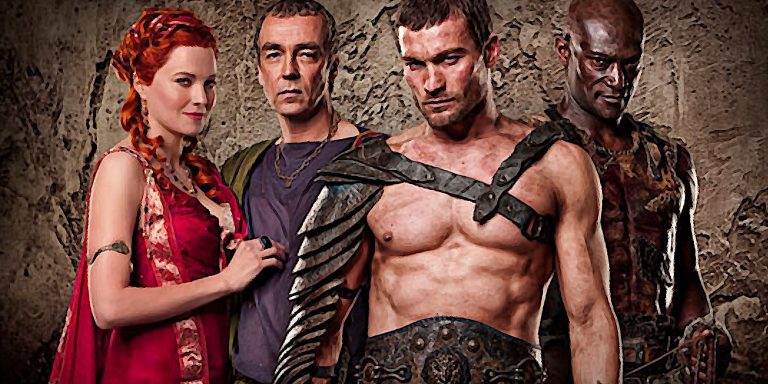
There are villains you love to hate, and then there is Ashur. The man who somehow failed upwards in Spartacus now has his own corner of the franchise, and against all odds, it works. House of Ashur is less about brute strength and more about survival through cunning, gossip, and perfectly timed betrayal. As someone who enjoys history with a side of sarcasm, this is my kind of ancient drama.
The Origins of the House
Ashur began as a nobody with ambition and a flexible moral compass. In the original series, he was not born to power, nor did he earn it through honour or battlefield skill. He survived by watching, listening, and exploiting cracks in the system. That talent eventually became his currency.
The House of Ashur grows out of that mindset. It is not a noble lineage in the traditional Roman sense. It is a political construct built from favours, leverage, and an understanding that Rome rewards usefulness more than virtue. Ashur’s house exists because he makes himself indispensable.
Timeline: From Slave to Power Broker
Ashur’s story unfolds alongside the chaos of Capua and the gladiator rebellions. Early on, he positions himself close to authority, especially within the ludus. When masters fall and power vacuums appear, Ashur does what Rome does best. He adapts.
The House of Ashur takes shape after the collapse of familiar structures. With old elites weakened, there is room for new players who understand information better than swords. Ashur steps into that space, not as a general or champion, but as a political survivor who knows exactly who owes him and why.
How the House Actually Holds Power
This is not a house built on legions or heroic loyalty. Its strength lies in influence. Ashur trades secrets the way others trade silver. He understands that knowing who betrayed whom is often more valuable than winning a fight.
The house operates through alliances with Roman officials, social climbers, and anyone desperate enough to need protection or advancement. Power here is quiet, transactional, and fragile. One wrong move and it all collapses, which is part of what makes it interesting to watch.
Roman Politics, Ashur Style
If traditional Roman politics were a knife fight in the Senate, Ashur’s version is poison in the wine. The House of Ashur reflects the uglier but more realistic side of Roman power. Status is negotiated daily. Loyalty lasts only as long as it is profitable.
Ashur thrives in this environment because he never pretends otherwise. He does not believe in honour, destiny, or noble causes. He believes in leverage. That honesty, twisted as it is, makes him oddly compelling.
Why This Story Works
A series focused on Ashur shifts the lens of Spartacus. Instead of gods, warriors, and grand speeches, we get survival politics. It explores how people without physical power navigate violent systems built by others.
As a viewer with a soft spot for morally questionable characters, this is refreshing. It asks an uncomfortable question. In a world ruled by brutality, is intelligence the sharpest weapon of all?
What the House of Ashur Adds to the Spartacus World
The House of Ashur expands the universe beyond the arena. It shows the consequences of rebellion, the reshuffling of power, and the uncomfortable truth that Rome always finds new operators to keep the machine running.
Ashur is not a hero, and the house bearing his name is not meant to be admired. It is meant to be understood. That makes it one of the more interesting political threads in the franchise, and a reminder that history is often shaped by the people lurking just off centre stage.
Watch the Q&A: