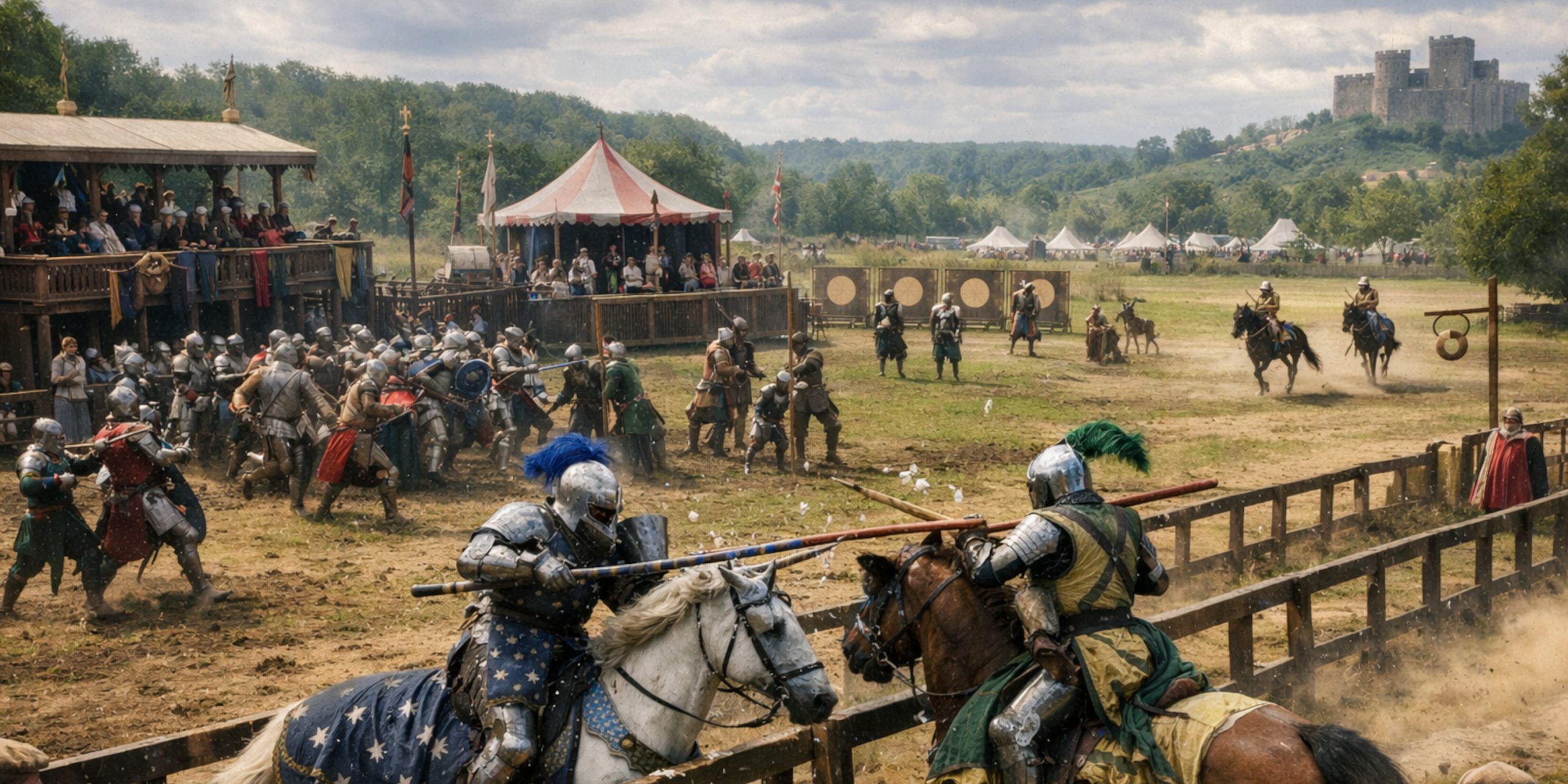
Tournaments in the Dunk and Egg stories feel smaller than the grand HBO pageants, but that is the point. They are muddy, awkward, half broke affairs where reputations wobble and the prize money barely covers the armour repairs. Reading them, I always get the sense that Westeros is holding its breath, waiting for someone to trip over a lance and change history by accident. That happens more than once.
The Ashford Meadow Tournament
The Ashford tourney sits at the heart of The Hedge Knight and it does most of the heavy lifting for the whole collection. It is here that we meet Ser Duncan the Tall and Egg properly, not as legends but as two people trying to blag a meal and a future.
Held near Ashford, this tournament is modest by royal standards. There are no dragons overhead or crowds stretching to the horizon. Instead, we get hedge knights, minor lords, and a clutch of Targaryens who already feel like trouble waiting to happen. The jousts are tense because Dunk does not really belong there, and everyone knows it. When he unhorses Prince Aerion, the story tips from sporting drama into something sharper.
What makes Ashford Meadow memorable is not the lists or the prizes. It is the trial of seven that follows, a reminder that in Westeros tournaments are never just games. They are pressure cookers. People bring grudges with them and sometimes they leave in coffins.
The Whitewalls Tourney
If Ashford Meadow is earnest and hopeful, the Whitewalls tourney in The Sworn Sword is cynical and slightly rotten around the edges. Hosted by Lord Butterwell, it pretends to be a celebration and quietly doubles as a political gamble tied to Blackfyre loyalties.
Dunk enters with more experience and fewer illusions. The lists matter less than the conversations in the tents. Knights eye each other with suspicion, and the sense that something is off never really lifts. This tournament has the feel of a country fair that has been hijacked by men with secrets.
The brilliance here is how Martin uses the tourney as camouflage. People expect noise, wine, and bruises. They do not expect conspiracy. When the plot collapses, it feels inevitable rather than shocking, which is the hardest trick to pull.
Minor Tourneys and Implied Lists
Not every tournament in A Knight of the Seven Kingdoms gets a full chapter treatment. We hear of smaller events in passing, the kind Dunk might attend for a few silver stags and a chance to stay fed for a week. These mentions matter because they ground the world.
Westeros is packed with half remembered tourneys where no songs are written and no banners become famous. Knights travel from one to the next, chasing relevance. Dunk’s life between the big moments is shaped by these unglamorous stops, and that makes the larger tournaments feel earned rather than staged.
Why These Tournaments Matter
What I love about the Dunk and Egg tournaments is how human they feel. Armour breaks. Horses panic. The rules bend when powerful people get annoyed. Victory rarely brings comfort, and defeat can still leave you standing if you are stubborn enough.
These events also act as early warning signs for the future of the Seven Kingdoms. The Targaryens we meet here are already cracking. The Blackfyre question hangs in the background like bad weather. Long before open war, tournaments show us where loyalties sit and how easily honour can be twisted.
Seven Swords Takeaway
If the main A Song of Ice and Fire saga is about thrones and armies, the tournaments in A Knight of the Seven Kingdoms are about survival. They are smaller, messier, and somehow more honest. Every lance clash feels personal because it usually is.
Reading them now, I find myself less interested in who wins and more in who walks away with their principles intact. In Westeros, that might be the rarest prize of all.
Watch the trailer: