Anne of Cleves is often reduced to a punchline about a failed marriage, which is unfair and historically lazy. She was a pragmatic survivor in a court that ate young women for breakfast. Her short reign as Henry VIII’s fourth wife ended quickly, but her life after the annulment was long, comfortable, and surprisingly independent. From a historian’s desk, that looks less like defeat and more like quiet mastery.
Early Life in the Duchy of Cleves
Anne was born in 1515 into the ruling family of Cleves, a small but strategically important state in what is now western Germany. Her upbringing reflected the values of a conservative, reform minded court. She received a practical education rather than a humanist one, with little emphasis on Latin, music, or courtly display. This mattered later, when she arrived in England and found herself judged by Tudor standards she had never been trained to meet.
Cleves sat at the crossroads of European politics during the Reformation. Anne’s family leaned toward Protestant reform without fully breaking from Catholic tradition. That ambiguity made her useful on the diplomatic chessboard, especially to an England looking for allies against Catholic powers.
The Marriage That Never Really Was
Henry VIII agreed to marry Anne in 1539 after seeing a flattering portrait by Hans Holbein. When Anne arrived in England, Henry was disappointed. The king later claimed he found her unattractive, though this says more about Henry’s expectations than Anne’s appearance. Contemporary observers described her as dignified and pleasant, if not dazzling.
Their marriage in January 1540 was brief and unconsummated. Henry blamed lack of attraction, Anne cited confusion over English customs, and everyone involved looked for the quickest exit. The annulment was finalised in July that same year. No heads rolled. By Tudor standards, this counts as a miracle.
A Queen for Six Months
Anne’s time as queen was short but revealing. She behaved carefully, avoided factional politics, and made no public enemies. She learned enough English to get by and followed court etiquette as best she could. Her restraint likely saved her life.
Unlike other queens who pushed for influence or reform, Anne kept her head down. It was a sensible approach when married to a man who had already executed two wives and was not in the mood for patience.
The King’s Beloved Sister
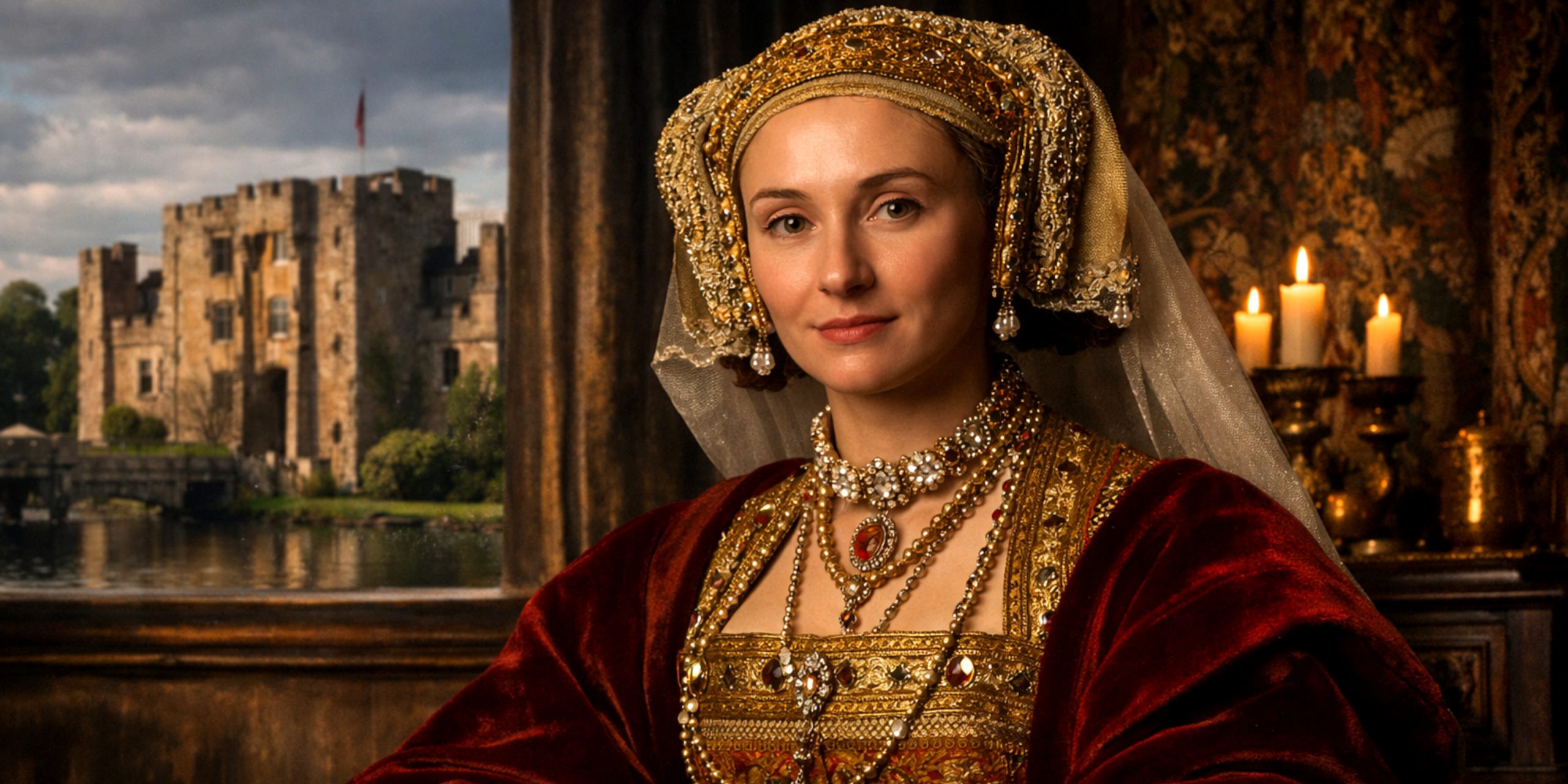
After the annulment, Anne accepted the settlement offered to her. In return, she received a generous income, several estates including Hever Castle, and the honorary title of the King’s Beloved Sister. She remained in England by choice, which suggests she understood exactly where her interests lay.
Anne lived independently, managed her household well, and maintained cordial relations with Henry and his children. She outlived Henry, Edward VI, and Mary I, dying peacefully in 1557. For a Tudor queen, that is an exceptional outcome.
Anne and the Tudor Children
Anne formed particularly warm relationships with Henry’s daughters, Mary and Elizabeth. She was present at court often enough to matter but rarely enough to avoid trouble. Elizabeth later attended Anne’s funeral, which tells its own story about affection and respect.
Anne navigated religious change with care. Under Edward she leaned Protestant, under Mary she adjusted back to Catholic practice. Survival sometimes requires flexibility rather than conviction.
Reputation and Myth
Anne of Cleves has long been mocked as the wife Henry rejected on sight. Modern historians have been kinder, pointing out that the marriage was a diplomatic miscalculation rather than a personal failure. Holbein’s portrait was not deceptive, and Henry’s own ageing and ill health likely played a role in his reaction.
If anything, Anne was the most successful of Henry’s wives in material terms. She kept her head, her wealth, and her freedom. That alone deserves reconsideration.
Legacy
Anne of Cleves never ruled, never bore a child, and never shaped policy. Yet she offers a valuable lesson about power at the Tudor court. Sometimes the clever move is knowing when not to fight.
She remains the only one of Henry’s wives to enjoy a long, secure life after marriage to him. In a dynasty defined by spectacle and bloodshed, Anne’s quiet endurance feels almost radical.
Watch the documentary: