The men of HBO’s Rome march, conquer, betray and declaim. They shout in the Senate and bleed on the battlefield. Yet if you actually watch closely, it is the women who shape the emotional temperature of the series and often its political direction.
They do not command legions. They command rooms.
Set against the collapse of the Roman Republic, the series gives us women who are ambitious, frightened, ruthless, loving, and occasionally all at once in the same scene. Their world is narrow on paper. In practice, it is lethal and strategic.
Below is a closer look at the women who define the show and what they reveal about power and survival in ancient Rome.
Atia of the Julii: Performance as Power

Atia, played with dangerous charm by Polly Walker, is arguably the series’ most magnetic presence. Loosely inspired by the historical Atia Balba Caesonia, the show’s version is exaggerated, theatrical and utterly unapologetic.
She weaponises intimacy. She treats marriage as negotiation. She views motherhood as political investment.
Focus points:
- Seduction as a calculated tool
- Social humiliation as strategic warfare
- Fierce maternal ambition for Octavian
- A refusal to apologise for wanting power
Atia understands that in a society where women cannot hold office, influence travels through beds, banquets and whispered alliances. She thrives in the grey areas. Sometimes she overreaches, and when she does, the fall is brutal.
What makes her compelling is not simply her scheming. It is her fear. She knows how precarious her position is. One wrong shift in fortune and she becomes disposable.
Servilia of the Junii: Dignity, Grief, and Revenge
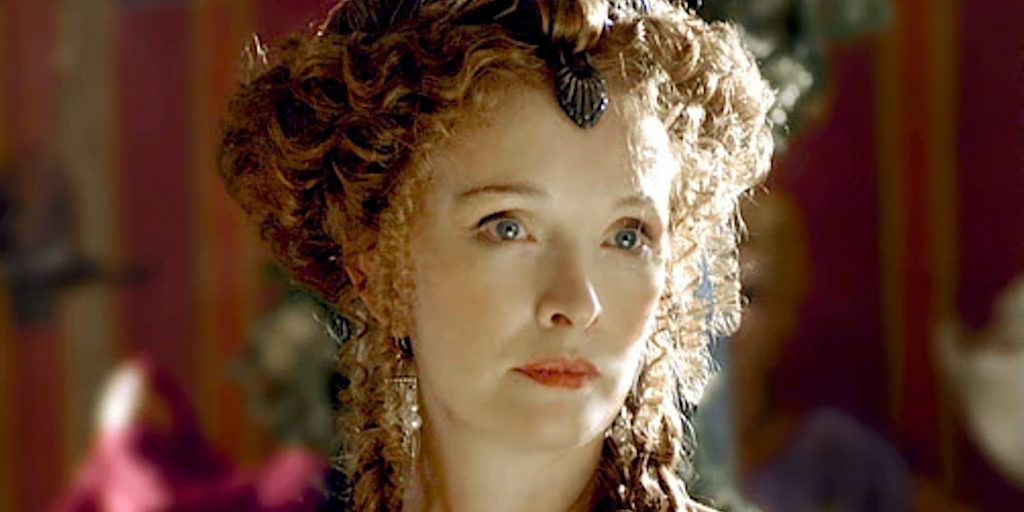
Servilia, portrayed by Lindsay Duncan, offers a colder, more restrained form of power. Based on the historical Servilia, she begins as a woman whose influence comes through her connection to Julius Caesar.
Her arc shifts from influence to isolation.
Focus points:
- Quiet political intelligence
- Maternal devotion to Brutus
- Public shame and private fury
- Revenge as a final assertion of agency
Servilia’s power erodes after Caesar’s assassination, yet she refuses to vanish quietly. Her final act, framed as ritual defiance, is not simply tragedy. It is a refusal to let her enemies dictate her narrative.
She embodies the cost of losing proximity to power in a system that grants women status only through men.
Octavia: The Burden of Duty
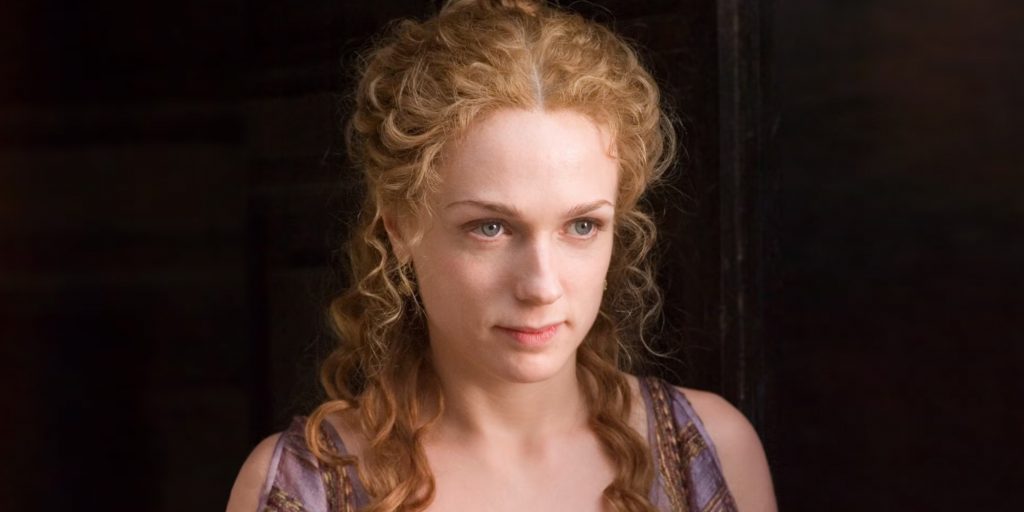
Octavia, played by Kerry Condon, is often dismissed at first glance as fragile. That reading does not last long.
Historically linked to Octavia the Younger, the series reimagines her as emotionally volatile yet increasingly self aware.
Focus points:
- Sexual awakening framed as rebellion
- Political marriage as personal sacrifice
- Loyalty to family above personal desire
- A gradual hardening into Roman stoicism
Octavia’s marriage to Mark Antony is transactional, designed to stabilise a collapsing alliance. She becomes a diplomatic instrument. Yet her vulnerability feels real and painfully human.
She reminds us that survival sometimes means enduring humiliation with composure.
Niobe: Domestic Tragedy in a Public World
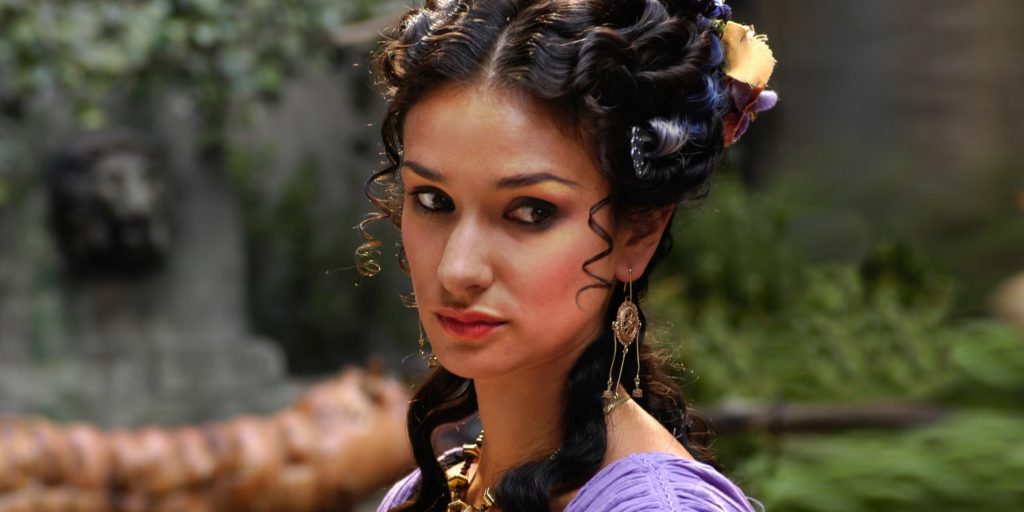
Niobe, portrayed by Indira Varma, stands apart from the aristocratic chessboard. She exists within the household of Lucius Vorenus, and her story shows how political chaos trickles into ordinary lives.
Focus points:
- The vulnerability of women without elite protection
- The consequences of secrets in a rigid honour culture
- Love strained by war and absence
- Tragedy born from silence
Niobe’s storyline feels painfully intimate. Her choices are not about empire but about survival within marriage, reputation and fear. When events spiral, the fallout is devastating.
Her arc grounds the show. Not every casualty of the Republic falls on a battlefield.
Cleopatra: Spectacle and Strategy
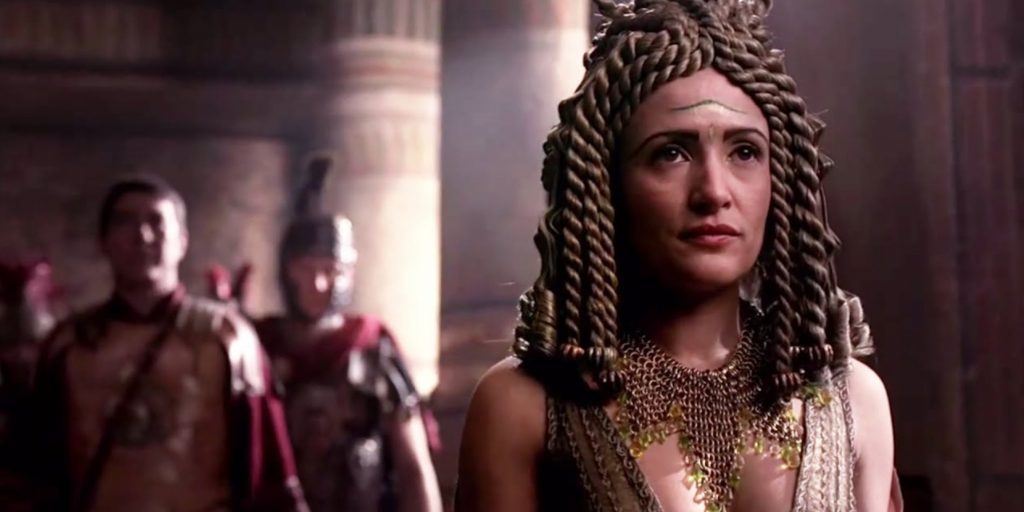
Cleopatra, played by Lyndsey Marshal, arrives as both outsider and catalyst. Based on Cleopatra, she is sensual, calculating and unapologetically political.
Focus points:
- Sexuality deployed as diplomacy
- Foreignness as mystique and threat
- Maternal ambition for Caesarion
- Survival through adaptability
Her portrayal avoids romantic fantasy. This Cleopatra is sharp, pragmatic and fully aware of the Roman gaze upon her. She is never naive. She is negotiating constantly.
In a male dominated geopolitical struggle, she carves space through spectacle and intelligence.
Power Without Office
The women of Rome operate in a system that excludes them from formal authority. Yet they exert influence through:
- Marriage alliances
- Motherhood as dynastic strategy
- Emotional manipulation
- Patronage networks
- Public shaming and private bargaining
Their limitations are clear. So is their resilience.
The series does not romanticise their suffering. It shows the compromises, the humiliations, and the occasional triumphs that come from navigating a violent political culture.
Takeaway
What makes these characters linger is not simply their historical inspiration. It is the way the series treats them as full political actors, even when the law denies them power.
They desire. They calculate. They endure.
And sometimes they win.
Watching them now, it feels almost modern. Ambition wrapped in vulnerability. Public image curated with precision. Survival dependent on alliances that can collapse overnight.
The fall of the Republic may belong to generals and senators. The emotional history of that fall belongs just as much to the women who lived inside it.