A Historian’s Look at Legend, Politics and Steel
Excalibur has always sat at an odd crossroads. Half myth, half political statement, and occasionally treated as if it were an artefact someone simply misplaced after a rowdy court feast. Modern readers tend to imagine it as a gleaming arming sword, held aloft in the sunshine while choirs belt out something dramatic. Medieval writers were not quite so consistent. Some gave it magical radiance, others treated it as a very fine weapon that simply belonged to a king who happened to enjoy good press.
Trying to decide whether Excalibur was ever real is less about hunting down a single sword and more about understanding why medieval people kept reinventing it. The result is a surprisingly tangled study of folklore, chroniclers, politics and the very human habit of improving a story each time it is retold.
Excalibur in the Earliest Traditions
Long before Geoffrey of Monmouth wrote his grand pseudo history, Celtic stories were full of heroic figures armed with supernatural blades. These weapons did not always have names, though many carried powers that would later feel familiar. Radiance, invincibility and a connection to the land were all present in early Welsh and Breton material.
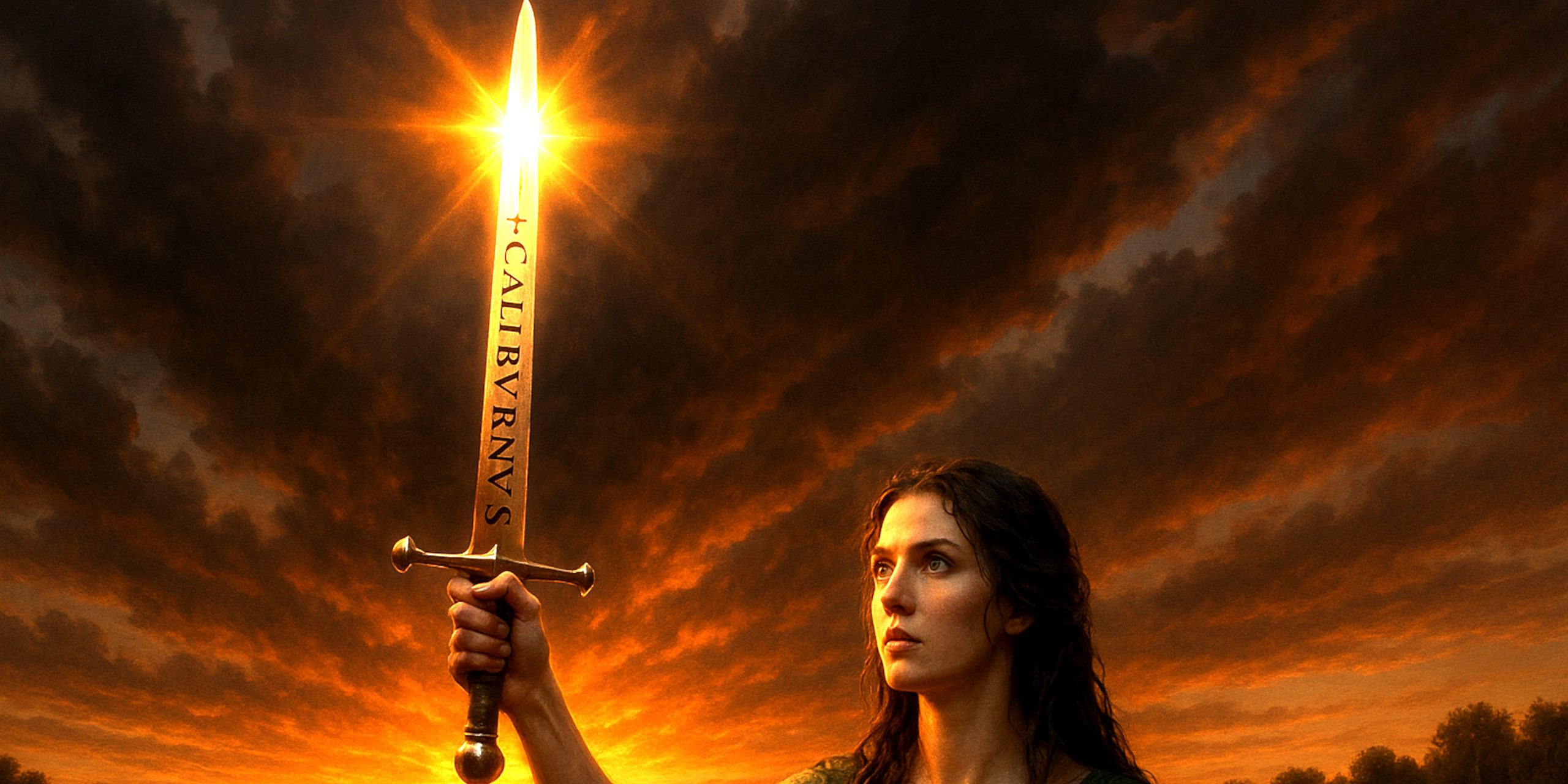
When Geoffrey introduced Caliburnus in the twelfth century, he was not inventing the idea from nowhere. He was formalising an existing tradition and giving it a Latin gloss suitable for a royal audience. His Caliburnus was forged in Avalon, an otherworldly location that acted as shorthand for spiritual legitimacy. A king with a sword from Avalon was a king approved by forces above and beyond earthly nobility. It was a clever narrative choice, the sort of thing court propagandists have always appreciated.
How Writers Reinvented the Sword
Later authors expanded the legend with great enthusiasm. The French prose cycles replaced Geoffrey’s single sword with two separate objects. A Sword in the Stone to validate kingship. A different sword from the Lady of the Lake to grant divine authority. It is a slight narrative overload, but since medieval romance was never known for restraint, readers seemed happy enough.
Three key patterns emerge.
1. The sword validates rule.
Pulling a blade from an anvil or receiving it from a mystical figure made royal power appear ordained rather than negotiated.
2. The sword marks the king as exceptional.
A monarch with an ordinary blade is simply a man in good armour. A monarch with a weapon of wonder becomes something closer to destiny in human form.
3. The sword reflects cultural ideals.
As chivalry developed, so did the properties of Excalibur. It went from enchanted blade to symbol of knightly virtue. Each retelling reshaped it to fit the moral tastes of the age. This says more about medieval Europe than it does about weapon metallurgy.
What Would a Real Excalibur Look Like
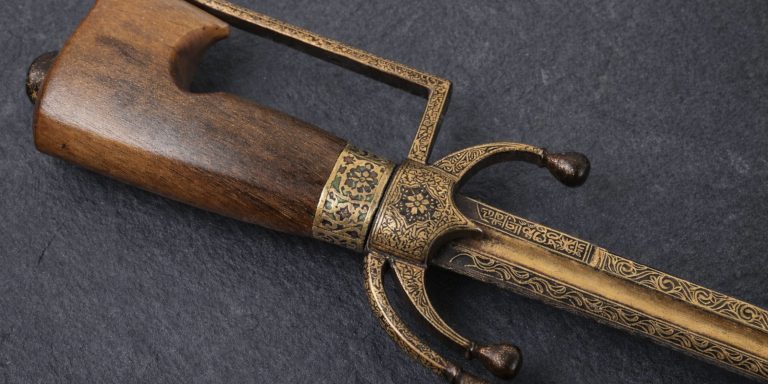
If Arthur existed at all, he would belong somewhere in the late fifth or early sixth century. The swords of that period were late Roman or early Migration Age weapons. These were long, largely straight blades with lenticular sections and relatively simple hilts. Decorative fittings could be impressive, but nothing in the archaeological record suggests a blade capable of blinding enemies with refracted sunlight.
A historically plausible Excalibur would therefore resemble a high status spatha. It would be well balanced, beautifully inlaid and carried by someone important enough to afford the craftsmanship. The Sutton Hoo sword is a good example of the sort of prestige weapon elites possessed. It is ornate, symbolically loaded and very much designed to communicate authority. If you replaced its owner with a semi mythical war leader, you would not be far from the idea medieval writers were grasping for.
Of course, this does not mean Excalibur itself was real. It simply means the concept fits into a long tradition of high status swords whose very presence announced that their owner mattered. In that sense, Excalibur is not absurd at all. It is perfectly normal behaviour to elevate an impressive weapon into a cultural symbol. Humans have been doing that since the Bronze Age.
The Sword in the Stone
The idea of a sword fixed in stone has no early Celtic foundation. It appears later, probably invented to underline the idea that Arthur’s kingship was chosen by fate, not inherited through messy politics. It works neatly in narrative terms. It also echoes a broader medieval fascination with relics, objects sealed into stone, and rituals of worthiness.
Some scholars have suggested ceremonial installations of real swords into rock or anvils to mark important events. Others see clear parallels with earlier myths in which heroes gain weapons by passing divine tests. Whatever its origins, the story achieved something clever. It created a moment of spectacle that proclaimed legitimacy in front of witnesses. If medieval kings could get away with coronation oaths so elaborate they needed scribes to keep track of them, a sword trick is hardly beyond the imagination.
Was There Ever a Historical Arthur
Historians remain divided on Arthur’s historicity. There may have been a military leader active after the Roman withdrawal. There may have been several. The name Arthur appears in enough early sources to be awkward to dismiss entirely, though none of them provide a neat biography.
If such a leader existed, he would have needed a strong retinue, keen tactical awareness and a good sword at his side. This is not romantic embellishment. It is the bare minimum for anyone commanding troops in Britain during that period. The idea of a revered weapon is therefore not outlandish. The supernatural embellishments were added later by writers who enjoyed good drama and knew a marketable story when they saw one.
The Cultural Legacy of Excalibur
Excalibur survived because medieval Europe loved the idea of righteous authority expressed through a blade. It fed national identity, courtly morality and the desire for a king who felt larger than life. Over time, the sword became a shorthand for ideal rulership, one that modern audiences still recognise instantly.
Its power is narrative rather than physical. The legend summarises what people wanted from leadership. Strength, virtue, destiny and an inconvenient amount of theatrical lighting. Every era reshaped the sword according to its own anxieties and hopes, which explains why Excalibur feels both ancient and strangely modern.
So Was Excalibur Real
Not in the literal sense. There is no surviving blade that can be traced to a historical Arthur. No Avalon workshop has been identified, unless you count the Isle of Wight and a very optimistic tourist board.
Yet the idea of Excalibur is built on real traditions. Elite warriors did carry ornate swords. Communities did embed political legitimacy into stories. Writers did borrow older mythic patterns to create something grander. Excalibur is not a single object. It is a cultural synthesis shaped over centuries, forged by the same human instincts that produce national epics, heroic cycles and the occasional historical exaggeration.
To put it plainly, Excalibur is real in the way that matters. It is a product of memory, identity and storytelling, not an artefact waiting to be catalogued in a museum drawer.