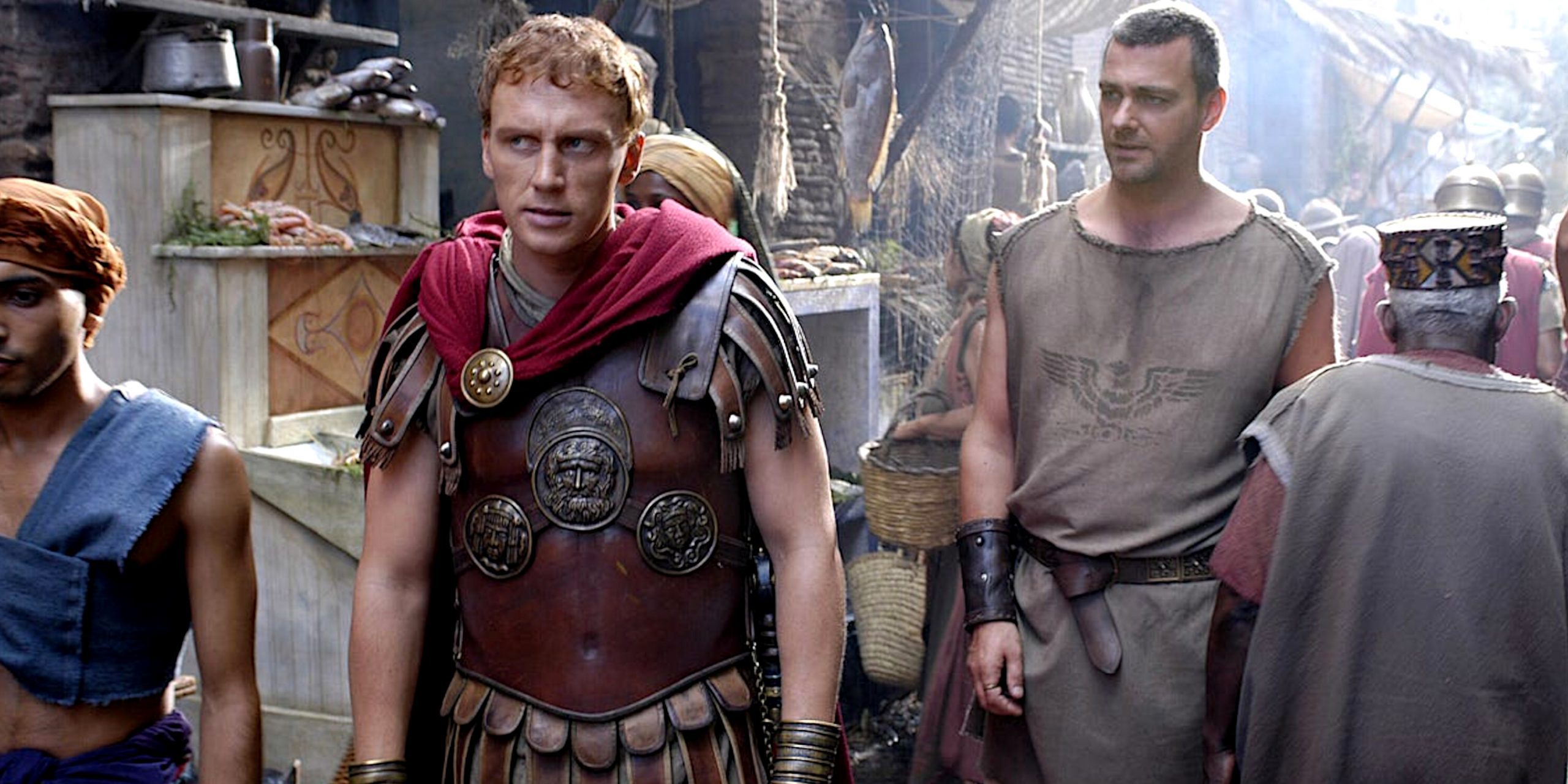
There are plenty of emperors, senators, and generals in Rome. They give speeches, start wars, and rewrite the rules of power. Yet the character who sticks with you, the one who feels most alive, is a sweaty legionary with poor impulse control and a surprising amount of heart. Titus Pullo should not work as the emotional core of an epic about the fall of the Republic. Somehow, he absolutely does.
A Man Powered by Instinct, Not Ideology
Pullo does not care much for politics, philosophy, or the long-term consequences of his actions. He reacts first and thinks later, if at all. In a series full of people constantly calculating their next move, that makes him feel almost rebellious. His honesty is not moral purity, it is emotional transparency. You always know where you stand with him, even when he is making a mess of everything.
This instinct-driven approach grounds the show. When the Senate debates abstract ideas like liberty or tradition, Pullo reminds you what those ideas look like on the street, or in a tavern, or on a battlefield covered in mud and bad decisions.
Violence With Consequences
Rome never treats Pullo’s violence as cool or effortless. He survives fights through brute strength and luck, but every act of violence leaves marks. Sometimes those marks are physical. More often they are emotional, especially when his actions hurt the few people he genuinely cares about.
That is where the writing gets clever. Pullo is not a cartoon brute. He is a product of Rome’s military machine, rewarded for killing efficiently and punished when that same instinct spills into civilian life. The show never lets you forget that this contradiction is baked into Roman society itself.
Pullo and Vorenus, Chaos Meets Control
Pullo only fully makes sense next to Lucius Vorenus. Vorenus is rules, duty, and self-denial. Pullo is appetite, impulse, and emotional honesty. Together they form a strange but believable friendship that carries the series through its most human moments.
Their bond works because it feels earned. They fail each other constantly. They forgive slowly. They stay loyal anyway. In a world obsessed with power shifts and betrayals, that kind of stubborn loyalty feels almost radical.
A Front-Row Seat to History
One of Pullo’s smartest narrative functions is his proximity to major events without fully understanding them. He interacts with figures like Julius Caesar and Octavian, but never becomes one of them. History happens around him, sometimes because of him, rarely for him.
This perspective keeps the story honest. Empires rise and fall, but most people experience history as confusion, rumour, and sudden loss. Pullo’s life improves and collapses almost at random, which feels closer to reality than any tidy political narrative.
A Performance That Refuses to Be Small
A lot of Pullo’s impact comes from the physicality and vulnerability brought by Ray Stevenson. He makes Pullo funny without turning him into comic relief, dangerous without making him monstrous, and emotional without begging for sympathy.
Small moments do the heavy lifting. A pause before an apology. A grin that fades when no one is watching. These details give Pullo weight, even when he is doing something ridiculous.
The Takeaway
Pullo matters because he reminds us that history is not just shaped by great men with speeches. It is shaped by people who punch first, regret later, love deeply, and survive mostly by accident. He is not noble in the traditional sense. He is sincere, which feels rarer.
Long after the politics blur together, Pullo remains vivid. He laughs too loud, bleeds too easily, and keeps going anyway. That stubborn humanity is why he ends up feeling like the heart of Rome.