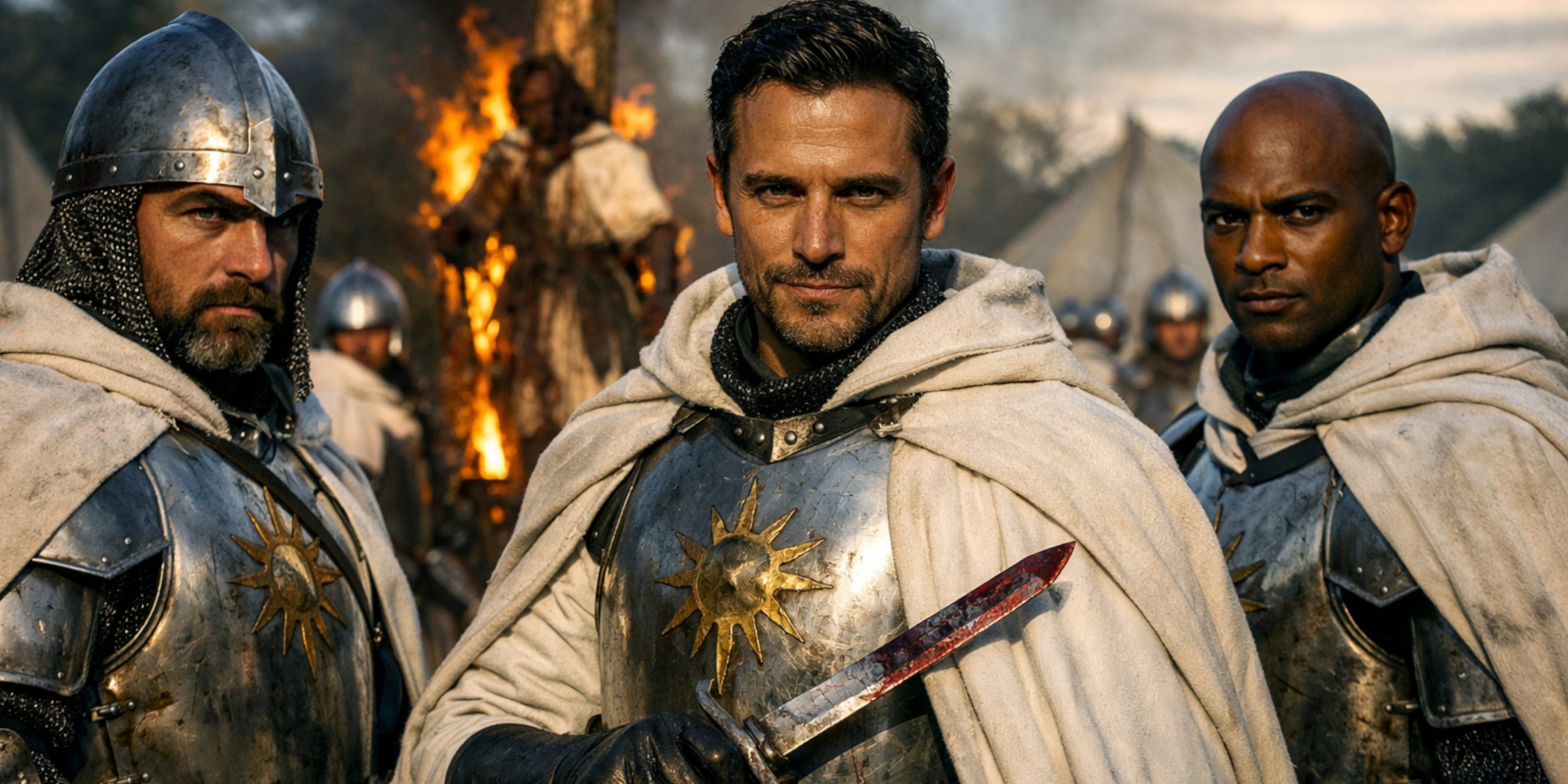
If you have spent any time in the world of The Wheel of Time or its television adaptation, you already know the Children of the Light are not here to make friends. They arrive in white cloaks, speak in calm tones about righteousness, and then proceed to arrest, intimidate, or execute anyone they suspect of consorting with the Shadow. Subtlety is not their strong suit.
They call themselves defenders of the Light. Others call them zealots. The truth sits somewhere uncomfortable in between.
Who Are the Whitecloaks?
The Children of the Light are a militant religious order devoted to rooting out Darkfriends and opposing the use of the One Power, especially by Aes Sedai. They operate across multiple nations yet answer to their own internal hierarchy, not to any king or queen.
Their core beliefs include:
- Absolute devotion to the Light
- Deep suspicion of Aes Sedai and channelers
- A conviction that moral corruption hides everywhere
- The idea that fear is a useful tool in maintaining purity
They present themselves as disciplined, morally upright, and incorruptible. In practice, they function as a paramilitary force with enormous autonomy. That autonomy is where things start to unravel.
Structure and Leadership
The Whitecloaks are led by a Lord Captain Commander, supported by Lord Captains and Questioners. The Questioners deserve special mention. They are effectively an internal intelligence and interrogation arm, responsible for extracting confessions from suspected Darkfriends.
In the television series, one of the most unsettling figures is Eamon Valda. Valda embodies the order’s cold self certainty. He smiles while committing atrocities and insists that he acts in service of the Light. It is a performance of piety layered over cruelty.
Leadership within the Children is officially based on merit and devotion. In reality, ambition and political manoeuvring shape much of their internal dynamics. The order claims to reject worldly corruption, yet power struggles are very much alive within their ranks.
Zealotry as Identity
The Whitecloaks define themselves by opposition. They are not just for the Light. They are against the Shadow, against Aes Sedai, against moral weakness, against doubt.
This absolutism gives them clarity. It also strips away nuance.
From a modern perspective, their worldview feels painfully familiar. When a group believes it alone holds moral truth, dissent becomes proof of guilt. The logic is circular. If you disagree, you must be compromised. If you are compromised, you must be punished.
It is frightening because it is coherent. They genuinely believe they are saving the world.
The Hypocrisy Problem
Here is where things get messy.
The Children preach purity and discipline. Yet we repeatedly see corruption, sadism, and political opportunism within their ranks. Questioners twist doctrine to justify torture. Leaders use the threat of the Shadow to consolidate influence.
Their hostility toward Aes Sedai is framed as righteous suspicion. But it often masks fear and resentment. The Whitecloaks reject the One Power while benefiting from the stability that channelers help maintain in the world.
There is also a social hypocrisy at play. The order condemns moral weakness, yet individual members struggle with pride, ambition, and personal vendettas. They claim to be guardians of truth while relying on forced confessions.
It is hard not to notice the gap between their ideals and their behaviour.
Relationship with the Wider World
The Whitecloaks operate across borders, often ignoring national sovereignty. Some rulers tolerate them out of political necessity. Others resent their interference.
Their presence creates tension wherever they go:
- Villages fear being accused of harbouring Darkfriends
- Aes Sedai see them as dangerous extremists
- Common people learn to keep their heads down
In theory, they fight for civilisation. In practice, they destabilise it through suspicion and intimidation.
That tension makes them compelling antagonists. They are not servants of the Dark One. They are convinced they are heroes.
Whitecloaks in the TV Adaptation
In the television adaptation of The Wheel of Time, the Whitecloaks are depicted with a sharper visual identity. Stark white cloaks, rigid posture, controlled speech. The aesthetic reinforces their self image of purity.
The show leans into their brutality, particularly through Valda’s arc. It makes their hypocrisy more explicit and arguably more uncomfortable. They are not cartoon villains. They are disturbingly human.
And that is the point.
Why They Matter
The Whitecloaks add a crucial moral complication to the story. The Shadow is a clear existential threat. The Children of the Light are something subtler. They represent what happens when fear of evil becomes an excuse for cruelty.
As a viewer or reader, you may find yourself thinking, “They are not entirely wrong.” Darkfriends do exist. The Shadow is real. That sliver of legitimacy is what gives them narrative weight.
But once righteousness becomes a weapon, it stops protecting people and starts controlling them.
Takeaway
The Whitecloaks are infuriating. They are self righteous, heavy handed, and often hypocritical. Yet they are also one of the most believable factions in the series.
They show how easy it is to slip from conviction into fanaticism. They remind us that moral certainty, when unchecked, can be as dangerous as the darkness it claims to oppose.
And honestly, that discomfort is what makes them so interesting.