A Romance Wrapped in Politics
The Spanish Princess presents itself as a sweeping Tudor romance, but beneath the candlelight and velvet gowns sits a question that refuses to go away. Is Catherine choosing love, or is she serving destiny?
From the first episode, the show frames Catherine not as a passive bride but as a woman who believes she is meant for England. That belief becomes the engine of the story. Romance matters, yes. But so does survival. So does power. So does the simple fact that queens do not get to choose freely.
And that tension is where the series earns its keep.
Catherine of Aragon: Romantic Idealist or Political Strategist?
Catherine of Aragon arrives in England with a fierce conviction that she will be queen. Historically, she was the daughter of formidable monarchs and raised to understand statecraft. The series leans into that upbringing, sometimes subtly, sometimes with a theatrical flourish.
Her marriage to Arthur is framed as both tender and strategic. After his death, the stakes shift. Her potential marriage to Henry becomes less about affection and more about necessity. Without it, her position collapses.
The show constantly asks us to decide whether Catherine’s choices are rooted in love for Henry or in her determination to fulfil what she sees as God’s plan. The answer is rarely simple.
At times, she seems genuinely smitten. At others, she looks like someone calculating the narrowest possible path to survival in a hostile court.
Henry VIII: Passion, Ego, and Expectation
Henry VIII in this series is young, charming, and slightly reckless. He represents the possibility of personal happiness for Catherine. He also represents risk.
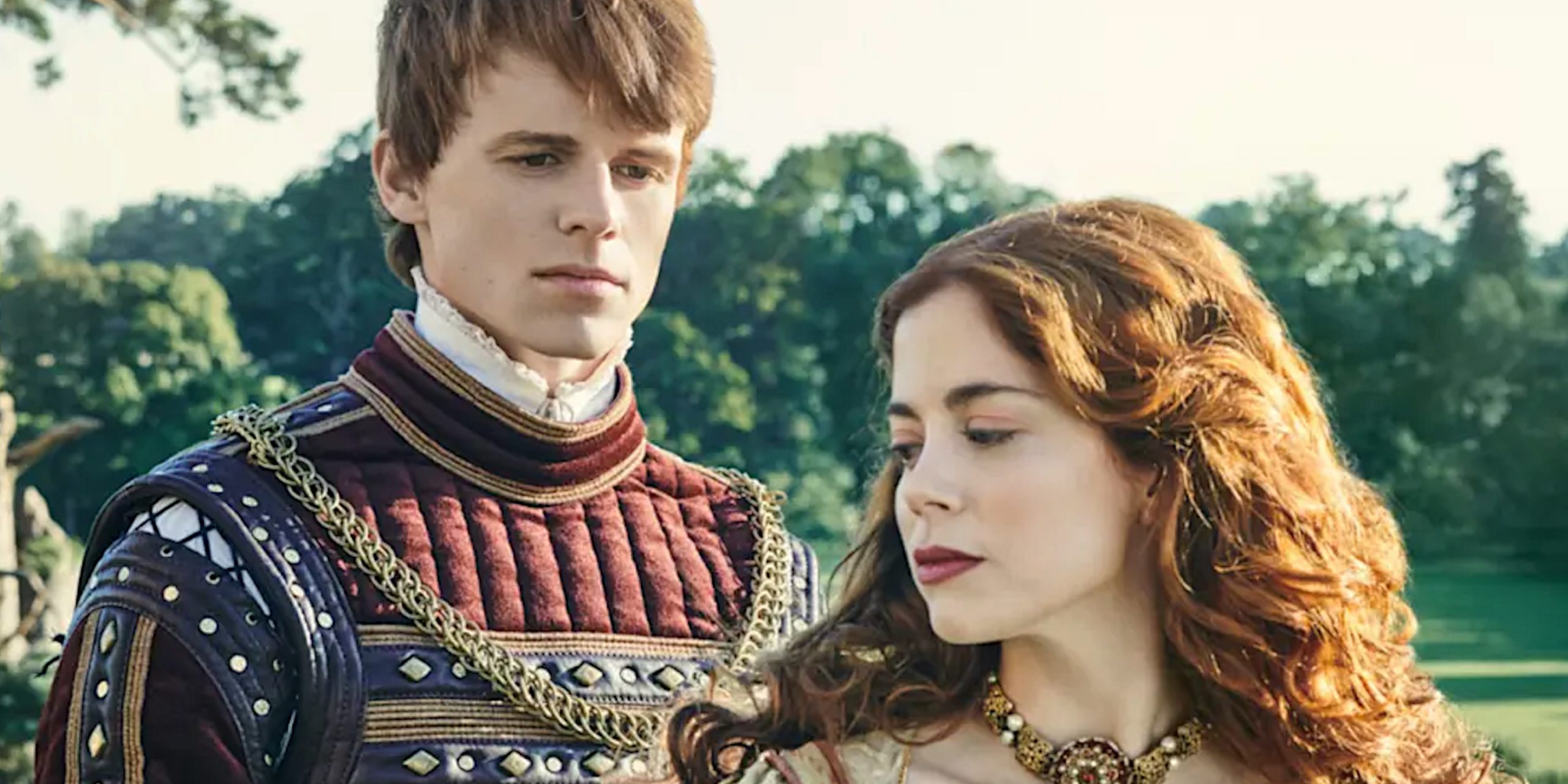
Their chemistry is played up, but the show never lets us forget that Henry’s affection exists within the rigid structure of Tudor politics. His desire can elevate Catherine. It can also undo her.
Henry’s conflict mirrors Catherine’s. He wants romance, but he also wants to be a powerful king. The early episodes portray him as torn between youthful feeling and dynastic obligation. Watching that tension unfold feels almost tragic when you know where history eventually leads.
Love as Performance
One of the cleverest threads in the show is how often love becomes something performed for others.
At court, affection is currency. A glance across a banquet table can shift alliances. A whispered promise can decide the future of nations. Catherine understands this quickly. Love is private, but marriage is public.
The series suggests that even genuine emotion cannot escape the theatre of monarchy. Catherine may feel deeply, but she must also persuade others that her love is righteous, legitimate, and politically convenient.
That is a heavy burden for anyone. Especially someone barely out of her teens.
Faith, Destiny, and Female Agency
The show places enormous weight on Catherine’s belief in divine purpose. She does not simply want the throne. She believes she is chosen for it.
This faith complicates the love versus duty debate. If she believes her marriage to Henry is God’s will, then romance and obligation merge into one. Love becomes part of destiny.
There is also a clear effort to highlight female agency. Catherine makes decisions. She argues. She resists. She adapts. Even when boxed in by court politics, she finds small ways to assert control.
The tension lies in how much control she truly has. Is she shaping events, or reacting to forces far larger than herself?
The Emotional Cost of Duty
Duty in this series is rarely noble in a straightforward way. It is exhausting. It isolates Catherine from her Spanish roots. It forces her to navigate suspicion, rivalry, and constant scrutiny.
The show is at its strongest when it slows down and lets us see the strain. Private tears behind closed doors carry more weight than any grand speech in a throne room.
There is something painfully modern about watching a young woman juggle ambition, expectation, and emotional vulnerability. The gowns may be sixteenth century. The pressure feels very current.
Does the Series Favour Love or Duty?
If pushed, the narrative seems to lean toward duty as the ultimate driver. Love adds colour and tension, but survival and sovereignty shape the decisions.
That said, the romance is not treated as trivial. It matters. It motivates. It complicates.
The series refuses to reduce Catherine to a stereotype. She is neither purely starry-eyed nor purely ruthless. She is both. That duality keeps the story engaging, even when historical outcomes are already known.
A Conflict That Defines a Queen
At its core, The Spanish Princess thrives on the friction between heart and crown. Catherine’s journey is compelling because it never settles into a tidy answer.
Love makes her human. Duty makes her formidable.
Watching her try to balance the two is what gives the series its emotional charge. It is messy, frustrating, occasionally romantic, and often ruthless.
And perhaps that is the point. In Tudor England, love could inspire a queen. Duty decided whether she survived.