Kingdom Come has always worn its homework proudly. Mud on boots, dented helmets, bad decisions made in smoky taverns. The second game digs deeper into the messier end of medieval Bohemia, drawing from real wars that were political, personal, and often embarrassingly chaotic. If you have ever wondered why the world feels tense even when nothing is happening, history is doing a lot of the heavy lifting.
A Kingdom on the Brink
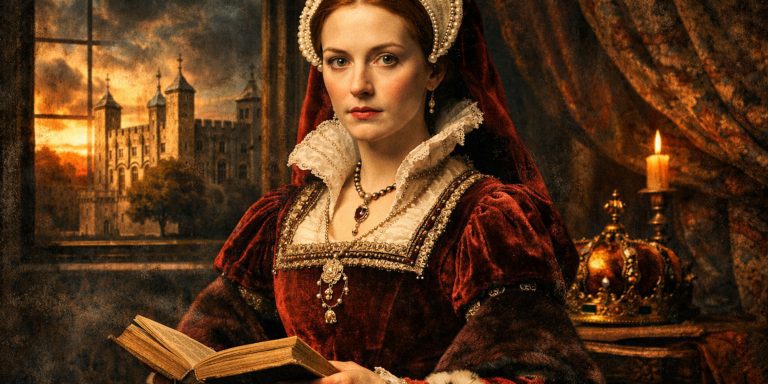
Bohemia at the turn of the fifteenth century was not a place at peace with itself. The death of Charles IV left a power vacuum that never really closed. His son Wenceslaus IV was king in name, but authority leaked out of Prague like ale from a cracked barrel. Local nobles armed themselves, towns fortified their gates, and everyone waited for things to get worse. They were not disappointed.
This background is not window dressing. It explains why authority in the game feels fragile and why every local dispute risks turning violent. Medieval people did not need a big war to justify carrying a weapon. They just needed uncertainty.
Sigismund and the Politics of Invasion
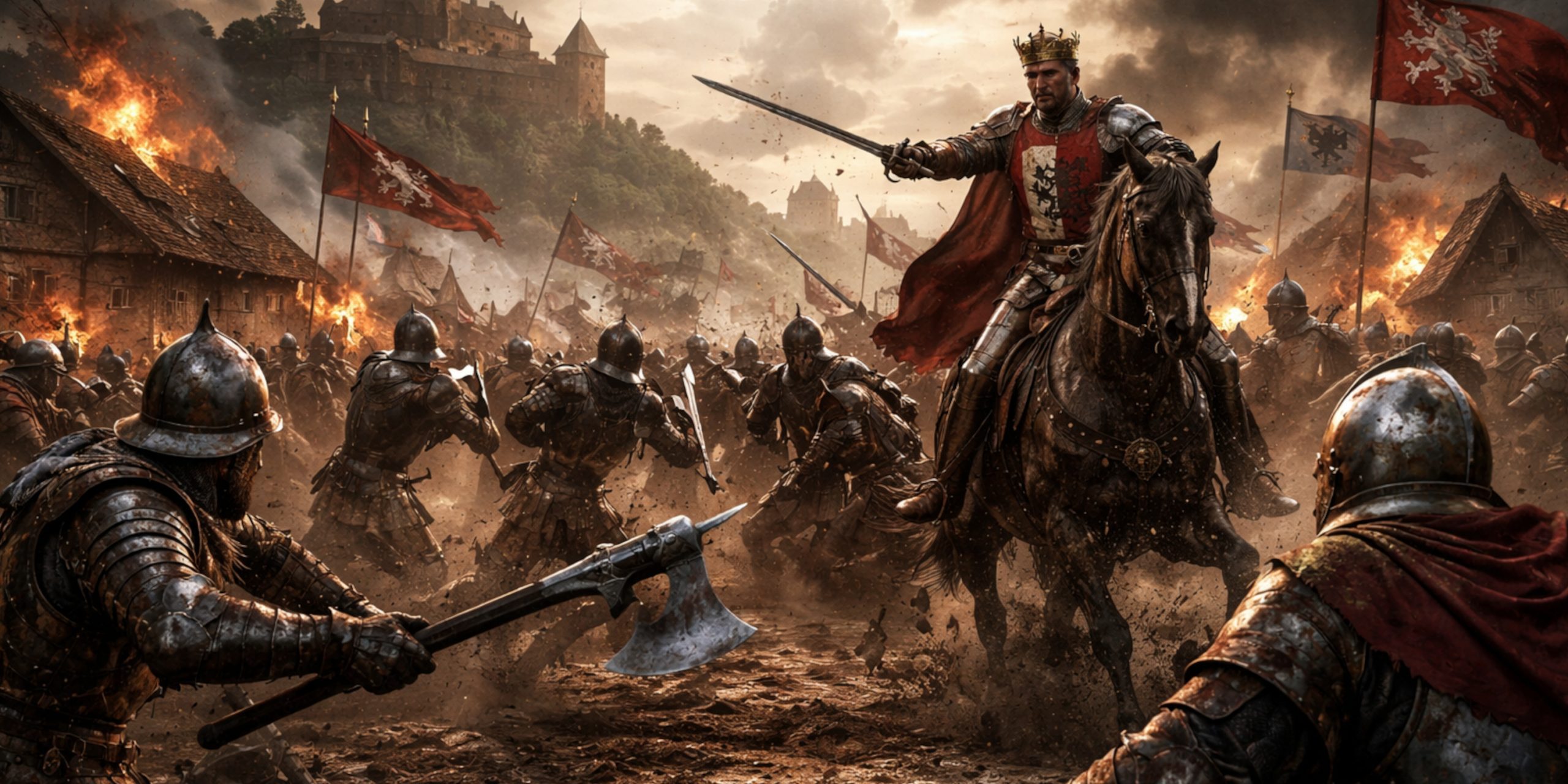
When Sigismund of Luxembourg marched into Bohemia in the early 1400s, he was not playing the moustache twirling villain. He was enforcing claims, settling scores, and trying to secure a crown he believed was rightfully his. His armies, heavy with Hungarian and foreign troops, were resented by locals and feared for good reason.
Kingdom Come leans into this tension. The feeling that soldiers do not quite belong, that loyalties are thin, that violence arrives wearing the wrong colours. That all comes straight from this period. Sigismund’s campaigns turned political rivalry into lived disaster for villages caught in between.
The Road to the Hussite Wars
The shadow hanging over the sequel is the build up to the Hussite Wars. These conflicts did not start as neat battle lines on a map. They began with sermons, public anger, and the execution of Jan Hus. Religious reform mixed with Czech identity, resentment of foreign influence, and a long list of grudges that were already overdue.
What matters for the game is timing. This is the moment before everything explodes. People argue in taverns, priests preach carefully, nobles hedge their bets. You can feel history clearing its throat.
Feudal Violence at Ground Level
Not every conflict inspiring the game involved kings and crusades. Local feuds were common and often brutal. Disputes over land, tolls, or inheritance could turn into armed standoffs that looked suspiciously like small wars. These clashes explain why the game is obsessed with jurisdiction, rights, and who technically owns which patch of forest.
When a quest spirals because two minor lords hate each other, that is not filler. That is medieval Bohemia operating exactly as designed, badly.
Why It Feels Uncomfortably Real
The brilliance of Kingdom Come is that it refuses to romanticise this period. Armour is expensive, travel is slow, and violence is risky even when you win. That tone comes directly from the history it draws on. This was not an age of clean heroes. It was an age of compromise, coercion, and survival.
Playing the sequel feels like standing in a moment where nobody knows what comes next, only that it will probably hurt. History agrees.
Seven Swords Takeaway
Kingdom Come: Deliverance 2 does not borrow from history for flavour. It builds its world on real instability, real power struggles, and real people who made decisions under pressure with limited information. The result is a game that feels tense even in silence.
If that makes you uneasy, good. Medieval Bohemia was not meant to be comfortable.
Watch the documentary: