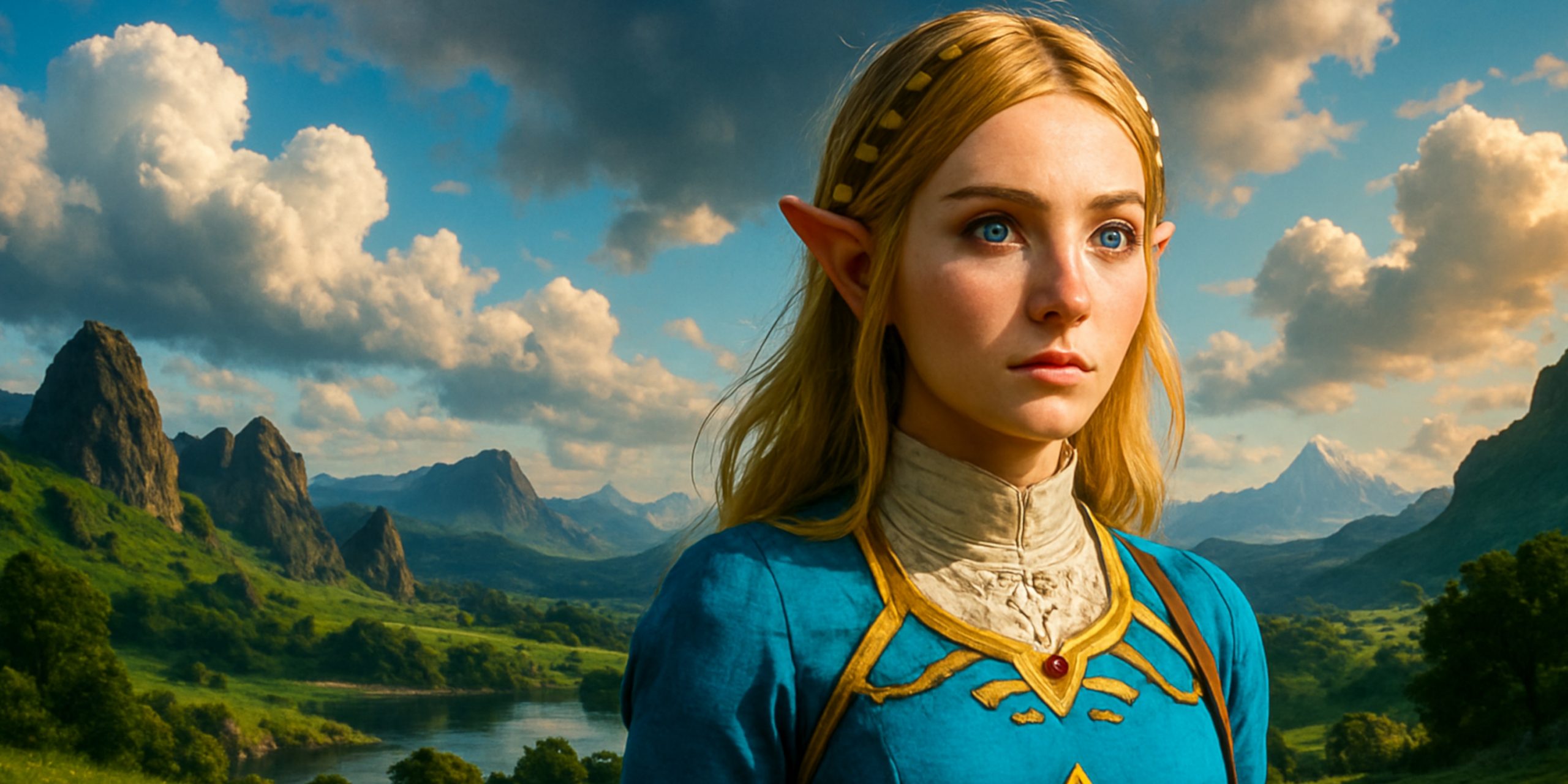
Trying to make sense of the Zelda timeline feels a bit like sorting laundry during a tornado. You can get most of it in the right place if you stay calm and accept that a few pieces will never behave. Still, once you dig into it you start to see patterns. Big, messy, brilliant patterns.
I remember thinking every Zelda game was just its own little story until Nintendo dropped the official timeline. It was like hearing a plot twist twenty years late. Suddenly everything did link together, even if the logic was hanging on with one hand and a prayer.
How the Timeline Works
Everything splits because of Ocarina of Time. That game plays with time travel so aggressively that reality fractures into three versions of history. One where Link fails, one where the adult world continues after his victory, and one where his childhood is restored. It is dramatic but also perfectly in character for a kid armed with a magic sword and very little supervision.
Timeline One
The Decline Timeline
This is the branch where Link loses to Ganon in Ocarina of Time. Yes, that actually counts. It leads to a harsher version of Hyrule where the classic adventures take place. There is a sense of ruin across this line, as if the world has been patching itself together ever since the big loss.
Games in this timeline:
- A Link to the Past
- Oracle of Seasons and Oracle of Ages
- Link’s Awakening
- The Legend of Zelda
- Zelda II The Adventure of Link
The tone is rugged and traditional. It feels like old Hyrule grinding its teeth and carrying on anyway.
Timeline Two
The Adult Timeline
Here, Adult Link defeats Ganon then vanishes back to his childhood. The world he leaves behind tries its best, fails, and ends up underwater thanks to divine intervention. That is how you get The Wind Waker which treats a drowned kingdom like a backdrop for a bright seafaring adventure.
Games in this timeline:
- The Wind Waker
- Phantom Hourglass
- Spirit Tracks
This timeline has the lightest touch. It feels like a myth retold as a summer holiday, even though its history is pure tragedy when you look closely.
Timeline Three
The Child Timeline
In this path Link returns to childhood, warns Zelda, and stops Ganon early. This creates a quieter world, although not exactly a peaceful one. Majora’s Mask picks up immediately and throws Link into one of the strangest, most emotional stories in the series.
Games in this timeline:
- Majora’s Mask
- Twilight Princess
- Four Swords Adventures
There is a grounded energy here, almost as if the characters remember the doom they avoided but still feel the weight of it.
Where Breath of the Wild Sits
Nintendo decided to play mysterious again and placed Breath of the Wild far beyond the three original timelines. It sits in a distant era where everything from past versions of Hyrule could have happened. That gives the developers freedom to borrow ideas from any branch while avoiding strict labels.
Think of it as the timeline finally becoming flexible enough to breathe.
Why the Timeline Matters
Part of the magic of Zelda comes from how each era reshapes the familiar patterns of Link, Zelda, and Ganon. You get cycles of heroism that change in tone but keep the same heartbeat. Whether the world is flooded, cursed, shattered, or rebuilt, the legend carries on.
Understanding the timeline does not change how the games play, but it deepens the sense that Hyrule has a long memory. Everything feels a bit more ancient and alive when you know where each story lands.
Seven Swords Takeaway
The Zelda timeline is chaotic in the way only a beloved series can be. It is confusing, dramatic, occasionally unhinged, and somehow still meaningful. Once you stop looking for perfect logic and start appreciating the mythology, everything falls into place.
If you are ever lost, you are in good company. Even Nintendo needed a full book to explain it. The important part is that every branch, every era, every version of Link keeps the story going. That is what gives the series its heart.
Watch the documentary: