The Sumerian gods sit at the root of recorded religion. Long before scripture hardened into canon, the people of southern Mesopotamia were already arguing with their gods, bargaining with them, blaming them, and trying to read their moods in floods, plagues, and political collapse. What survives comes from clay tablets rather than temples, fragments rather than systems. That makes Sumerian religion feel oddly modern. It is unfinished, inconsistent, and deeply human.
This is everything we can reasonably say, without pretending the gaps do not exist.
Who the Sumerians Thought the Gods Were
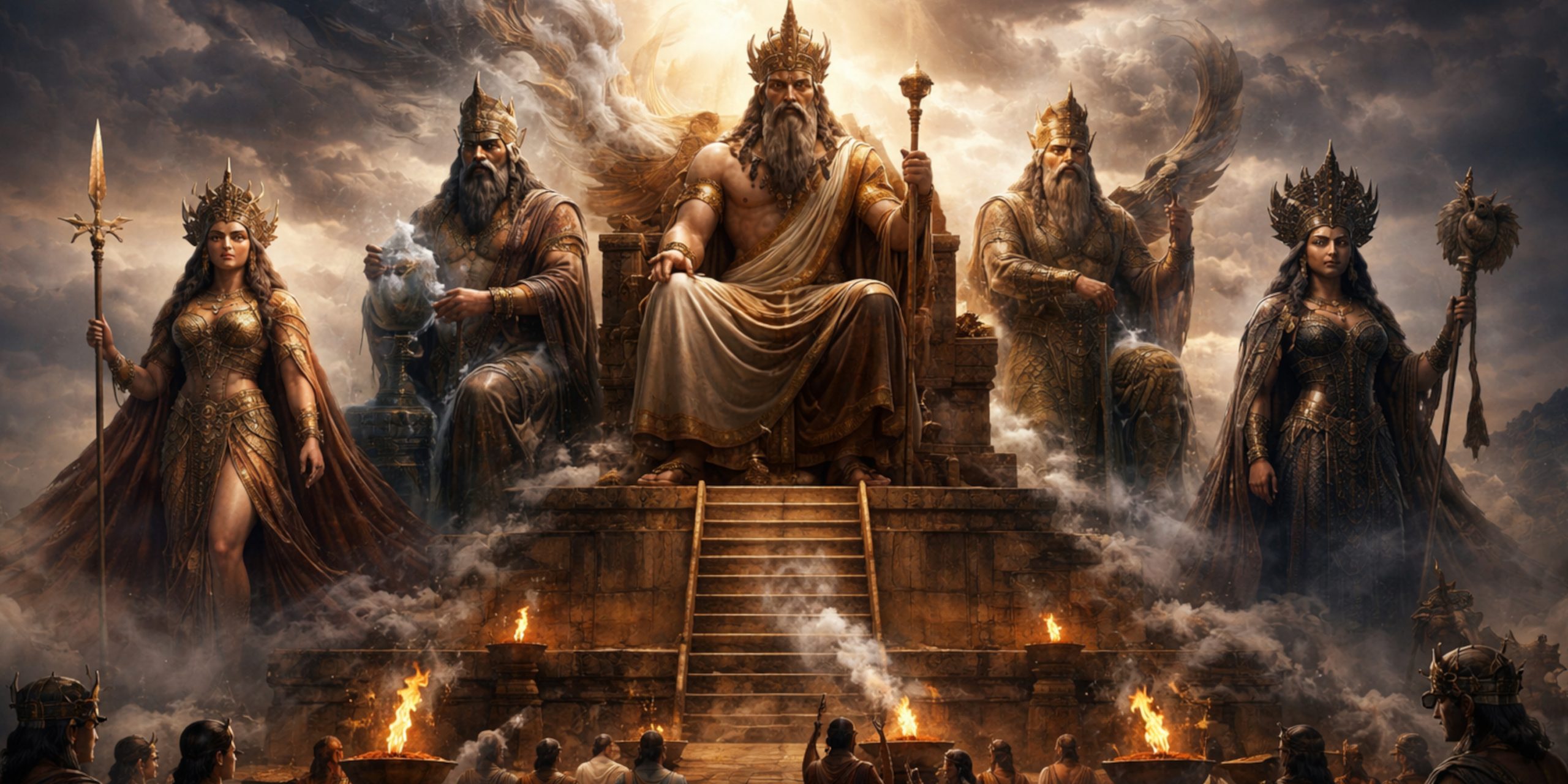
The Sumerians did not imagine distant, abstract deities. Their gods had appetites, tempers, rivalries, and blind spots. They were powerful but not perfect. A city’s god was not just a symbol, but a political force with real consequences. If your city fell, your god had failed, been overpowered, or simply stopped caring.
At the top sat Anu, the sky god, remote and aloof. Authority flowed from him, but he rarely intervened directly. Real power on earth belonged to Enlil, master of wind, storms, and royal legitimacy. Enlil’s favour made kings. His anger erased cities.
This hierarchy was not neat. Gods overlapped in function, stole each other’s roles, and evolved as cities rose and fell. Theology followed politics, not the other way around.
The Gods and the Structure of the World
The Sumerian cosmos was divided vertically. Heaven above, earth in the middle, the underworld below. Humans existed in the narrow band between forces they could never fully control.
Enki stood out as the most sympathetic figure. God of freshwater, wisdom, and clever solutions, Enki routinely helped humans survive disasters caused by other gods. Flood myths, divine warnings, and quiet acts of sabotage all point back to him. As a historian, I find Enki fascinating because he feels like a god invented by people who knew the system was rigged and wanted a loophole.
The underworld belonged to Ereshkigal, a grim but not malicious ruler. Death was not punishment or reward. It was simply exile from the living world, dusty, silent, and final. No judgement. No redemption arc.
War and Divine Violence
War
War was not an aberration in Sumerian thought. It was expected. Cities fought because gods fought. Victory meant your god had prevailed. Defeat meant abandonment.
Inanna embodies this brutal honesty. She ruled love, sex, fertility, and war without apology. To modern readers this feels contradictory. To the Sumerians it made perfect sense. Creation and destruction were inseparable. Inanna could bless a marriage one day and sack a city the next.
War gods like Nergal reveal something colder. Violence was not heroic. It was contagious. Once unleashed, it spread famine and disease behind it. Sumerian war hymns celebrate conquest, but they also read like warnings written after the damage was done.
Disease, Plague, and Divine Neglect
Disease
Disease was rarely framed as random. Illness meant divine displeasure, spiritual contamination, or ritual failure. The gods did not need to act directly. Withholding protection was enough.
Nergal again looms large here, blurring the line between battlefield death and epidemic collapse. Plagues were understood as weapons that slipped free of their handlers. The gods caused them, but even the gods did not always control the outcome.
Medical texts from Mesopotamia show priests and healers working side by side. Prayer and diagnosis were not competing systems. They were parallel attempts to negotiate with an unpredictable universe.
Hunger, Floods, and the Fear of Empty Granaries
Famine
Famine terrified the Sumerians more than war. An enemy army could be fought. A failed harvest meant slow extinction.
The gods controlled water, and water controlled everything. Floods destroyed crops. Droughts starved cities. Enlil’s storms could bring abundance or annihilation. Enki’s rivers could sustain life or drown it.
Famine was often interpreted as a sign that rituals had failed or that kings had lost divine favour. This belief placed enormous pressure on rulers. A hungry city was proof of cosmic disorder, not just poor administration.
Humans and the Purpose of Creation
Humans were not created for love or enlightenment. They were created to work. To farm, maintain temples, and feed the gods through offerings. This idea unsettles modern readers, but it explains much about Sumerian anxiety. If humans existed to serve the gods, then suffering was not a mistake. It was inefficiency, neglect, or rebellion being punished.
And yet, the myths constantly show humans outlasting divine tantrums. Cities are rebuilt. Knowledge survives. Even after floods and famines, life resumes. There is resilience baked into these stories that often gets overlooked.
Worship, Temples, and Daily Life
Temples were economic engines as much as sacred spaces. They stored grain, employed workers, and anchored city identity. The ziggurat was not a place for congregational worship. It was a house for the god, and access was restricted.
Ordinary people interacted with the divine through small rituals, household prayers, and local spirits. Religion was constant but practical. You did not seek salvation. You sought stability.
What the Sumerian Gods Reveal About the World They Lived In
As a historian, I find Sumerian religion strikingly unsentimental. The gods do not promise justice. They promise power. Survival depends on attention, ritual, and luck. There is no final reckoning where wrongs are righted.
That worldview makes sense in a land shaped by rivers that could nurture or destroy without warning. The Sumerian gods reflect a society that knew control was temporary and order fragile.
In that sense, they still feel uncomfortably relevant.
Watch the documentary: