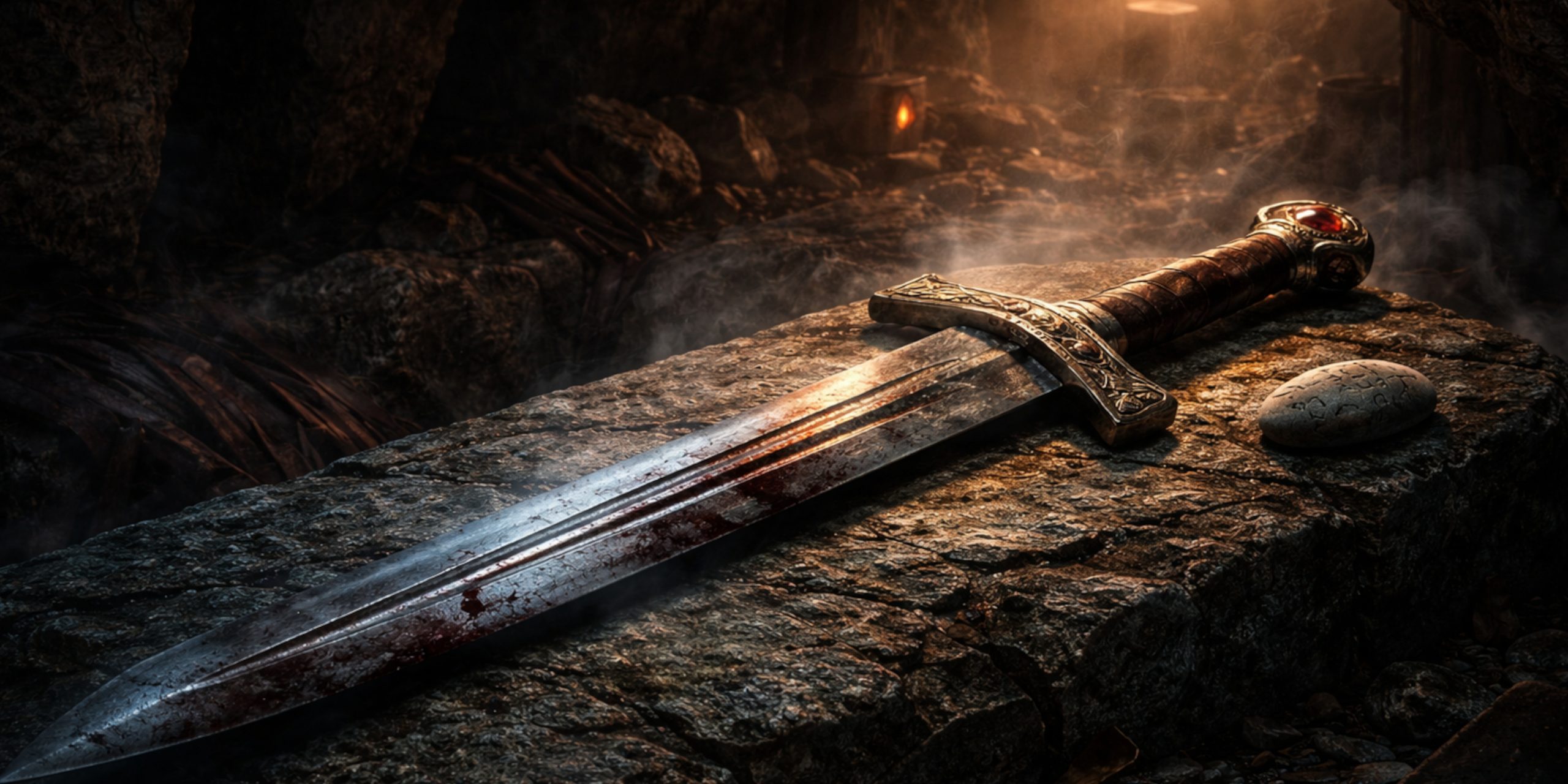
Few swords in the Norse world carry a reputation quite like Skofnung. It is not simply described as sharp or well made. It is spoken of with caution. With ritual. With rules. In the sagas, Skofnung is less a weapon and more a presence, tied to kingship, vengeance and fate.
As a historian, I approach it with care. Skofnung exists in literature rather than archaeology. Yet the way it is described tells us something very real about how the Viking Age understood power and legitimacy. When a sword is said to hum before battle and refuse to be drawn in sunlight, we are no longer dealing with steel alone. We are dealing with belief.
The Saga Origins of Skofnung
Skofnung appears most prominently in Hrólfs saga kraka, a legendary saga centred on the Danish king Hrólf Kraki. According to the text, Skofnung was the finest of all swords in the northern lands. It belonged to Hrólf and was buried with him after his death.
Later, the sword is retrieved from his burial mound by the Icelandic hero Skeggi of Midfirth. This episode is significant. The breaking of a mound to retrieve a weapon is not mere treasure hunting. It is symbolic inheritance. Skeggi does not just take a blade. He claims a fragment of royal authority.
The saga tradition does not treat Skofnung as an ordinary heirloom. It is guarded by the spirits of Hrólf’s twelve berserkers. It resists unworthy hands. It demands respect. That framing alone reveals how medieval Scandinavians linked weapons with identity and destiny.
The Sword’s Legendary Properties
The sagas attribute several remarkable qualities to Skofnung:
- It was said to be the sharpest sword in the North.
- It would emit a sound, almost a singing note, before battle.
- It must not be drawn in the presence of women.
- The sun must not shine upon its hilt.
- Its wounds would not heal unless treated with a special stone that accompanied the blade.
These restrictions matter. They reflect ritual purity and taboo. Many elite swords in Indo European myth carry conditions. Skofnung fits neatly into that tradition.
The “healing stone” in particular is fascinating. It implies that the sword’s harm was supernatural rather than purely physical. To counter it required not skill, but knowledge. That suggests a worldview in which objects could carry spiritual force.
Historical Context: Viking Age Swords
While Skofnung itself has not been identified archaeologically, we can place it within the broader tradition of Viking Age swords.
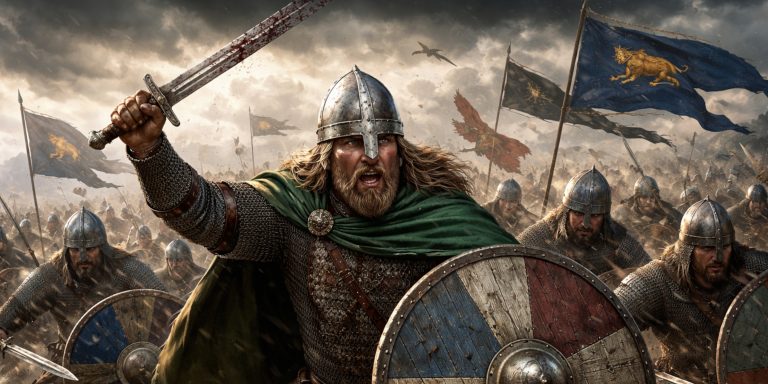
Most high status blades of the ninth to eleventh centuries were pattern welded or forged from imported Frankish steel. Many carried inscriptions such as ULFBERHT. Hilts were often richly decorated with silver, copper alloy or gold inlay. These were prestige objects, sometimes worth a fortune in silver.
If Skofnung reflects reality at all, it likely resembled a high quality Petersen Type H or similar elite sword. Such weapons were balanced for cutting and capable of severe wounds, especially against lightly armoured opponents.
Yet the sagas exaggerate. They elevate craftsmanship into magic. That transformation tells us that an exceptional blade, rare and deadly, easily became legendary in oral tradition.
Burial, Retrieval and Kingship
One of the most telling aspects of Skofnung’s story is its burial with Hrólf Kraki. Grave goods in the Viking Age were common among elites. Swords symbolised status and martial authority. To be buried with one reinforced identity in death.
The later recovery of the sword by Skeggi echoes a wider saga theme: reclaiming power from the past. Breaking into a burial mound was both sacrilegious and heroic. It signalled courage and ambition.
From a historian’s perspective, this reflects Icelandic society in the thirteenth century when many sagas were written. These were communities deeply invested in ancestry, honour and inherited prestige. Skofnung becomes a narrative device through which legitimacy is transferred.
Was Skofnung Real?
This is the question that always surfaces.
There is no confirmed archaeological sword labelled Skofnung. No inscription. No museum case. The name survives only in literature.
Yet that does not make it meaningless. Many legendary swords likely began as real objects. An especially fine blade owned by a powerful king could easily inspire generations of retelling. Over time, memory sharpens the edge further.
As a historian, I suspect there may once have been an exceptional sword associated with a royal Danish lineage. Whether it hummed before battle is another matter entirely.
Cultural Legacy
Skofnung occupies a place alongside other legendary European swords, though it is less internationally famous. Within Norse literature, however, it stands as a benchmark of excellence.
Its story reinforces several Viking Age values:
- Kingship tied to martial strength
- The sacred nature of heirlooms
- The blurred boundary between magic and craftsmanship
- The moral weight of ownership
Swords were not disposable tools. They were named, inherited and feared. Skofnung embodies that relationship between man and weapon in its purest literary form.
Seven Swords Takeaway
Skofnung is not preserved behind glass. It survives in words. That might be fitting. The sagas themselves were crafted with care, shaped by storytellers who understood drama and memory.
When I read of Skofnung singing before battle, I do not picture sorcery. I picture anticipation. The tightening of a grip. The scrape of steel leaving a scabbard. The moment before violence breaks loose.
That is enough to make the legend endure.
In the end, Skofnung tells us less about metallurgy and more about meaning. And sometimes, that is the sharper edge.