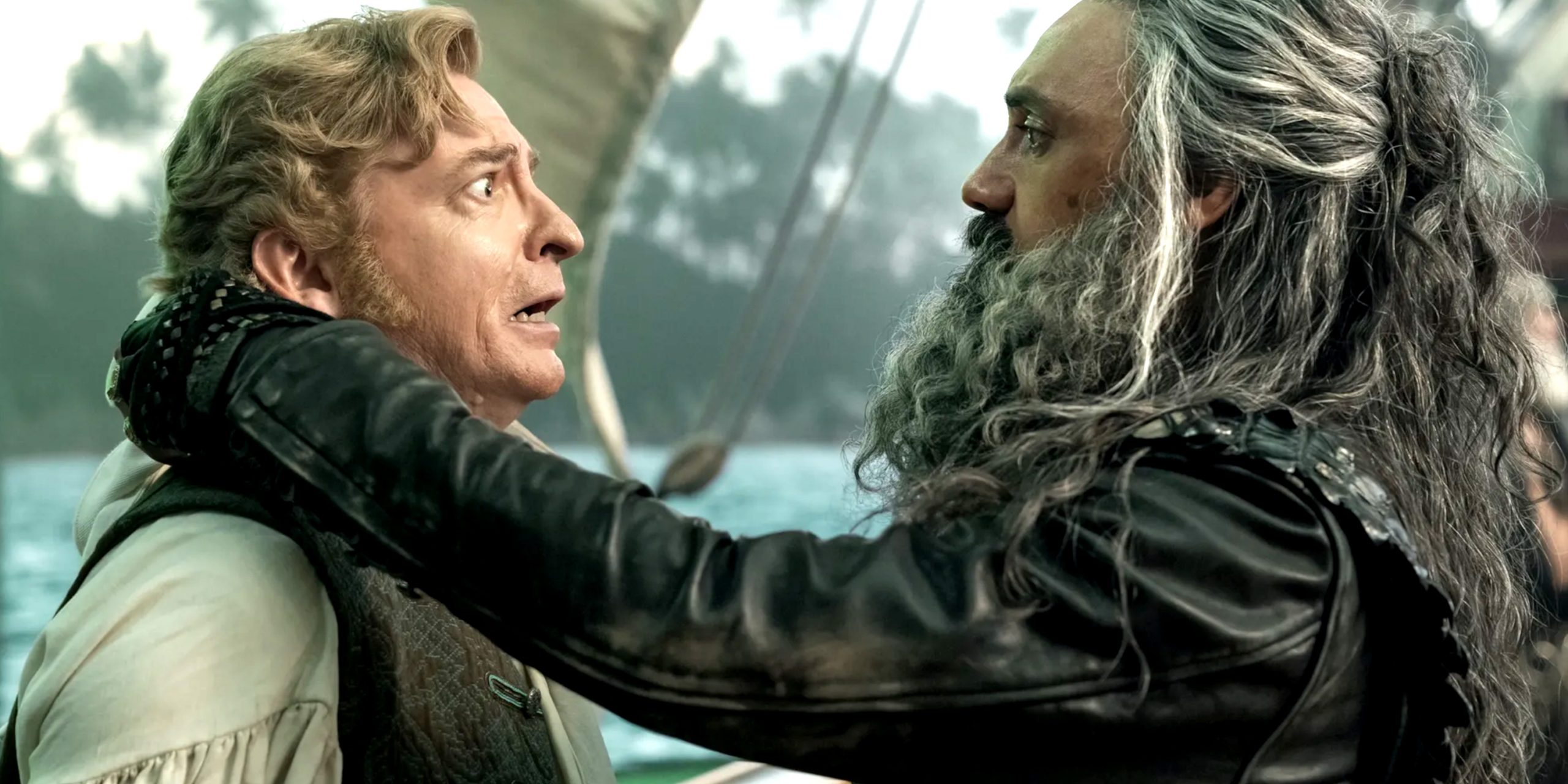
When Our Flag Means Death first sailed onto HBO Max in 2022, few expected a pirate comedy to become one of the most important queer love stories on modern television. What started as a quirky satire of 18th-century piracy evolved into a heartfelt exploration of gender, identity, and emotional vulnerability that genuinely changed the landscape of LGBTQ+ representation on screen.
It wasn’t just about Stede Bonnet and Blackbeard falling in love, it was about seeing them exist in that love.
Breaking the Pattern of Queerbaiting
For decades, queer audiences have learned to squint between the lines, searching for scraps of coded subtext in “close friendships” or “deep bonds” that networks were too afraid to call what they were. OFMD smashed that pattern wide open.
- It gave us two male leads whose relationship was openly romantic.
- It didn’t rely on innuendo, tragedy, or last-minute confession scenes.
- It let queerness be joyful, messy, and ordinary all at once.
By the time Taika Waititi’s Blackbeard whispered “You wear fine things well” to Rhys Darby’s Stede Bonnet, the fandom collectively realised: this wasn’t queerbait, it was a queer story told with full sincerity.
Representation Beyond Labels
What makes Our Flag Means Death remarkable isn’t just that it’s gay, it’s that it’s multidimensional. The show refuses to flatten queerness into a single narrative.
- Jim (played by Vico Ortiz) gave visibility to nonbinary identities in a way that felt natural, not performative.
- Oluwande’s tenderness towards both Jim and his crew showed that masculinity could be kind, not stoic.
- The crew itself became a floating microcosm of found family, mutual care, and queer liberation.
Rather than turning queerness into a statement, the series normalised it as a shared human experience, one that could be funny, awkward, violent, and tender, sometimes all at once.
A Rare Blend: Comedy, Camp, and Care
There’s something beautifully rebellious about using comedy to tell queer stories. Historically, queer characters were either tragic or sidelined. OFMD refused both extremes. It used absurdity and camp to challenge masculine stereotypes while wrapping its message in warmth.
Taika Waititi and David Jenkins understood that vulnerability can be radical. By making pirates, the ultimate symbols of chaos and masculinity, soft, heartbroken, and emotionally articulate, the show turned toxic archetypes inside out.
The humour never diluted the depth; it amplified it.
Cultural Impact and Fandom Power
When Season 1 ended, social media became a storm of fan art, essays, and heartbreak. The community that formed around OFMD wasn’t just a fandom, it was a movement of collective joy. For many queer viewers, the show was the first time they saw love like theirs presented without cynicism.
And when the show’s future became uncertain, that same fandom mobilised with petitions, campaigns, and grassroots support, proving that visibility isn’t just cultural, it’s communal.
The Legacy of Our Flag Means Death
Even with its short run, OFMD has already earned its place alongside other groundbreaking LGBTQ+ series like Pose, Heartstopper, and Gentleman Jack. What sets it apart is how it used historical fiction and humour to push representation forward without sacrificing authenticity.
It redefined what a love story could look like for queer characters on mainstream TV, messy, imperfect, hopeful, and deeply human.
If queerness has often been treated as something to be explained or justified, Our Flag Means Death simply said, “No, it just is.”