Few objects carry the weight of Japanese history quite like the Honjo Masamune. It was not just a blade of rare quality but a symbol of authority, continuity, and taste. Its disappearance after the Second World War has left historians with fragments, testimonies, and a lingering sense that one of Japan’s most important cultural objects slipped through our fingers at exactly the wrong moment.
As a historian, I find this case compelling not because it promises a neat solution, but because it exposes how easily heritage can vanish when law, language, and upheaval collide.
What Was the Honjo Masamune?
The Honjo Masamune was the finest known work of Masamune, the Kamakura period swordsmith whose blades sit at the absolute summit of Japanese metallurgy. It later became the personal heirloom of the Tokugawa shoguns, passing from Tokugawa Ieyasu through successive rulers as a quiet but unmistakable sign of legitimacy.
Unlike battlefield swords that earn fame through bloodshed, this blade’s power lay in what it represented. It was a statement that authority had both lineage and restraint.
Arms and Armour Context
Masamune swords were not ornamental in the shallow sense. They were weapons perfected to an almost unsettling degree.
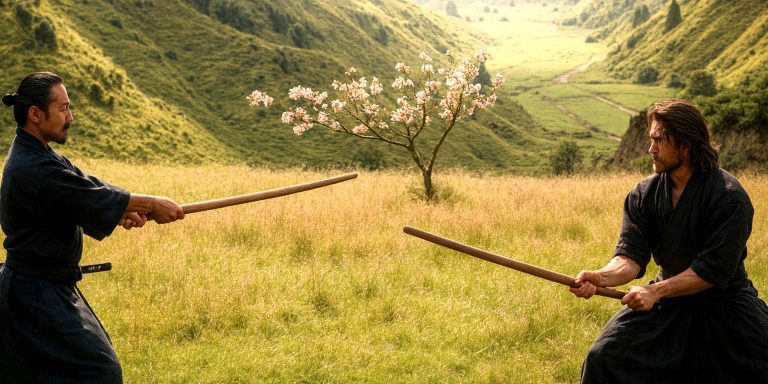
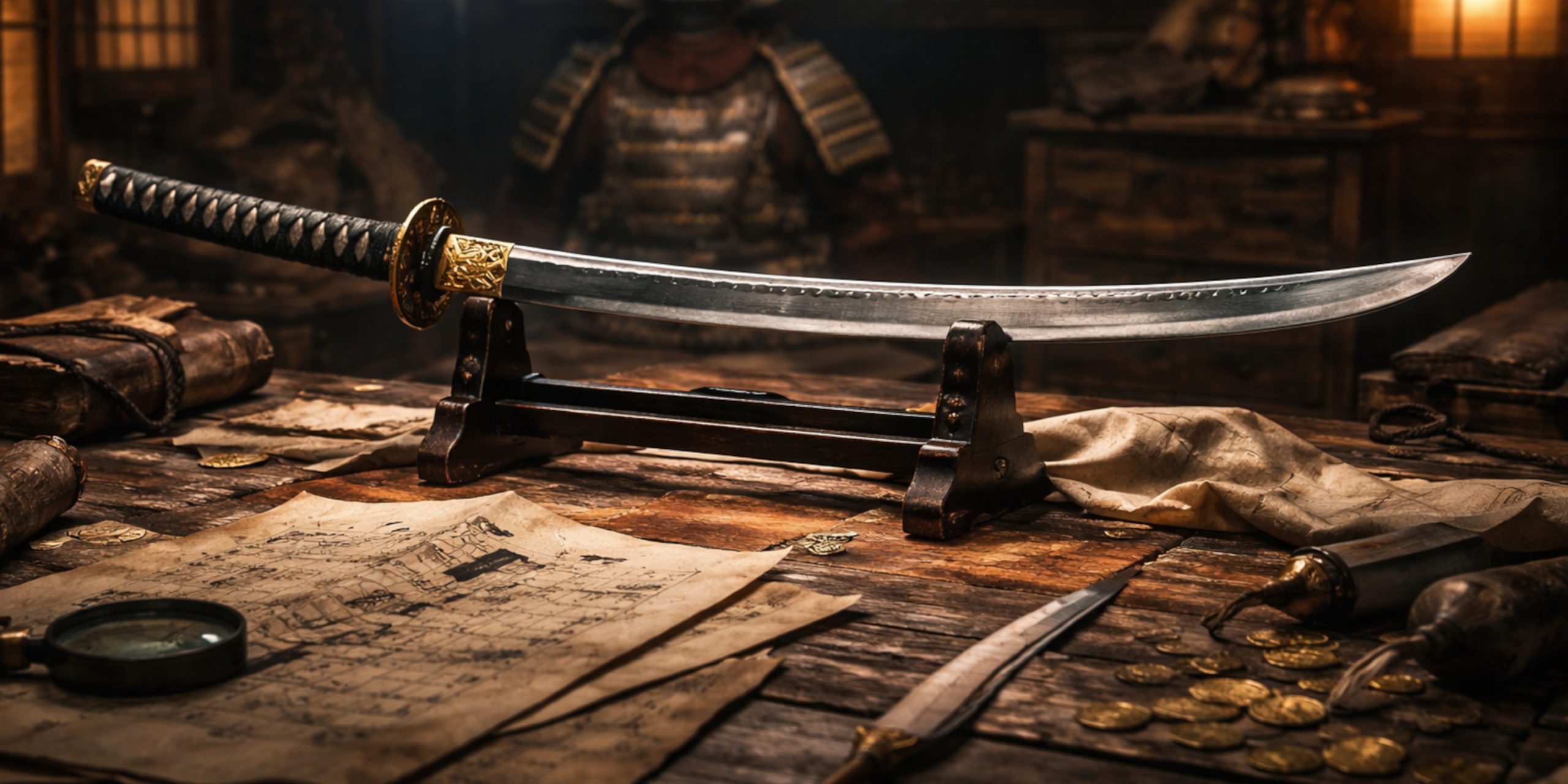
The Honjo Masamune would have been a long katana with a subtle but complex hamon, created through differential hardening that balanced edge retention with shock resistance. The steel showed refined jihada grain, a hallmark of Masamune’s mastery.
In Tokugawa hands, the sword would have been mounted in formal koshirae rather than battlefield fittings. Lacquered scabbards, understated metalwork, and subdued silk wrappings reflected Edo ideals where control mattered more than aggression. Armour of the period followed the same philosophy. Function remained, but visual restraint signalled authority far better than excess.
Battles and Military Acumen
The Honjo Masamune earned its name earlier, during the Muromachi period, after a clash involving Honjo Shigenaga. Legend says the blade split his helmet yet spared his life, a story that borders on folklore but fits Masamune’s reputation for controlled lethality.
Under the Tokugawa, the sword was no longer carried into combat. That itself tells us something important. Tokugawa military acumen rested on preventing war rather than winning it. The blade became a relic of strength held in reserve, much like the shogunate’s armies themselves.
In that sense, the Honjo Masamune reflects one of history’s quiet truths. The most successful military systems often fight the fewest battles.
The Disappearance After 1945
The sword’s trail ends in December 1945. Tokugawa Iemasa, recognising the danger of confiscation, surrendered several family blades to the occupation authorities. Records suggest the Honjo Masamune was handed over at a police station and logged under an American name, often cited as “Sgt. Coldy” or similar variants.
From there, silence.
No confirmed shipping records. No museum intake. No private collection that has stood up to scrutiny. If the sword left Japan, it did so anonymously, stripped of the context that made it recognisable.
This is where frustration sets in. The loss was not malicious. It was procedural. History rarely survives bureaucracy intact.
Where to See Related Artefacts Today
While the Honjo Masamune itself remains missing, other Masamune works can be seen in Japan. Institutions such as the Tokyo National Museum preserve blades attributed to his school, allowing close study of his techniques and aesthetics.
Several Tokugawa heirloom swords also survive in regional museums and shrine collections. They lack the singular fame of the Honjo Masamune, but together they help reconstruct the cultural environment that produced it.
Seeing these blades in person is sobering. Photographs flatten what is, in reality, an object that changes with light, angle, and distance.
Latest Archaeology and Research
No archaeological discovery has yet reopened the trail. Research remains archival rather than excavational. Japanese scholars continue to re-examine occupation records, police logs, and customs paperwork from late 1945, hoping for a misfiled clue.
There is also ongoing metallurgical work on confirmed Masamune blades, refining criteria that might help identify the Honjo if it ever surfaces. This matters because many swords are misattributed, and wishful thinking has produced more false leads than genuine progress.
Still, the door is not closed. Lost objects have a habit of reappearing when estates change hands or private collections come to light.
A Historian’s Closing Thoughts
The Honjo Masamune fascinates me because its absence tells a story as clearly as its presence once did. It reminds us that cultural loss does not always come from iconoclasm or fire. Sometimes it comes from paperwork, language barriers, and a moment when no one quite realises what is being handed over.
If the sword is ever found, it will not simply be a triumph of discovery. It will be a test of how seriously we take shared heritage in a world still shaped by the aftermath of war. Until then, the mystery remains unresolved, and perhaps that discomfort is part of its legacy.
Watch the documentary: