Few mounted forces in medieval history earned such consistent respect as the cavalry of the Mamluk Sultanate. From the mid thirteenth century until the Ottoman conquest in 1517, these professional slave soldiers dominated the eastern Mediterranean battlefield. They defeated Mongol armies that had shattered empires, broke Crusader strongholds along the Levantine coast, and built a military state in Egypt and Syria that revolved around the horse.
Origins and Social Structure
The term mamluk means owned or possessed. Most were purchased as young boys from the steppe regions north of the Black Sea or from the Caucasus. Kipchak Turks and Circassians formed the backbone of the early and later Mamluk corps. After conversion to Islam, they underwent rigorous training in horsemanship, archery, and close combat.
Under the Sultan Baybars, the system matured into a formidable military machine. The Mamluk state functioned almost as a cavalry aristocracy. Loyalty centred on the regiment and its patron rather than bloodline, though over time dynasties formed despite the theoretical prohibition on hereditary succession.
It was a paradoxical system. Enslaved warriors, fiercely proud, who seized sovereignty and guarded it jealously.
Organisation and Training
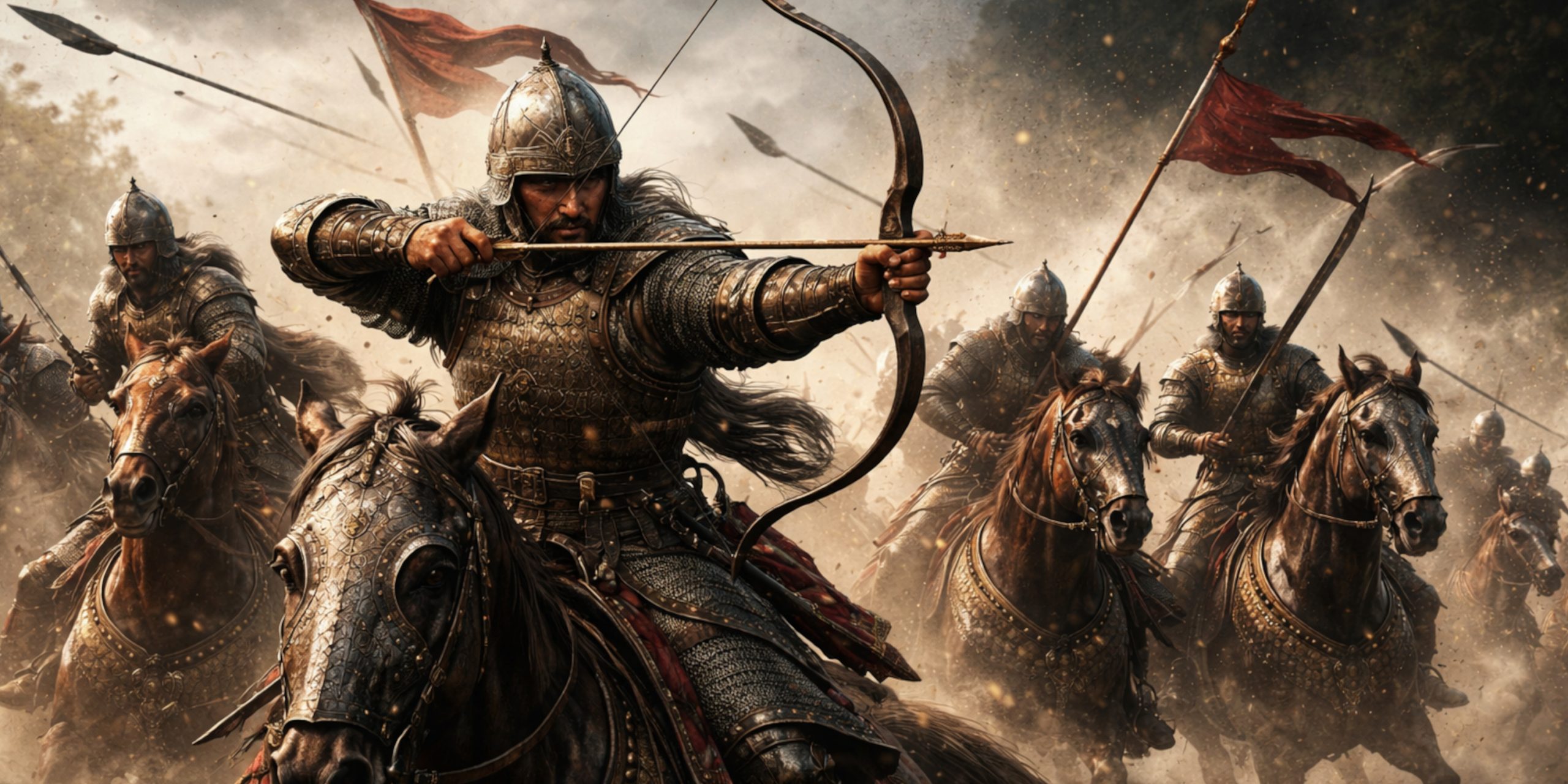
Mamluk cavalry were not irregular raiders. They were professional soldiers drilled intensively in mounted archery and heavy cavalry shock tactics. Training grounds in Cairo and Damascus echoed with the practice of furusiyya, the martial code that combined riding skill, weapon mastery, and courtly conduct.
Key features of their military culture included:
- Mastery of the composite bow from horseback
- Coordinated manoeuvres in formation
- Close combat with lance and sword
- Strict hierarchical discipline
- Personal retinues maintained through iqta land grants
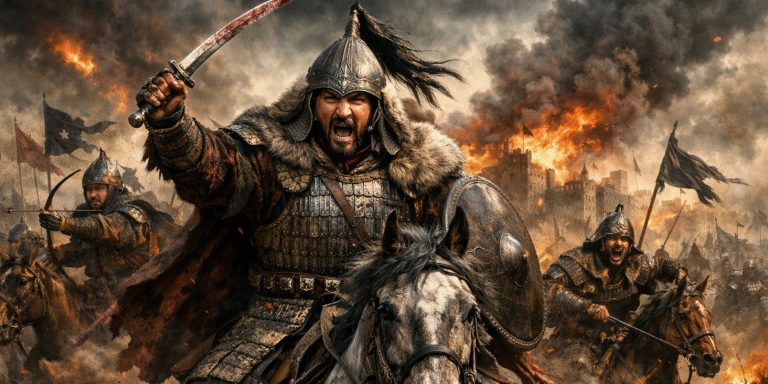
Their battlefield coordination allowed them to absorb Mongol tactics and then defeat them, most famously at the Battle of Ain Jalut in 1260. That victory halted Mongol expansion into the Levant and reshaped Near Eastern history.
Arms and Armour
Weapons
Mamluk cavalry employed a balanced combination of ranged and melee weapons.
Composite Bow
Their primary weapon was the powerful recurved composite bow, constructed from wood, horn and sinew. It delivered penetrating force at considerable range, even against armour.
Lance
Used for the initial charge. Some were fitted with pennons for identification and signalling.
Swords
Several sword types appear in surviving examples and manuscript illustrations:
- Early straight, double edged blades influenced by earlier Islamic and Byzantine traditions
- Curved sabres that foreshadow the later kilij form
- Imported or traded blades from Europe, including Frankish style swords re-hilted in Islamic fashion
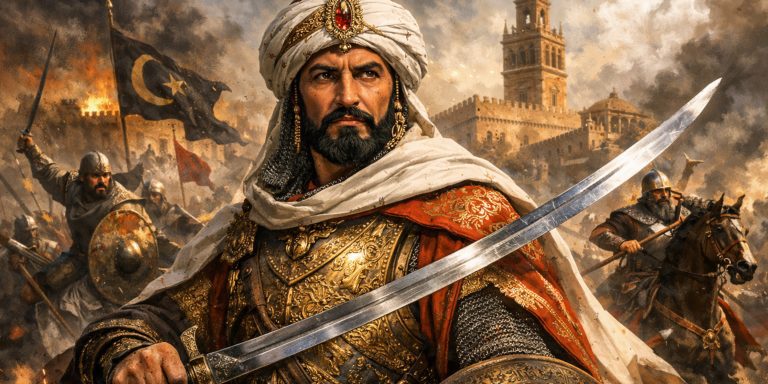
Many surviving examples in museum collections show refined hilts with crossguards and pommels distinct from European types, often paired with leather or fabric scabbards decorated with geometric patterns.
Mace and Axe
Blunt weapons were valued against armoured opponents, particularly in close fighting against Mongol or Crusader cavalry.
Armour
Mamluk armour reflects a blend of steppe and Middle Eastern traditions.
- Mail hauberks often reinforced with plate elements
- Lamellar armour for both rider and horse
- Conical or rounded helmets, sometimes with nasal guards
- Shields of leather or wood, occasionally reinforced
Archaeological finds and preserved artefacts in Cairo and European collections confirm the widespread use of mail and plate combinations. Horse armour, though less commonly preserved, is attested in illustrations and fragments.
One cannot help admiring the practicality. Elegant, yes, but built for survival.
Battlefield Tactics
Mamluk cavalry excelled in flexible engagement. They combined the mobility of steppe archers with the shock of heavy cavalry.
Common tactical elements included:
- Feigned retreats to draw enemies into pursuit
- Coordinated arrow volleys to weaken formations
- Rapid regrouping for decisive lance charges
- Targeting enemy commanders
Against Crusader forces, they exploited mobility and avoided static sieges until advantage was clear. Against Mongols, they matched steppe tactics with discipline and numerical organisation.
The campaigns that dismantled the last Crusader strongholds, culminating in the fall of Acre in 1291, demonstrate their ability to adapt between field battle and siege warfare.
Archaeology and Material Evidence
Material remains offer tangible confirmation of textual accounts.
Surviving Mamluk weapons and armour are held in collections such as the Topkapi Palace Museum and the Metropolitan Museum of Art. These artefacts display high craftsmanship, particularly in steelwork and decorative inlay.
Archaeological excavations in Egypt and Syria have uncovered:
- Armour fragments and mail links
- Horse tack and stirrups
- Arrowheads consistent with composite bow usage
Metal analysis suggests advanced steelworking techniques, though not radically different from contemporary Islamic metallurgy elsewhere. What distinguishes Mamluk material culture is the refinement and ceremonial embellishment layered atop practical equipment.
Even their war gear carried a sense of prestige. It was warfare conducted with style, though not sentimentality.
Contemporary Accounts
Chroniclers and travellers left vivid impressions.
The historian Ibn Abd al Zahir praised Sultan Baybars as a warrior of exceptional energy and discipline. Later writers described the cavalry’s speed and cohesion with admiration.
European observers, including Crusader chroniclers, often remarked on the effectiveness of mounted archery. One account from the late thirteenth century describes them as riders who seemed to loose arrows without pause, wheeling their horses as if part of the same creature.
There is an undercurrent of grudging respect in many Western sources. The Mamluks were not easily dismissed as exotic adversaries. They were recognised as professionals.
Decline and Legacy
By the late fifteenth century, firearms began to challenge the dominance of traditional cavalry. The Mamluk state was slower to integrate gunpowder weaponry than its Ottoman rivals. In 1517, the Ottoman armies under Selim I defeated the Mamluks, incorporating Egypt and Syria into a new imperial framework.
Yet their military legacy endured.
Mamluk cavalry represent one of the most successful examples of a mounted warrior elite ruling in their own name. Their blend of steppe tactics, Islamic statecraft, and disciplined training created a military culture that shaped the medieval eastern Mediterranean for over two centuries.
As a historian, I am always struck by the irony. They were trained to serve a sultan. In the end, they became the sultans.