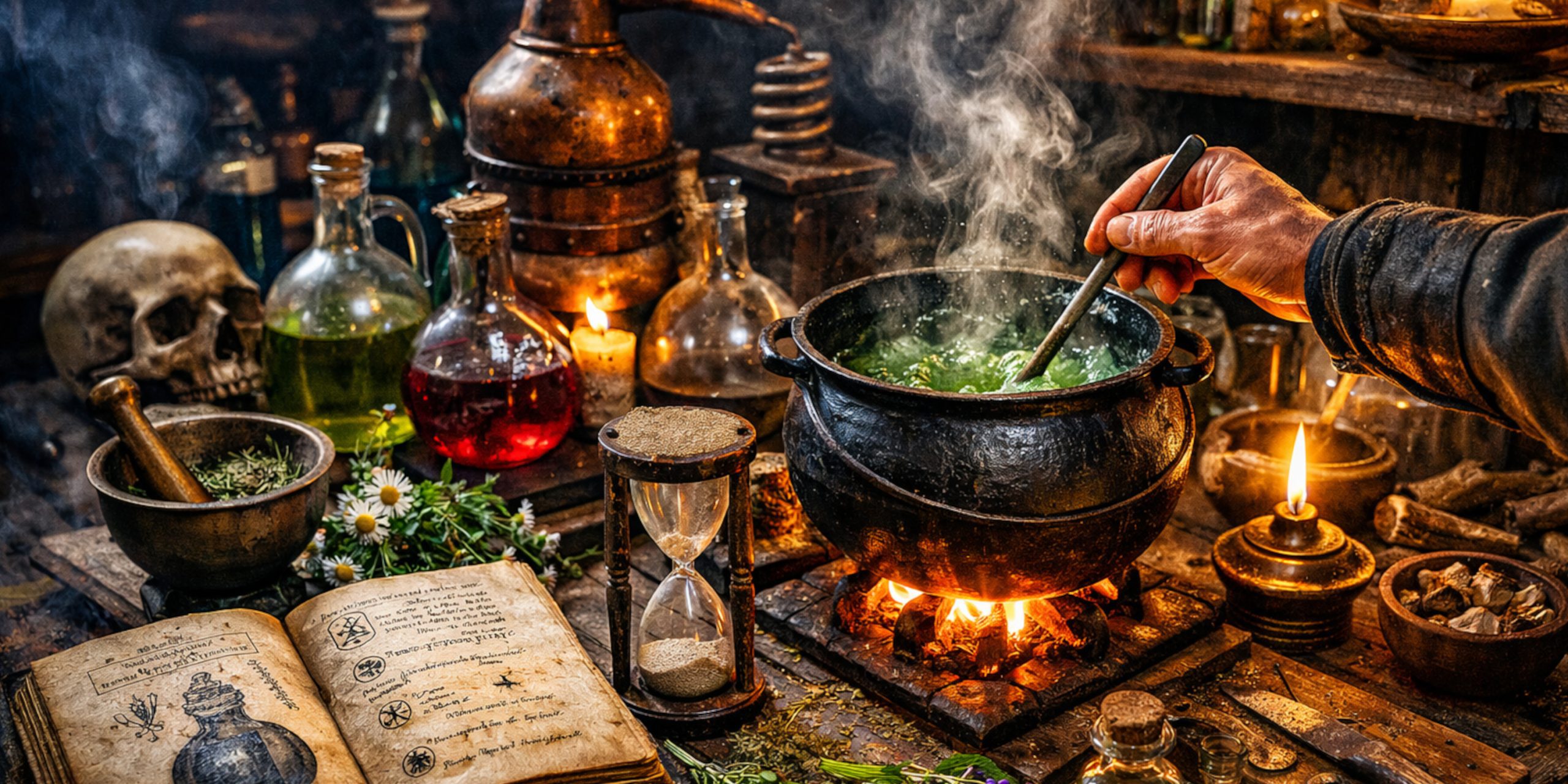
Alchemy in Kingdom Come Deliverance II is the closest thing the game has to a chemistry lab mixed with medieval guesswork and the quiet fear that you are about to waste rare ingredients. It is slow, tactile, occasionally stressful, and honestly one of the most satisfying systems in the game once it clicks.
This guide breaks down how alchemy actually works, how to avoid common mistakes, which perks matter, and how to brew potions that do not embarrass you in front of an alchemy bench. I am not here to romanticise grinding herbs at dawn, but I am here to help you stop poisoning yourself.
How Alchemy Works in Kingdom Come II
Alchemy is a manual process. No menus that magically spit out potions. You read a recipe, follow steps, heat liquids, grind herbs, time boils, and pray you did not miss a detail. The game does not forgive sloppiness, which is sort of the point.
Every potion follows a rhythm. Add base liquid, prepare ingredients, control heat, boil for the correct duration, then finish the brew. Skip a step or rush it and the result ranges from weak to completely ruined.
This is less about speed and more about attention. Treat it like a puzzle rather than a chore and it suddenly becomes fun instead of stressful.
Finding and Using an Alchemy Bench
Alchemy benches are usually found in towns, monasteries, and larger settlements. Early on, you will rely on public benches, but later you may gain access to more convenient locations depending on quests and reputation.
When you interact with a bench, you enter a fully hands on interface. You physically pick up ingredients, operate bellows, flip hourglasses, and pour liquids. Nothing happens automatically, which is both the charm and the trap.
Take your time. Rushing is the fastest way to waste belladonna.
Ingredients and Where to Find Them
Herbs are everywhere, which is great, because you will mess up a lot at first. Meadows, forests, roadsides, monastery gardens, and abandoned clearings are packed with useful plants.
Freshness matters. Dried or old herbs reduce potion quality. If a recipe asks for fresh ingredients, it really means it.
Common early game herbs include nettle, chamomile, mint, and dandelion. More valuable plants like belladonna and henbane are rarer and often found in shaded woodland or near ruins. When you find them, pick everything.
Pro tip from someone who learned the hard way, always check the ground texture. Some herbs blend in alarmingly well with mud.
Reading Recipes Properly
Recipes are not suggestions. They are instructions written by people who assumed you knew what you were doing.
Pay attention to:
- Base liquid, usually water, wine, oil, or spirits
- Order of ingredients
- Preparation method, whole, ground, or added directly
- Boiling time, counted in turns of the hourglass
- Final step, distillation or simple bottling
Missing a boil or grinding something that should stay whole will downgrade or fail the potion. This is not the game being mean, this is the game being medieval.
Heat, Timing, and Boiling Without Panicking
Heat control is the biggest learning curve. Too little heat and nothing happens. Too much and you scorch the brew.
Use the bellows steadily rather than mashing them. Watch the liquid. Bubbling means boiling. Violent bubbling usually means you have gone too far.
The hourglass is your best friend. Flip it once per boil unless the recipe says otherwise. Guessing is how you end up with mystery sludge.
If you lose track, stop. It is better to reset than to salvage a mistake.
Alchemy Perks That Actually Matter
As you level alchemy, perks make the system far more forgiving. Early on, focus on perks that reduce penalties for mistakes or improve potion quality.
Perks that increase potion strength are especially valuable because stronger potions sell for more and last longer. This turns alchemy from a hobby into a money printer.
Later perks that reduce boiling time or ingredient consumption are quality of life upgrades you will not want to live without.
Best Potions to Brew Early
Not all potions are equal, especially when you are broke and under levelled.
Early standouts include healing potions, stamina restoratives, and anything that boosts combat survivability. These save money on doctors and keep you alive when armour fails you.
Poisons are also worth learning early. They sell well and make combat significantly easier if you are not keen on fair fights.
Avoid complex multi stage potions until you are comfortable with timing. Confidence comes fast, but ingredients disappear faster.
Making Money With Alchemy
Alchemy is one of the most reliable income sources in the game if you are patient.
Pick herbs constantly. Brew in batches. Sell to apothecaries and traders who specialise in medical goods for better prices.
High quality potions scale well with perks, meaning one perfect brew can be worth several sloppy ones. Quality beats quantity once your skill improves.
This is not glamorous wealth, but it is honest medieval capitalism.
Common Mistakes and How to Avoid Them
Everyone makes these mistakes at least once.
Grinding everything because you assume it helps. It does not.
Forgetting to boil. Shockingly common.
Overheating and assuming the game will be lenient. It will not.
Ignoring recipe order. Order matters more than you think.
Slow down, reread the recipe, and treat each brew like it matters. Because it does.
Why Alchemy Is Worth Your Time
Alchemy rewards focus, patience, and curiosity. It feels earned in a way few RPG crafting systems do. When you finally brew a perfect potion without checking the recipe every ten seconds, it feels like actual mastery rather than a stat upgrade.
It is fiddly, demanding, and occasionally unforgiving. That is exactly why it works.