Kingdom Come: Deliverance II is set in a world where the church is not simply a backdrop of bells, candles and severe-looking priests glaring at everyone for enjoying themselves. In 1403 Bohemia, religion shaped almost every part of life. It influenced politics, justice, education, law, land ownership and even what people ate on certain days of the week.
The result is one of the most convincing medieval worlds ever put into a game. KCD2 understands that power in the Middle Ages did not belong only to kings and knights. It also belonged to bishops, monasteries, parish priests and anyone who could claim to speak with the authority of God.
Religion Was Part of Everyday Life
For most people in medieval Bohemia, religion was woven into daily routine. Church bells marked the hours. Feast days broke up the year. Marriage, baptism and burial all passed through the church. A village priest could be one of the few literate men most peasants ever met.
In KCD2, that influence can be felt everywhere. Shrines stand beside roads. Churches dominate village skylines. Priests carry weight in local disputes, while monasteries appear as places of wealth, learning and suspicion in equal measure.
This is historically accurate. The medieval church acted almost like a second government.
It controlled:
- Parish records
- Large amounts of farmland
- Taxes and tithes
- Courts dealing with moral and religious offences
- Education and literacy
- Charitable support for the poor and sick
A nobleman might own the castle on the hill, but the church often owned half the land around it.
Church Power in Bohemia in 1403
KCD2 takes place during a deeply unstable period. King Wenceslas IV was struggling to hold onto power, while Sigismund manoeuvred against him. Across Bohemia, loyalties were divided.
At moments like this, the church became even more important.
Rulers needed priests and bishops to support them publicly. A king who appeared blessed by God looked far more legitimate than one who merely had the larger army. Medieval politics was rarely subtle. If a bishop backed you, it suggested heaven itself had signed the paperwork.
At the same time, church leaders had their own interests:
- Protecting church lands
- Collecting revenues
- Preserving influence over towns and nobles
- Supporting the political faction that benefited them most
KCD2 hints at these tensions through disputes between parishes, monasteries and secular authorities. That is exactly the sort of conflict that filled medieval Bohemia. Parish churches competed over income. Monasteries guarded their privileges fiercely. Nobles often tried to interfere when church wealth became too tempting to ignore.
There is a reason monasteries in medieval stories are often shown with impressive libraries, thick walls and suspiciously well-stocked wine cellars.
Why Heresy Was So Dangerous
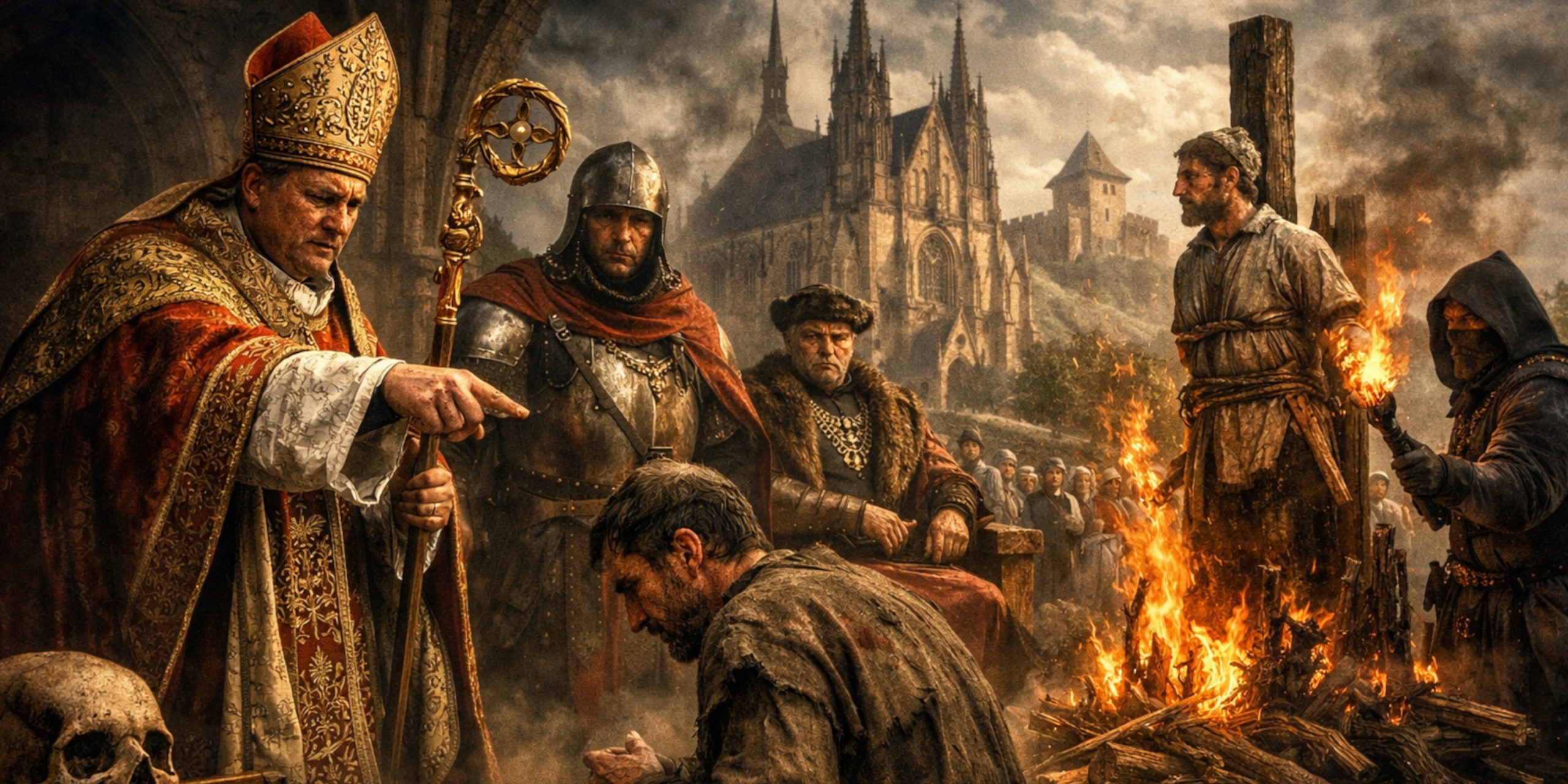
Modern players often think of heresy as simply having a different opinion. In 1403, it meant something far more dangerous.
Heresy was seen as a threat to the entire structure of society. The church believed that wrong belief could lead souls to damnation, but rulers also feared that religious dissent could undermine obedience, law and order.
If people stopped trusting priests, they might begin questioning:
- Why nobles held power
- Why the church owned so much land
- Why taxes and tithes had to be paid
- Whether kings ruled by divine authority
That made heresy political as well as religious.
A preacher criticising corruption might not sound dangerous at first. Yet in a kingdom already divided by civil unrest, those ideas could spread very quickly. Medieval governments had a habit of reacting to such questions with alarming enthusiasm and very little patience.
Jan Hus and the Shadow Hanging Over KCD2
One of the most fascinating things about KCD2’s setting is that it takes place just before one of the greatest religious upheavals in European history.
In 1402, the Czech reformer Jan Hus began preaching in Prague at Bethlehem Chapel. By 1403, he was openly criticising corruption in the church and supporting some of the ideas of the English reformer John Wycliffe.
Hus argued that:
- Priests should live more moral lives
- The church had become too wealthy and corrupt
- Scripture mattered more than church hierarchy
- Religious truth should not belong only to elites
Those ideas would eventually lead to Hus being condemned as a heretic and burned at the stake in 1415. His death triggered outrage across Bohemia and helped spark the Hussite Wars.
KCD2 is set right before that storm begins.
That gives the game world a fascinating sense of tension. The old order still exists, but cracks are already beginning to show. Priests, nobles and ordinary people may still speak confidently about the church, yet there is a feeling that not everyone believes the same things any more.
It is rather like standing in a dry forest and noticing somebody in the distance carrying a lit torch.
Monasteries, Priests and Moral Ambiguity
The best thing KCD2 can do with religion is avoid treating the church as entirely good or entirely corrupt.
Real medieval Christianity was far more complicated.
Some priests were genuinely devoted and helped their communities. Others were ambitious, greedy or deeply hypocritical. Monasteries could preserve learning and offer refuge to the poor, while also becoming wealthy institutions more interested in protecting property than saving souls.
KCD2 has always been strongest when it shows people trapped between competing loyalties and imperfect institutions. Religion fits that approach perfectly.
A local priest in the game might:
- Offer help and advice
- Protect villagers from violence
- Take bribes
- Preach morality while ignoring his own behaviour
- Become involved in politics far beyond his station
That moral ambiguity makes the world feel believable. Medieval people were not simple caricatures of piety or corruption. They were people, which usually means contradictory, frustrating and occasionally ridiculous.
The Church and Social Status
Religion in KCD2 also helps reinforce class and social divisions.
A noble could pay for a private chapel, a grand tomb and a respected burial. A poor peasant might have little more than a wooden cross and the hope that the local priest remembered his name.
The church often reflected the hierarchy of society:
| Social Group | Relationship with the Church |
|---|---|
| Nobility | Donated money, gained influence, expected privileged treatment |
| Clergy | Held power, education and land |
| Townsfolk | Depended on parish churches and guild chapels |
| Peasants | Paid tithes, attended church and relied on priests for guidance |
| Heretics or outsiders | Faced suspicion, punishment or exclusion |
That hierarchy is important because it shows why religion and power cannot be separated in the world of KCD2. Faith was not merely personal. It shaped where people stood in society.
How Religion Could Influence Gameplay
Although Warhorse has not turned KCD2 into a theological simulator, religion has the potential to shape quests, reputation and choices in interesting ways.
Players may find themselves dealing with:
- Priests who ask for help
- Conflicts between monasteries and nobles
- Suspected heresy or forbidden books
- Moral decisions involving church authority
- Disputes over land, tithes or relics
A church-backed character might enjoy more trust in some places. A player accused of sacrilege or religious dissent could quickly find themselves unwelcome.
In medieval Bohemia, reputation mattered enormously. Being called a thief was bad enough. Being called a heretic was far worse, largely because nobody expected the conversation to end there.
Why the Church Makes the World Feel More Real
Many medieval games include churches because players expect to see them. KCD2 uses religion more intelligently.
The church helps make the world feel genuinely medieval because it reminds the player that people in 1403 saw life differently. They believed that heaven, hell, sin and divine judgement were real forces that shaped everyday decisions.
Even powerful men feared damnation. Even kings wanted the blessing of the church. Even peasants judged events through a religious lens.
That does not mean everyone was devout. Medieval people could be cynical, irreverent and openly critical of priests. Yet even criticism happened within a society where religion still mattered.
KCD2 captures that brilliantly. It shows a world where faith is powerful, where reform is beginning to stir, and where the church sits at the centre of politics, fear and ambition.
Final Thoughts
Religion in Kingdom Come: Deliverance II is far more than scenery. The church shapes the laws, values and power struggles of the game’s world. Priests and monasteries are not simply quest-givers in robes. They are part of the machinery that keeps Bohemia together, even as that machinery begins to strain.
Heresy matters because it threatens the foundations of society. Church influence matters because nobody in 1403 can escape it. And the looming shadow of Jan Hus gives KCD2 a deeper historical edge than most medieval games ever attempt.
The game understands something important about the Middle Ages. Swords could win battles, but sermons, accusations and the blessing of the church could decide who had the right to fight them in the first place.