The Joseon Dynasty has a habit of staying with you. The more you look at it, the more it rewards the attention. It was a realm shaped by kings who believed deeply in order, scholars who trusted in the power of the written word, and officials who sometimes argued themselves into exile. This was a society that pushed for moral clarity while quietly wrestling with the contradictions that come with ruling actual human beings. When you track its story from the late fourteenth century to the dawn of the twentieth, you find a kingdom that repeatedly reinvented itself without ever losing its core belief in stability and Confucian ethics. As a historian, I find that consistency oddly comforting, even when the lived reality inside the dynasty was anything but simple.
The Founding of a Confucian State
The dynasty began in 1392 when Yi Seong gye, the future King Taejo, brought down Goryeo and announced a new order. This was not a reckless overthrow. It was a carefully framed reset that promised cleaner governance and stronger moral direction. Neo Confucian scholars soon dominated the court. They demanded discipline in everything from law codes to family structure. It is striking how quickly their ideas saturated public life. Even today, many of the rhythms of Korean etiquette trace their logic back to these early centuries.
Yet the dynasty did not float serenely on learned philosophy. Taejo’s sons fought bitterly for power. The famous coup by Prince Jeong an, who took the throne as King Taejong, was brutal enough to cut through any romantic version of events. Still, it was he who stabilised the bureaucracy and built the administrative backbone that carried Joseon through its golden periods. This pattern recurs across the dynasty: harmony was preached, but real survival came from pragmatic, sometimes ruthless decisions.
Cultural Flourishing and Intellectual Confidence
King Sejong is the name most people carry in their heads, and for good reason. His reign in the fifteenth century brought one of the most generous contributions any monarch has ever given a people, the creation of Hangul. The script opened reading and writing to those far beyond the scholar elite. As a researcher, I admit there is something deeply moving about a king commissioning a writing system to make knowledge more democratic.
The court sponsored science and literature. Astronomical charts improved. Rain gauges appeared. Medical texts circulated. Yet this cultural bloom came with strict social divisions. Yangban aristocrats guarded their status with an energy that borders on claustrophobic when you read their own letters. Beneath them lived a large population who had little chance to rise. The elegance of Joseon scholarship sat alongside economic gaps that rarely budged.
Conflict, Invasion and the Hard Lessons of Survival
By the late sixteenth century the kingdom faced a nightmare in the form of the Japanese invasions of 1592 and 1597. The scale of destruction reshaped the entire peninsula. Admiral Yi Sun sin’s naval victories saved Joseon, yet even his heroism cannot mask the shock the invasions left behind. I often think of this period as the dynasty’s forced awakening. After generations of relative insulation and scholarly focus, the court suddenly discovered how vulnerable it was.
The seventeenth century added new pressure from the Manchu. Joseon suffered two invasions from the Qing and was forced into tributary relations. The humiliation etched itself into the political memory of the elite. You can feel it in their writings. They defend their identity more fiercely than ever, clinging to Confucian purity as a way of resisting what they could not stop militarily.
Factionalism and Reform in a Changing World
Joseon politics developed a level of factional division that can feel dizzying. Noron versus Soron. Byeongja Horan versus scholars of restoration. These were not minor disagreements. They shaped royal succession, foreign policy and the everyday life of the state. From a historian’s perspective, this constant internal tug of war can be frustrating to read, but it shows how deeply invested the elite were in the ideological character of their kingdom.
Reformers did occasionally push through practical change. The Silhak movement encouraged empirical study and urged officials to notice the real economic conditions of the countryside. Later, in the nineteenth century, figures like Daewongun tried to recentralise authority. Yet the world was shifting faster than the state could manage. Western powers appeared in regional waters. Japan modernised with startling speed. Joseon held to its old rhythms for too long, and the tension between tradition and survival became impossible to ignore.
The Final Century and the Fall of the Dynasty
King Gojong’s era was turbulent from the start. Attempts at modernisation, often half served and half resisted, created instability. Foreign powers exploited this uncertainty. Russia, China and Japan pressed their interests, treating the peninsula as a strategic hinge. The assassination of Queen Min, who had opposed Japanese influence, remains one of the most chilling moments in late Joseon history. By 1910, the kingdom was gone, absorbed into the Japanese empire.
The fall of Joseon is difficult to write about without slipping into lament. Yet the dynasty had lasted over five hundred years. It left a cultural grammar that still shapes Korea’s sense of identity. Family rites, honour codes, etiquette, language structure and a remarkable literary corpus all survive as its living legacy.
Legacy and Reflections
What I appreciate most about Joseon is its duality. It offered intellectual beauty and bureaucratic discipline yet struggled with social rigidity. It produced Hangul, a tool of access, while restricting mobility for many of its people. It praised virtue but often survived on iron willed realpolitik. Perhaps that contradiction is why the dynasty remains so compelling. It is the record of a society that tried very hard to perfect itself while never fully escaping its flaws.
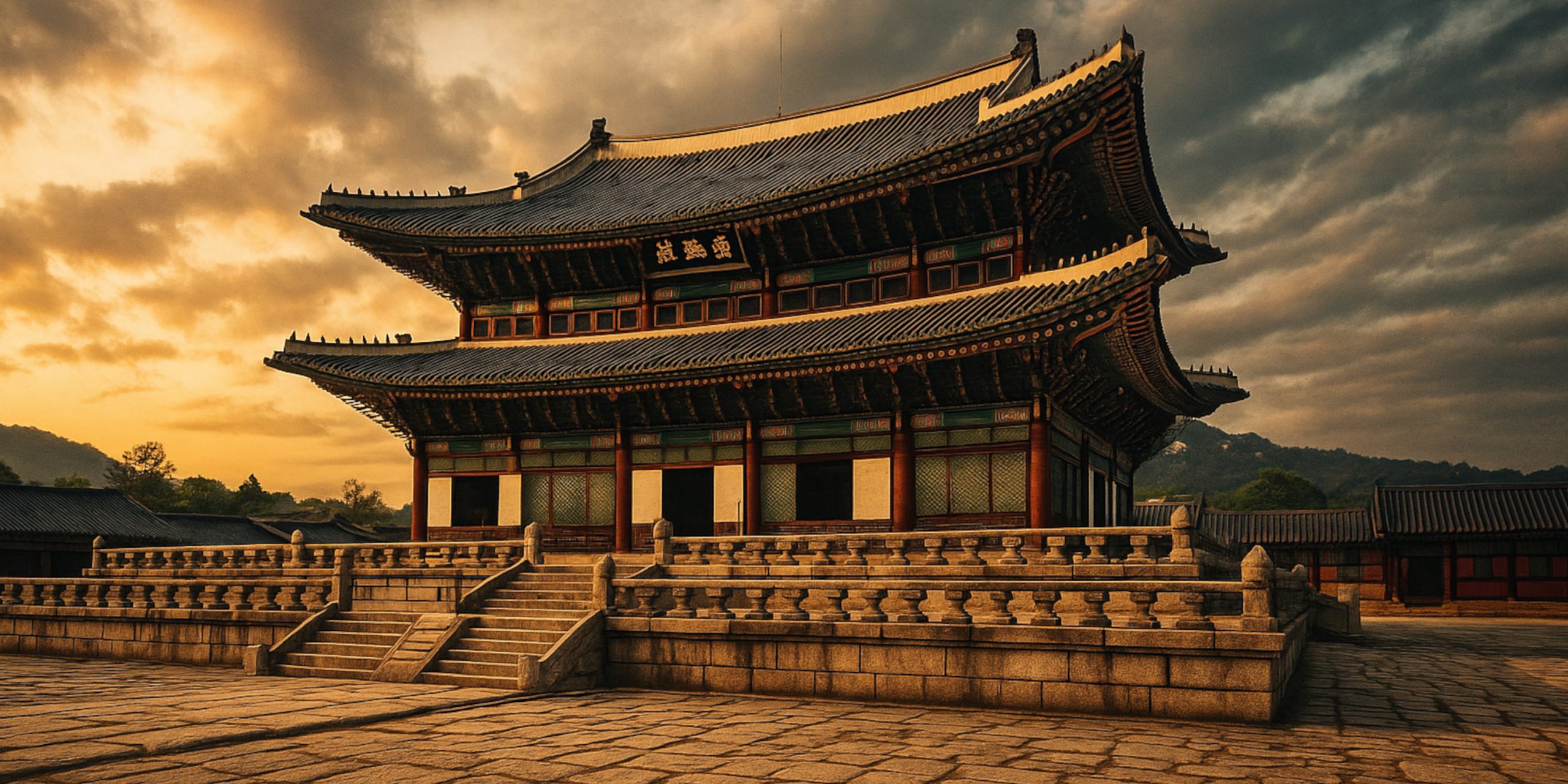
When walking through Seoul’s remaining palace complexes, you can feel how deliberately the dynasty choreographed its own image. Gates, courtyards and throne halls speak in a language of order. I find that architectural intention oddly sincere. The Joseon state hoped that careful design could foster a careful society. History tells us that hope can only go so far, but it also shows how enduring those hopes can be.