There are pirates who blaze brightly and briefly, and then there are the ones who linger awkwardly in the records, injured, pardoned, and never quite heroic enough for legend. Israel Hands belongs firmly in the second camp. He was no captain, no visionary terror of the seas, but he stood close enough to Edward Teach to be shot by him, pardoned by a governor, and remembered long after braver men were forgotten. From a historian’s point of view, that is often where the real interest lies.
Hands gives us a rare thing in pirate history: a subordinate who left traces behind him after the guns fell silent. His story is not glorious, but it is human, messy, and rather revealing about how piracy actually worked in the early eighteenth century.
Origins and Early Life
We know frustratingly little about Hands before piracy claimed him. He was probably English, likely a sailor from a commercial or privateering background, as most pirates were. He did not arrive at piracy through rebellion or ideology. He arrived through work. Sailors followed wages and opportunity, and piracy offered both, at least until the hangman intervened.
By the time Hands appears clearly in the record, he is already embedded in Blackbeard’s crew and trusted enough to act as a lieutenant. That alone tells us he had experience, competence, and a temperament suited to command under pressure.
Service Under Blackbeard
Hands served as one of Blackbeard’s closest subordinates during the height of the captain’s career in 1717 to 1718. He commanded prize crews, helped manage captured ships, and acted as an intermediary between captain and crew. This was not glamorous work, but it was essential. Piracy ran on discipline as much as fear.
His relationship with Blackbeard was practical rather than affectionate. Teach valued loyalty, but he also ruled through intimidation. That tension comes into sharp focus in the most famous incident involving Hands.
The Shooting Incident
At some point during their cruise, Blackbeard shot Israel Hands in the knee. According to later accounts, Teach did it deliberately, supposedly to remind his crew that he could still command fear even when no enemies were present. Hands survived, but he was permanently lamed.
Whether this was calculated theatre or drunken cruelty is impossible to say. Blackbeard was known for both. What matters is that Hands remained with the crew afterwards, which tells us something important. Fear worked. Survival often mattered more than dignity.
A later report attributed to Blackbeard rather dryly claimed he shot Hands so he would not forget who was captain. One senses Hands remembered perfectly well.
Weapons and Fighting Style
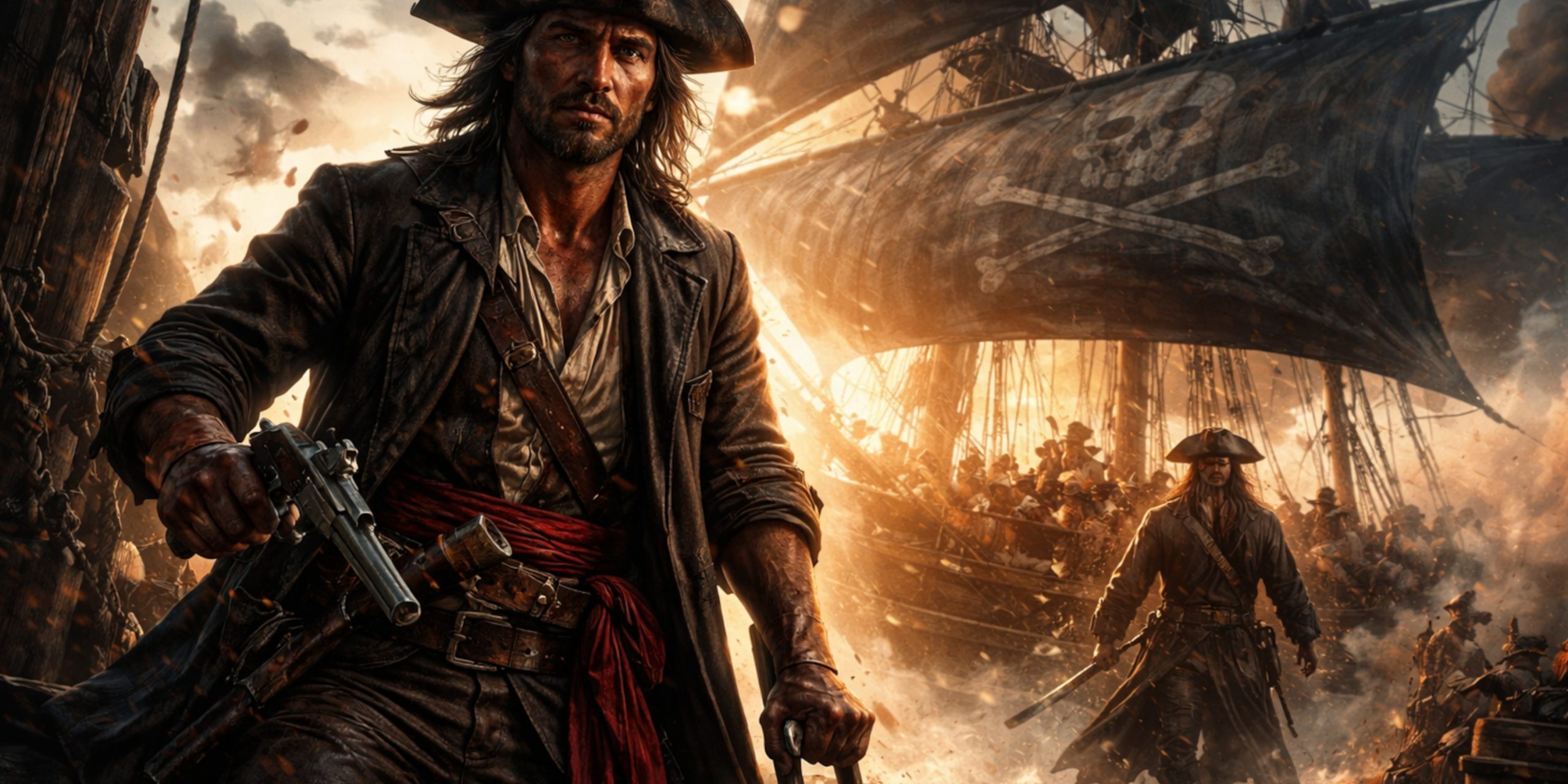
Hands would have fought with the standard pirate toolkit rather than any personalised weapon of legend.
Typical arms included
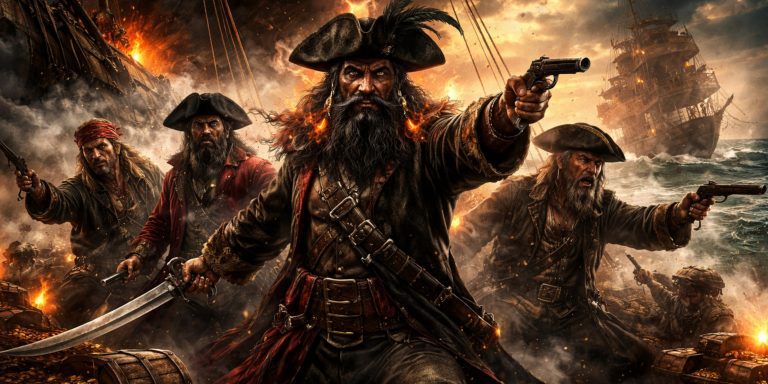
• Flintlock pistols, usually carried in pairs
• A cutlass for close combat
• Possibly a boarding axe or dagger
Pirates favoured overwhelming violence at close range. Hands, as a lieutenant, was more likely organising boarding parties than charging first across the rail. After his injury, he would have been even more valuable as an organiser rather than a front-line fighter.
Ships and the Queen Anne’s Revenge
Hands served aboard Blackbeard’s flagship, the Queen Anne’s Revenge, a former French slaver refitted for piracy. She carried heavy guns and an intimidating silhouette, designed as much to terrify as to fight.
As lieutenant, Hands would have overseen captured vessels, crew discipline, and prize management. Piracy depended on efficiency. Ships had to be taken quickly, crews subdued, cargo inventoried, and decisions made before naval patrols arrived.
Treasure and Spoils
Contrary to romantic expectation, there is no evidence that Hands ever buried treasure or amassed vast personal wealth. Pirate spoils were divided according to agreed shares, and lieutenants received more than ordinary crew, but not extravagantly so.
Typical plunder included
• Sugar, cocoa, and indigo
• Textiles and trade goods
• Coin and plate when available
Hands seems to have taken enough to survive, not enough to vanish into luxury. In this, he was typical.
Battles and Final Engagements
Hands was present during Blackbeard’s later operations along the American coast, including the infamous blockade of Charleston. He was not present at the final battle at Ocracoke, likely because his injury had already reduced his usefulness at sea.
This absence probably saved his life.
Capture, Trial, and Pardon
After Blackbeard’s death, Hands was captured and examined by colonial authorities. Here the story takes a turn away from gallows drama and towards bureaucratic anticlimax.
Hands received a royal pardon, likely aided by his injury and his willingness to testify. He was valuable as a witness, and he no longer posed much of a threat. Piracy was as much about paperwork as plunder by this stage.
His testimony helped shape later accounts of Blackbeard, including descriptions of his cruelty and theatricality. In that sense, Hands influenced pirate history more as a survivor than as a fighter.
Later Life and Fate
After his pardon, Hands fades from the record. He appears to have lived quietly in North Carolina, working ashore. There is no evidence he returned to piracy, nor that he met a dramatic end.
As a historian, I find this deeply satisfying. The pirate who lived to limp into obscurity tells us far more about the limits of piracy than the ones who died sword in hand.
Contemporary Quotes and Accounts
Hands himself left testimony during his examination, describing Blackbeard as a man who used terror deliberately, even against his own crew. One later account records that Blackbeard shot him “only to see how the other rogues would take it.”
It is not poetic, but it is honest. Piracy was rarely romantic when you removed the rum.
Historical Significance
Israel Hands bridges the gap between pirate legend and colonial administration. Through him, we see how piracy ended not with a blaze of glory, but with amputation, pardons, and paperwork.
He was not a hero. He was not a mastermind. He was a working pirate who made it out alive. In my view, that makes him one of the most instructive figures of the Golden Age.