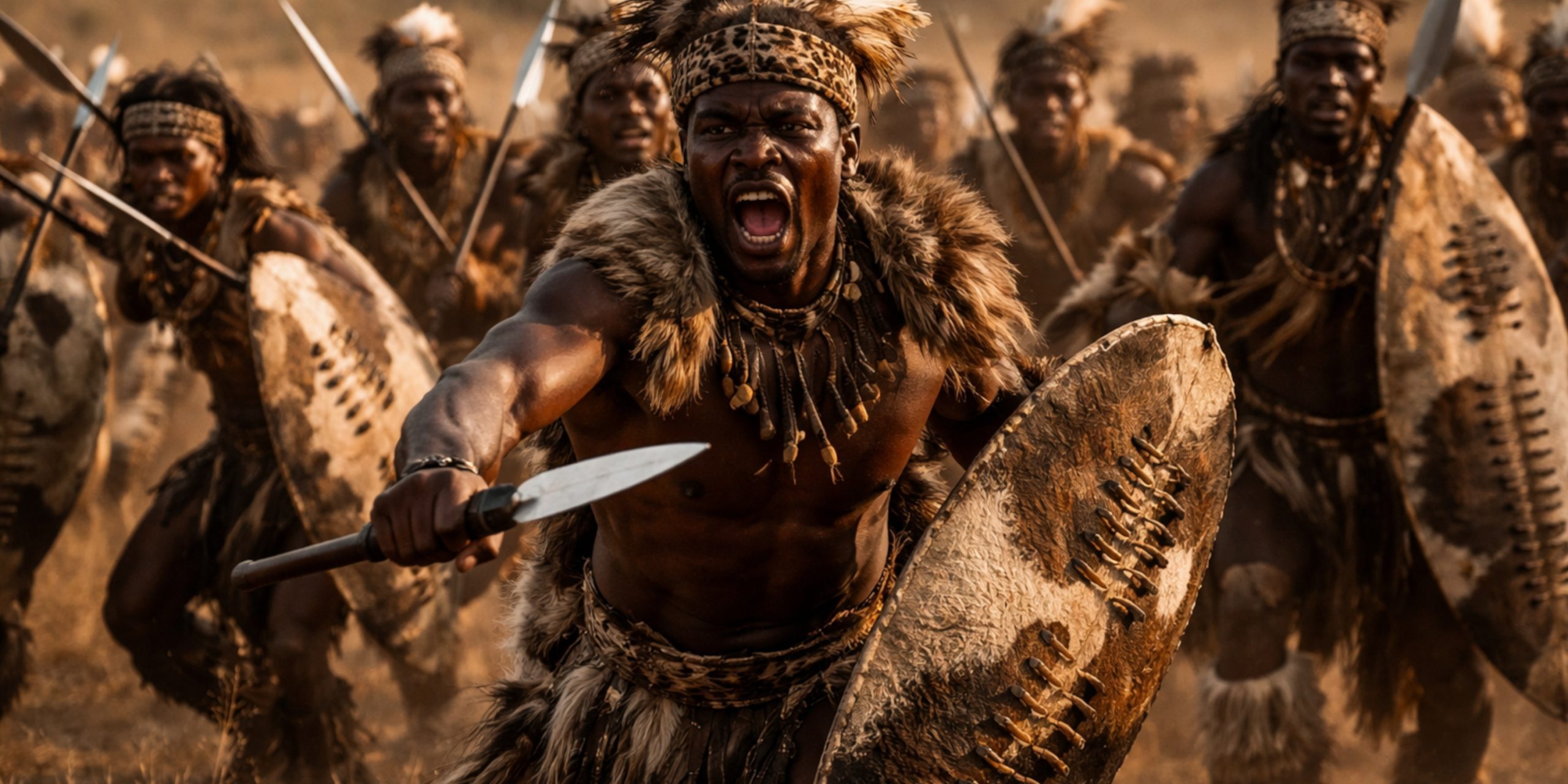
The iklwa is one of the most recognisable weapons in African military history. Short, broad bladed and built for close combat, it became the defining weapon of the Zulu army during the reign of Shaka Zulu in the early nineteenth century.
Unlike earlier throwing spears, the iklwa was designed for stabbing at close quarters. Its name is said to imitate the sound made when the blade was withdrawn from a wound. Whether that story is literal or poetic, the weapon marked a turning point in southern African warfare. It transformed loose skirmishing into disciplined shock combat.
What follows is a structured examination of the iklwa, its development, battlefield role and modern relevance to collectors and historians.
Specifications
While individual examples vary, surviving originals and ethnographic records allow for a reliable profile.
| Feature | Typical Measurement |
|---|---|
| Overall length | 90 to 120 cm |
| Blade length | 25 to 40 cm |
| Blade width | 4 to 6 cm |
| Blade type | Broad, leaf-shaped |
| Tang | Long spike inserted into shaft |
| Shaft material | Hardwood, often local African species |
| Weight | Approx. 0.9 to 1.5 kg |
Key Characteristics
- Shorter shaft than traditional throwing assegais
- Wide stabbing blade rather than narrow piercing point
- Long tang extending deep into the shaft for reinforcement
- Optimised for thrusting in tight formation
The balance is forward weighted but controlled. It is not a fencing weapon. It is direct and forceful.
History and Evolution

Before the rise of the Zulu kingdom, many Nguni-speaking groups relied primarily on lighter throwing spears, often referred to broadly as assegais. Combat was typically conducted at range, with limited close engagement.
That changed under Shaka Zulu in the early nineteenth century. Shaka reorganised the Zulu military system into age-based regiments known as amabutho. He emphasised discipline, rapid manoeuvre and decisive close combat. The traditional throwing spear was reduced in importance, replaced by the short stabbing spear that became known as the iklwa.
The iklwa worked in combination with:
- The large cowhide shield, known as the isihlangu
- The “bull horn” formation, designed to envelop the enemy
- Aggressive forward movement to close distance rapidly
By the time of the Battle of Isandlwana during the Anglo-Zulu War, the iklwa was firmly embedded in Zulu military culture, even though firearms were increasingly present on the battlefield.
Advantages and Disadvantages
Advantages
- Highly effective in close combat
- Broad blade created severe wounds
- Strong tang construction reduced breakage
- Simple and robust design
- Worked seamlessly with shield-based fighting
In formation, the iklwa allowed disciplined ranks to press forward, pin opponents with shields and deliver thrusts at close range. It encouraged cohesion and aggression.
Disadvantages
- Limited reach compared to longer spears or polearms
- Ineffective at long range
- Vulnerable against disciplined firearm volleys
- Dependent on tight formation tactics
Against opponents armed with muskets or rifles, especially in open ground, the iklwa’s strengths were offset by technological disadvantage. Its effectiveness relied on closing distance quickly.
Comparison with Similar Weapons
The iklwa is often confused with other assegai types. In reality, it represents a specific tactical evolution.
| Weapon | Length | Primary Use | Tactical Role |
|---|---|---|---|
| Traditional throwing assegai | 150 to 200 cm | Thrown | Skirmishing |
| Iklwa | 90 to 120 cm | Stabbing | Shock infantry |
| European infantry spear | 180 to 250 cm | Thrusting | Formation defence |
| Roman pilum | 180 to 210 cm | Thrown | Disrupt shield walls |
Unlike the Roman pilum, which was designed to bend and disrupt shields, the iklwa was reusable and built for sustained melee. Compared to European pikes, it sacrificed reach for mobility and aggression.
Its closest functional comparison might be short thrusting spears used by certain ancient Mediterranean infantry, though the tactical systems were culturally distinct.
Legacy
The iklwa remains inseparable from the military identity of the Zulu kingdom. It symbolises:
- The centralisation of power under Shaka Zulu
- The transformation of regional warfare in southern Africa
- Indigenous military innovation independent of European influence
Today, the weapon appears in historical reenactment, museum displays and cultural ceremonies. It has also entered popular imagination through film and literature depicting the Anglo-Zulu War.
Beyond symbolism, the iklwa stands as a reminder that tactical doctrine can matter as much as technology.
Where to See the Iklwa
Original nineteenth century examples can be found in several institutions:
- British Museum
- National Army Museum
- KwaZulu-Natal Museum
Many European collections acquired Zulu weapons during the colonial period. Provenance varies, and serious researchers should consult catalogue records carefully.
Collector’s Guide
Collecting African edged and pole weapons requires caution and due diligence.
What to Look For
- Hand forged iron blade with visible hammer marks
- Patinated hardwood shaft
- Period binding materials
- Consistent wear patterns
Modern replicas are common and often well made. They are suitable for display or reenactment but hold limited investment value.
Auction Prices
Prices fluctuate depending on provenance and condition.
| Type | Typical Price Range |
|---|---|
| 19th century authenticated example | £1,200 to £4,500 |
| Museum-quality provenance | £5,000 plus |
| Modern replica | £80 to £400 |
Exceptional examples with clear links to the Anglo-Zulu War can command higher sums.
Legal Considerations in the UK
- Antique weapons are generally legal to own
- Sale may be subject to age verification
- Export restrictions may apply for culturally significant artefacts
Collectors should also consider ethical questions surrounding colonial acquisition.
Final Assessment
The iklwa was not simply a shorter spear. It was a weapon built around a new philosophy of warfare. Under Shaka Zulu, it became the centrepiece of a disciplined military system that reshaped southern Africa.
Technologically simple, tactically transformative, and culturally powerful, the iklwa remains one of the most significant indigenous weapons of the nineteenth century. For historians, it represents adaptation. For collectors, it demands careful research. For anyone interested in military history, it is a reminder that innovation does not always require gunpowder.as (often sold as Zulu spears) typically fetch under £100 and should be avoided by serious collectors.
Watch the documentary: