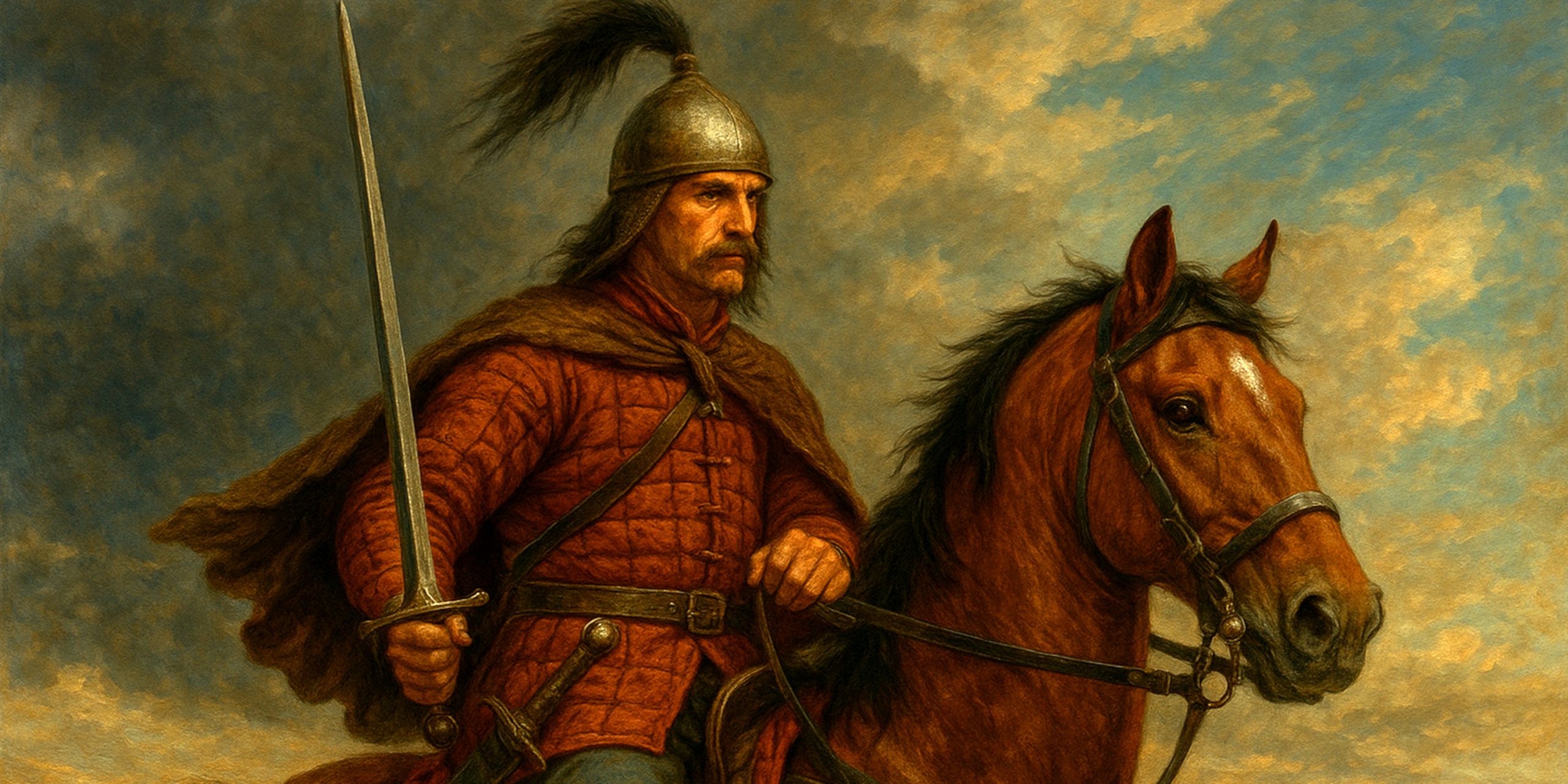
There is something rather satisfying about writing on the Hungarian Hussars. They were never the most heavily armoured troops on a battlefield, nor the most disciplined, nor the most inclined to stay exactly where their superiors told them. Yet they left a mark on European warfare that generals could not ignore. By the time their style spread across the continent, it was clear that the Hungarians had reinvented the light cavalry tradition in a way that blended swagger with cold efficiency. If cavalry could smirk, it would probably look like a hussar.
Origins and Early Development
The earliest hussars emerged in the late fifteenth century among Serbian warriors fleeing the Ottoman advance. Many found service in the Kingdom of Hungary, where their style of fast shock manoeuvre fit neatly into Hungary’s long running border conflicts.
By the early sixteenth century the term huszár was firmly established. They relied on mobility instead of brute force and operated as raiders, scouts, skirmishers, and opportunists. Their use of sudden charges, feints, and swirling movement made them troublesome opponents for any slow moving infantry or lumbering cavalry.
The constant pressure of Ottoman warfare sharpened their methods. In the same way a river cuts its own path, Hungarian warfare shaped the hussars into something distinct. They became indispensable for chasing down retreating foes and harassing supply lines, tasks usually neglected by armies that preferred neat formations and ordered ranks.
Evolution across Europe
By the seventeenth century their reputation caught the attention of other powers. Poland, Austria, and various German states raised their own hussar units, although none quite matched the original Hungarian mix of cunning and bravado. Western militaries often adopted the uniform before they truly understood the tactics, a pattern that will feel painfully familiar to any historian of European imitation.
By the eighteenth century hussars became fashionable additions to almost every major army. Their bright dolmans, pelisses, and fur trim gave them a theatrical quality, though beneath the finery the Hungarian heritage remained. Frederick the Great once remarked that hussars were either the best troops in the world or the worst, which says more about their unpredictable brilliance than their shortcomings.
Arms and Armour
Hungarian hussars did not win battles by weight of metal. Their gear reflected speed, agility, and a talent for making enemies very nervous.
Primary weapons
- Hussar sabre. The iconic, single edged, deeply curved sabre with a clipped point. Light enough for repeated strikes, heavy enough to break bone with a committed cut.
- Pike or light lance. Early hussars carried a relatively short lance, useful in the first moments of a charge before switching to sabre work.
- Pistols. From the seventeenth century many hussars carried a pair of wheellock or later flintlock pistols in saddle holsters.
- Carbine. Some units adopted short carbines for skirmishing, although these were never meant for musket style volleys.
Armour and protective gear
- Early hussars sometimes wore light mail or a simple breastplate, though this faded as firearms became more common.
- A fur trimmed cap or kolpak became a recognisable item of dress.
- The pelisse worn slung over one shoulder served as both fashion and modest protection, though one suspects the sartorial impact mattered more to the men wearing it.
Their equipment tells a consistent story. They trusted their horses and their own judgement more than any suit of armour. The hussar way required freedom of movement and the confidence to get dangerously close to the enemy.
Tactics and Battlefield Style
Hussars excelled in hit and run engagements. They approached in loose formations, probing weak points, drawing out enemy cavalry, and unsettling infantry lines before vanishing again.
Once an opening appeared, they charged with startling speed. The curved sabre encouraged slashing attacks along the line of movement, clean and efficient. They avoided grinding melees and heavy cavalry collisions, preferring motion to stagnation. A hussar stuck in a prolonged brawl had already made a mistake.
Their true gift was initiative. Commanders valued them for their ability to decide when not to fight, a trait surprisingly rare in pre modern warfare.
Contemporary observers often commented on their nerve. Bartosz Paprocki, writing on border warfare, noted that hussars rode as if “the wind itself owed them a path.” You can almost hear the irritation in the words of those they outmanoeuvred.
Archaeology and Material Evidence
Material finds connected to early hussars are rarely as lavish as those associated with heavy cavalry, but they offer useful glimpses into their world.
Saddle mounts and stirrups from fifteenth and sixteenth century Hungarian sites show a preference for lighter, more agile riding gear. Sabres recovered from riverbeds near former battlefields display the classic Central European curvature that defined the hussar blade.
Excavations at fortifications along the Hungarian Ottoman border produce occasional fragments of tack, uniform fittings, and pistol barrels. Nothing about these items suggests luxurious troops. They reveal men who lived on campaign, relied on practical gear, and replaced what wore out rather than curate it.
Every so often a finely worked sabre hilt appears in private collections or museum holdings, often Ottoman in style. It serves as a quiet reminder that the frontier was a place of exchange as much as conflict.
Contemporary Voices
The hussars inspired admiration, confusion, and occasional exasperation among their contemporaries.
A Habsburg officer in the late seventeenth century described them as “cavalry that appear before one knows they are near, and depart before one can aim.” The same officer added that they were far too cheerful for his taste, which feels entirely on brand.
A Polish chronicler praised their ability to “turn dust into terror,” a line that historians enjoy because it is frankly too poetic for the military reports of the period.
Later Legacy
Although their battlefield role diminished in the nineteenth century, the image of the hussar survived with surprising vigour. Romantic painters adored them. European armies kept hussar regiments in name long after the tactics had lost practical relevance. The uniform itself became a kind of shorthand for dashing cavalry.
Hungary continues to treat the hussar as a symbol of national resilience. Museum collections proudly display surviving sabres, pistols, and uniforms. Re enactment groups preserve the riding style with a seriousness that would have amused the original hussars, who rarely took anything too seriously apart from winning.
Where to See Hussar Material Today
- Hungarian National Museum, Budapest offers sabres, pistols, lance heads, and uniform pieces from sixteenth to nineteenth century hussar regiments.
- Museum of Military History, Budapest holds several finely preserved sabres and early pistol holsters.
- Vienna’s Heeresgeschichtliches Museum contains Austrian hussar uniforms and equipment from the eighteenth century.
- Kraków’s Czartoryski Museum displays Central European sabres, some associated with early hussar forms.
Watch the documentary: