The idea of the “greatest swordsman” is slippery. We are comparing people across centuries, cultures, weapons, and rules that often did not exist at all. Some fought for survival on battlefields. Others refined killing into an art under strict duelling codes. A few left behind manuals that quietly shaped how swords are still studied today. What unites them is not myth alone, but a mix of documented skill, reputation among contemporaries, and lasting influence.
This is not a list chasing perfection. It is a historian’s attempt to weigh evidence, separate theatre from technique, and still enjoy the fact that some people really were that dangerous with a blade.
Miyamoto Musashi

Musashi sits at the intersection of history and legend, which is always a dangerous place for accuracy. Yet even when the myths are trimmed back, the core remains unsettling. He fought and won dozens of duels, often against trained opponents, often using unconventional tactics. Turning up late, using a wooden sword, or fighting two men at once was not bravado. It was psychology, and it worked.
His real legacy lies in The Book of Five Rings, which reads less like mysticism and more like a cold analysis of violence, timing, and intent. Musashi was not obsessed with beauty or honour. He was obsessed with winning, and that honesty still makes modern readers uncomfortable.
Johannes Liechtenauer

Liechtenauer is proof that the greatest swordsmen are not always the loudest. We do not have duelling tallies or dramatic last stands. What we have is influence. His teachings dominate the German longsword tradition and form the backbone of much of what modern historians and martial artists know about medieval European fencing.
The Liechtenauer tradition focuses on initiative, pressure, and ending fights decisively. There is no wasted motion, no romantic posing. Reading his verses today, once deciphered, you get the sense of a man deeply uninterested in spectacle. This was fencing for survival, not applause.
Fiore dei Liberi

If Liechtenauer was severe, Fiore was methodical. His Fior di Battaglia remains one of the most comprehensive martial manuals ever produced, covering longsword, dagger, polearms, armoured combat, and unarmed fighting.
Fiore’s greatness lies in clarity. He shows not only how to strike, but why it works, when it fails, and how to recover. There is a calm confidence in his writing that suggests long experience with real violence. This is not theoretical fencing. It is a toolkit for staying alive when plans collapse.
Salvator Fabris
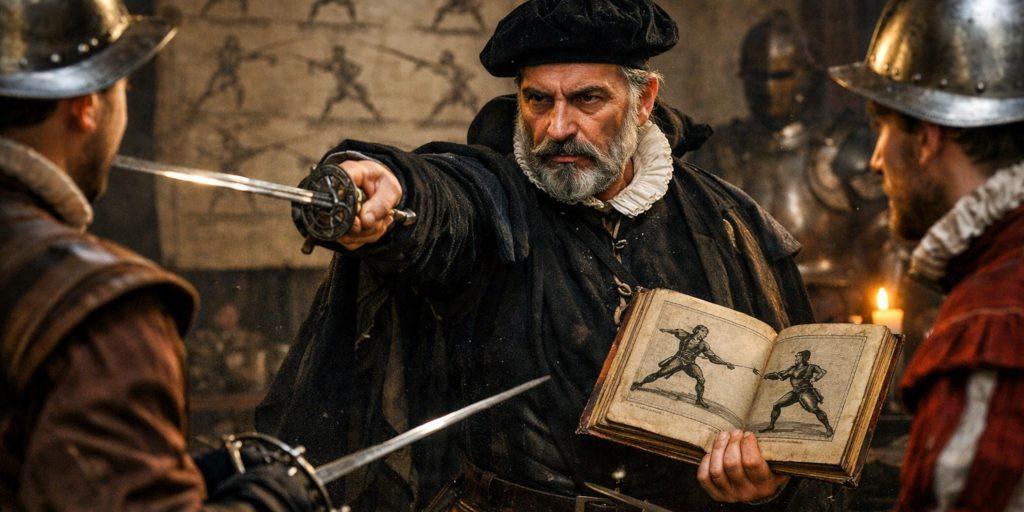
Fabris helped drag European swordplay into the modern age. His rapier system emphasised structure, balance, and control of distance in a way that feels almost scientific. Where earlier traditions embraced explosive aggression, Fabris taught patience, posture, and the quiet dominance of measure.
His treatise influenced fencing across Europe, particularly in Scandinavia and northern courts. Fabris did not need battlefield chaos to prove his worth. His duelling system was so effective that it became the standard others reacted against.
Ridolfo Capo Ferro
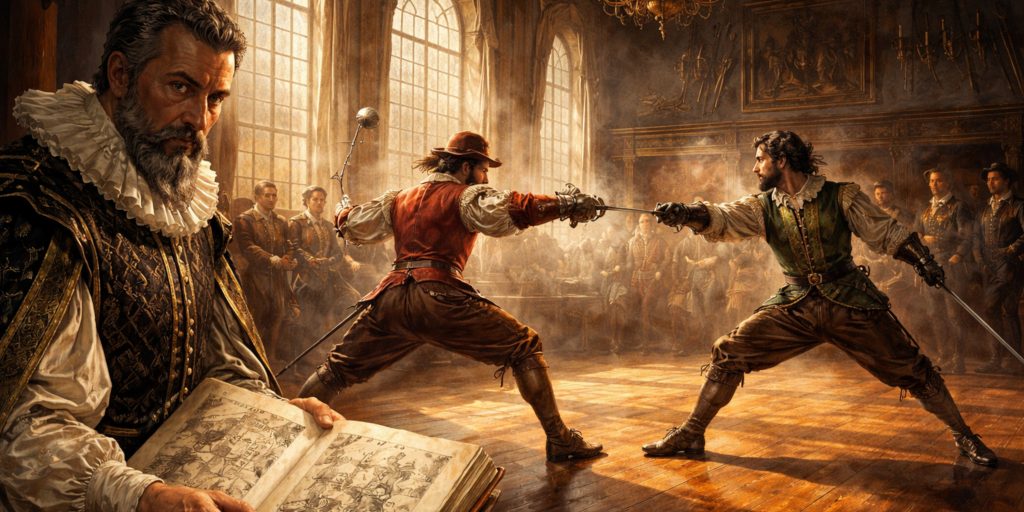
Capo Ferro refined rapier fencing into something brutally efficient. His work strips away flourish and focuses on straight lines, minimal movement, and precise timing. Reading his manual, you can almost feel his irritation with unnecessary complexity.
Capo Ferro’s approach is why late rapier duels became fast and lethal affairs. There is little romance here. Just geometry, nerves, and consequences.
Donald McBane

McBane is refreshingly honest. A soldier, duellist, and occasional criminal, he wrote about fighting the way most people actually experienced it, messy, unfair, and terrifying. His autobiography reads like a pub confession delivered by someone who survived when others did not.
He fought across Europe, survived multiple duels, and taught swordsmanship without pretending it was noble. McBane matters because he punctures the myth. Skill mattered, but so did luck, aggression, and knowing when to run.
Sasaki Kojirō

Kojirō is often remembered as the man Musashi killed, which is deeply unfair. He was a renowned swordsman in his own right, famous for his long blade and his signature sweeping cut. Contemporary accounts describe him as elegant, composed, and deadly.
His duel with Musashi is famous not because Kojirō was weak, but because he was strong enough that the victory mattered. Without Kojirō, Musashi’s legend would be smaller.
Yagyū Munenori
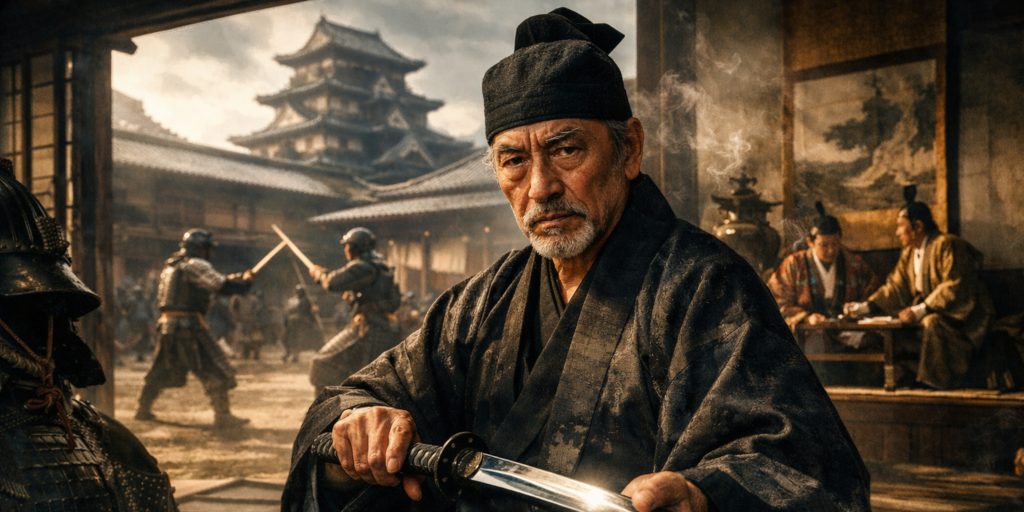
Munenori represents the moment when swordsmanship became statecraft. As instructor to the Tokugawa shoguns, his understanding of combat blended physical technique with political awareness. His writings explore how restraint, perception, and timing apply to leadership as much as fighting.
He was not chasing duels. He was shaping a ruling class. That influence makes him one of the most consequential swordsmen in history.
Achille Marozzo
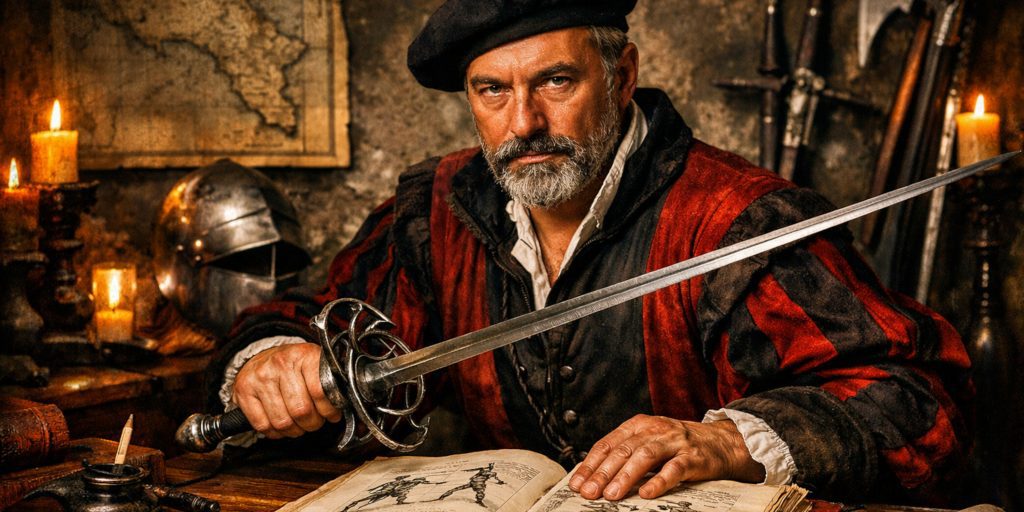
Marozzo’s work feels like standing in a busy Renaissance salle, surrounded by weapons and ideas. His manual covers sword and buckler, two handed swords, polearms, and more. It is broad, practical, and occasionally chaotic.
He earns his place because his system worked for civilians, soldiers, and professionals alike. Marozzo did not specialise narrowly. He prepared people for a violent world with many variables.
Henry de Sainct Didier
Often overlooked, Sainct Didier helped shape early French fencing theory. His work shows the transition from medieval cut focused systems to thrust oriented civilian swordplay. He cared deeply about pedagogy, how fencing was taught and understood.
His importance is quieter, but without figures like him, later French schools would not exist in the same form.
Pierre de la Touche
La Touche represents the peak of the deadly gentleman duellist. His fencing focused on composure under pressure and exploiting mistakes instantly. Accounts of his fights emphasise how rarely he wasted movement.
He embodies the uncomfortable truth of duelling culture. Polite society, sharpened to a lethal edge.
Why “Greatest” Is Always a Compromise
Comparing a samurai duellist to a Renaissance rapier master is like comparing a storm to a scalpel. Context matters. Weapons matter. Rules matter. A battlefield veteran might crush a civilian duellist under armour, while losing instantly in a formal rapier bout.
What links these figures is not universal dominance, but mastery within their world. They understood violence as it existed around them and adapted faster than their peers.
The Legacy That Still Cuts
Modern historical fencing, martial arts scholarship, and even stage combat owe an enormous debt to these individuals. Their manuals are studied line by line. Their reputations still spark arguments in pubs, forums, and lecture halls.
As a historian, I trust them most when they are least glamorous. When they talk about fear, timing, exhaustion, and mistakes. That is where greatness usually hides, not in the flourish, but in the moment when a blade meets reality and the outcome is decided.
Legendary & Mythological Blades
Figures immortalised in lore and literature.
| Name | Era/Region | Style/Weapon | Legendary Feats |
|---|---|---|---|
| Tomoe Gozen | 12th century (Japan) | Naginata & katana | Female samurai who beheaded Honda no Yoshihiro in the Genpei War. Symbol of onna-bugeisha (warrior women). |
| El Cid | 1043–1099 (Spain) | Tizona (longsword) | Undefeated in battle; his sword, Tizona, became a national treasure. Inspired epic poems like El Cantar de Mio Cid. |
| Artemisia I of Caria | 5th century BCE (Greece/Persia) | Naval tactics & sword | Queen-admiral who fought at Salamis; praised by Herodotus for “male courage” in battle. |
Modern Sword Masters: Olympic Glory & Beyond
Today’s champions blending tradition and sport.
| Name | Country | Discipline | Accolades |
|---|---|---|---|
| Aldo Montano | Italy | Sabre fencing | Olympic gold (2004), 4 World Championships. Part of Italy’s fencing dynasty. |
| Mariel Zagunis | USA | Sabre fencing | 2 Olympic golds (2004, 2008), 10 World Championship medals. First US woman to win fencing gold. |
| Richard Cohen | UK | Foil & sabre | 5-time British champion; author of By the Sword, a history of fencing. |
| János Kevey | Hungary | Épée fencing | 2023 World Champion; known for tactical brilliance and unorthodox strikes. |
| Yao Ni | China | Wushu (jian) | 3-time World Wushu Champion. Masters the jian (straight sword) with fluid, acrobatic flair. |
Key Competitions & Titles
| Event | Top Medalists | Notable Swordsmen |
|---|---|---|
| Olympic Fencing | Italy, France, Hungary | Edoardo Mangiarotti (13 Olympic medals, 1952–1960) |
| World Fencing Championships | Russia, Italy, South Korea | Sofya Velikaya (Russia, 5-time sabre champion) |
| World Wushu Championships | China, Iran, Hong Kong | Yuan Wen Qing (China, 8 golds in taolu sword) |
| HEMA (Historical European Martial Arts) | Poland, Germany, USA | Martin Fabian (2023 Longsword World Champion) |
What Makes a Great Swordsman?
- Technical Mastery: Precision in strikes, parries, and footwork (e.g., Fiore dei Liberi’s Flos Duellatorum).
- Tactical Genius: Adapting to opponents’ weaknesses (see Musashi’s duel against Kojirō).
- Legacy: Influencing future generations (e.g., Liechtenauer’s impact on German fencing).
- Cultural Impact: Blades like Tizona or the jian becoming symbols of national pride.
The greatest swordsmen are more than fighters, they are artists, strategists, and innovators. Whether in the chaos of a 17th-century duel or the precision of Olympic fencing, their mastery of the blade transcends time. As long as steel meets ambition, their legacy will endure.
For further reading, explore The Book of Five Rings or attend a HEMA tournament to witness historical techniques resurrected.