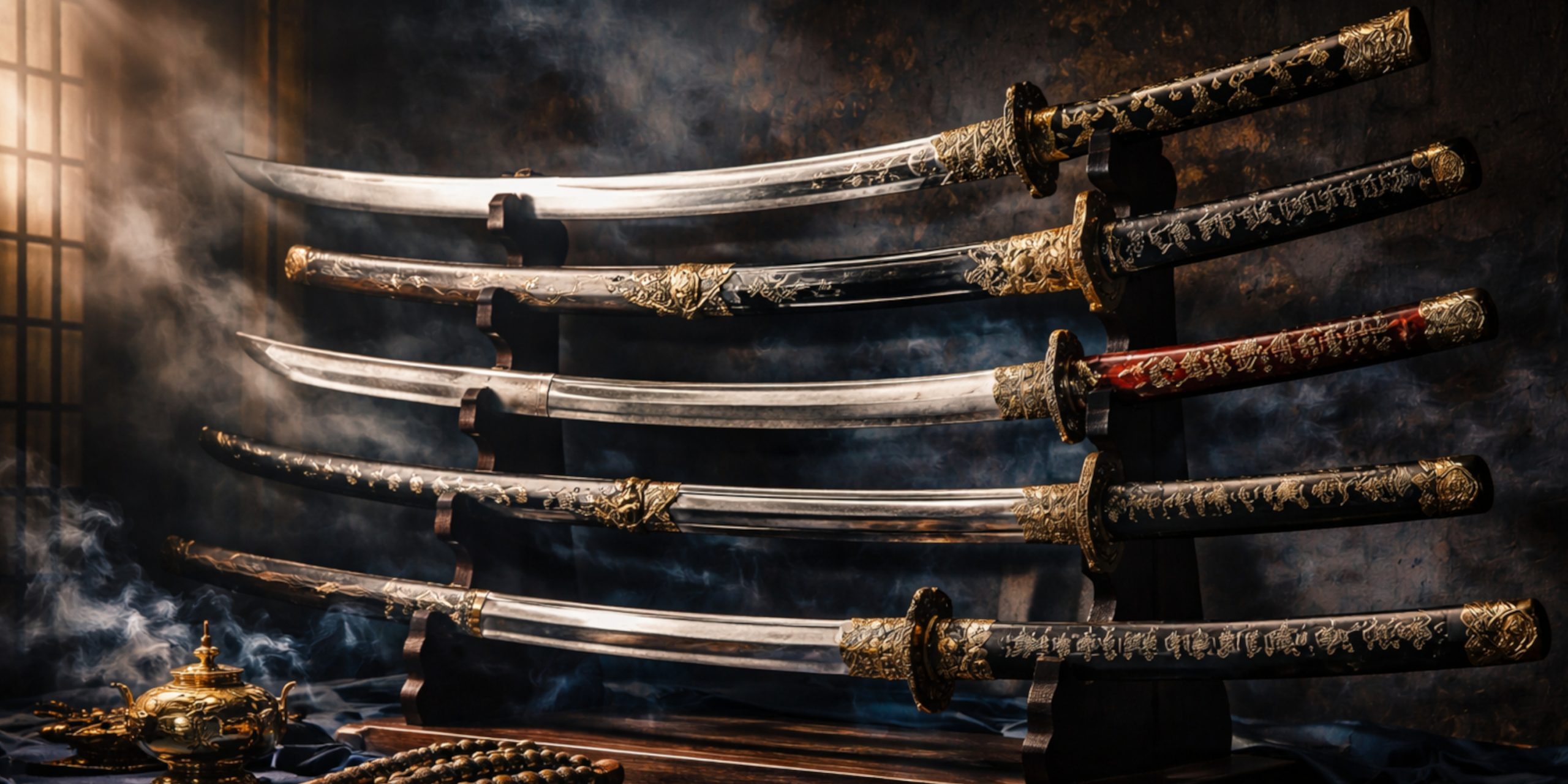
Kusanagi no Tsurugi
Kusanagi no Tsurugi sits above every other Japanese sword because it was never really competing with them. As part of the Imperial Regalia, it represents divine legitimacy rather than craftsmanship or combat effectiveness.
Its mythological origin inside the body of the serpent Yamata no Orochi tells you everything you need to know about its role. This is not a sword you swing. It is a sword you inherit. Its power comes from belief, continuity, and the quiet insistence that authority flows from heaven downward.
From a historian’s point of view, Kusanagi matters because it shaped political reality for over a millennium without ever needing to draw blood. That is influence of the highest order.
Honjō Masamun
Honjō Masamune is the most important sword ever forged by human hands in Japan, and it is currently missing.
Forged by Masamune during the Kamakura period, the blade earned its name after a battle in which it famously split a helmet yet failed to kill its opponent. The sword survived. Its reputation thrived.
What truly elevated it was ownership. Honjō Masamune became the symbolic blade of the Tokugawa shogunate, passed from shogun to shogun as a statement of rightful rule. By the Edo period, it was no longer a weapon but a political artefact. You did not fight with it. You ruled with it.
Its disappearance after the Second World War has turned it into a historical wound that never quite closes. The sword now exists as absence, which only deepens its legend. Nothing fuels reverence like something lost.
Dōjigiri Yasutsuna
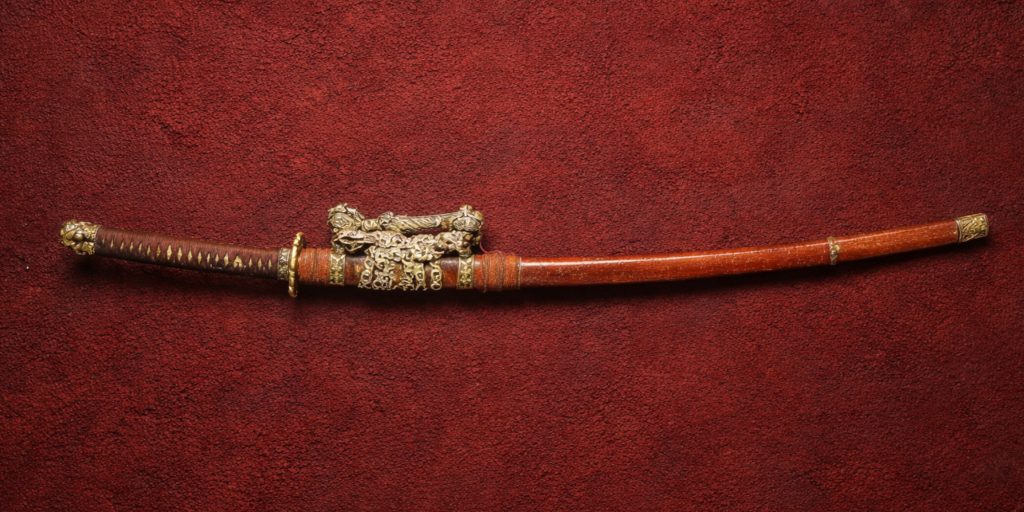
Dōjigiri Yasutsuna is often described as the greatest extant Japanese sword, and this time the praise is rooted firmly in steel.
As the foremost member of the Tenka Goken, its reputation blends elite craftsmanship with folklore, including the slaying of the demon Shuten Dōji. Unlike many legendary blades, the sword itself survives in remarkable condition.
Standing before it, the myth recedes and the technical mastery takes centre stage. The proportions, the balance, the clarity of the forging all speak for themselves. This sword does not need stories, even though it has plenty.
Mikazuki Munechika
Mikazuki Munechika is famous for beauty rather than violence, which is rarer than it sounds in sword history.
Named for the crescent moon shapes along its hamon, it became a courtly treasure passed between emperors and shoguns. Its fame rests almost entirely on aesthetics and refinement.
As a historian, I respect this blade for being honest about why people love it. Mikazuki is admired because it is visually arresting. No battlefield heroics required. Sometimes taste alone is enough.
Onimaru Kunitsuna
Onimaru Kunitsuna rounds out the Tenka Goken with a reputation built on protection and political association.
Its name, often translated as Demon Circle, comes from stories of warding off malevolent forces. Later ownership by the Tokugawa cemented its importance. As ever, proximity to power sharpens a sword’s legacy.
This is a recurring theme. Great blades become famous. Blades owned by rulers become immortal.
Juzumaru Tsunetsugu
Juzumaru Tsunetsugu is unusual among famous swords because it is tied more closely to religion than warfare.
Associated with the monk Nichiren, it functioned as a spiritual companion rather than a battlefield tool. Its name refers to Buddhist prayer beads, reinforcing its devotional role.
From a historian’s perspective, this sword is a useful corrective. Japanese swords were not always about killing. Sometimes they were about authority of belief and personal conviction.
Muramasa Blades
Muramasa swords are included here reluctantly but necessarily. While technically a group, individual named Muramasa blades achieved infamy through repeated association with Tokugawa misfortune.
Their reputation as cursed weapons was amplified by politics and coincidence. Excellent blades became taboo almost overnight.
As a historian, I find Muramasa swords fascinating precisely because the steel did nothing wrong. Reputation did all the damage. Few examples better show how narrative can overpower metallurgy.
The Seven Swords Takeaway
Named Japanese swords endure because they outgrow their original purpose. They become vessels for authority, belief, and memory. Steel is only the starting point.
When people argue about which sword was best, they are usually asking the wrong question. The real issue is which sword mattered most, and that answer almost always lies in who held it, when they held it, and what others believed it meant.