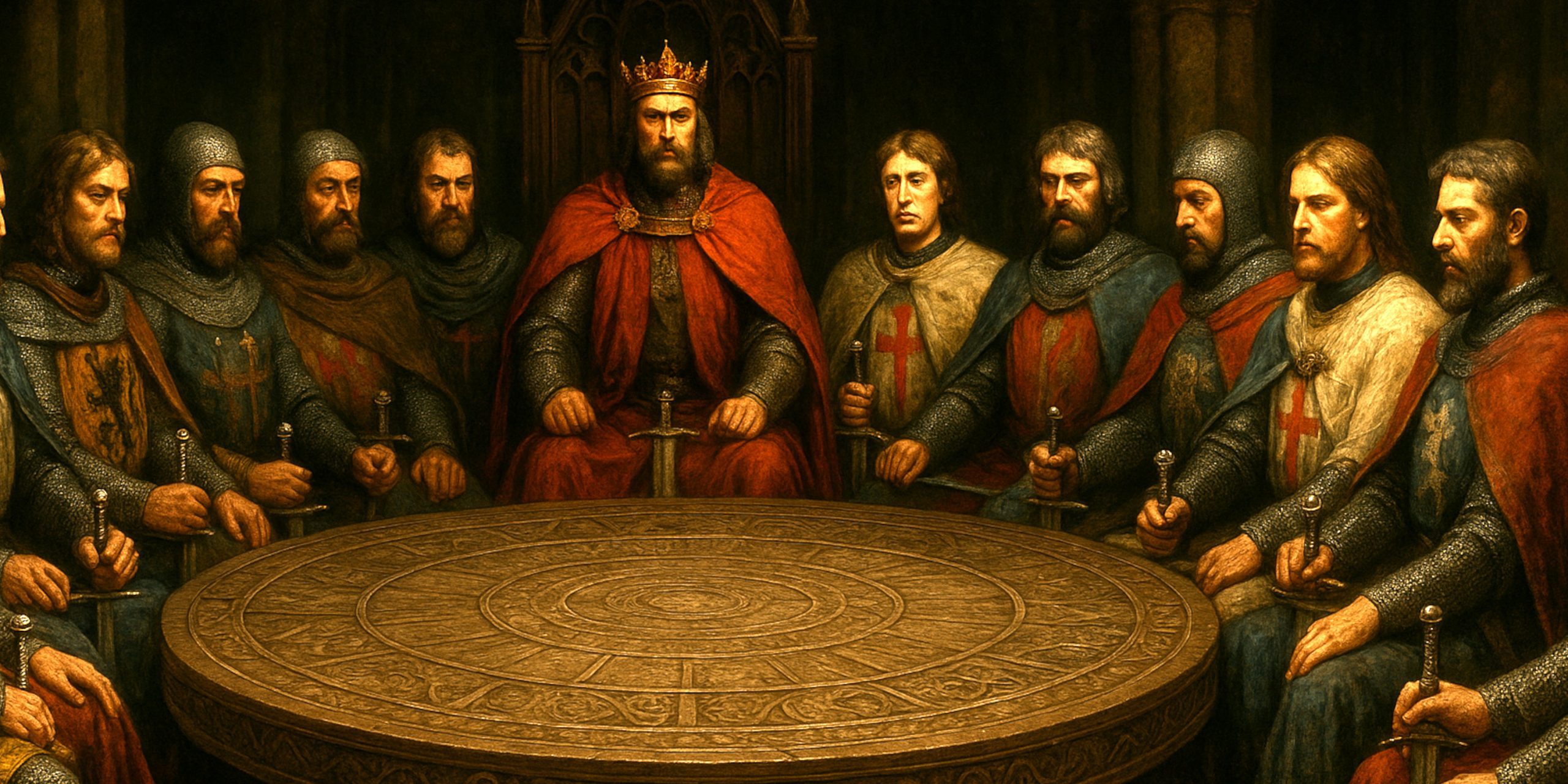
Arthur’s Round Table did not begin as the enormous roster modern authors love to parade. Early texts mention only a handful of knights. Later writers, especially during the French romance tradition, expanded the list into something closer to a heroic football squad, each knight with his own speciality, tragic flaw, or highly questionable decision-making.
What follows is a structured guide to every named Knight of the Round Table across the major medieval Arthurian traditions, with context, quirks, and a few moments where you may find yourself quietly judging the chivalric elite.
The Core Knights of the Round Table
These are the knights found consistently across early sources such as Geoffrey of Monmouth, Wace, Layamon, and the Vulgate Cycle. They form the backbone of Arthur’s court.
King Arthur
Not technically a knight on his own roster, although some later authors insist on placing him at the head of it. Arthur serves as commander, judge, and sometimes problem solver when his more volatile companions make a mess of chivalry.
Sir Lancelot du Lac
The archetypal knight. Peerless on the battlefield and disastrous in his personal life. His storyline sets half the court on fire and somehow remains the blueprint for tragic heroism in medieval literature.
Sir Gawain
Arthur’s nephew and one of the few knights who tries (with mixed results) to uphold chivalric ideals. His strength rises with the sun, which is convenient until someone schedules a duel at dusk.
Sir Percival
A pure-hearted quester who stumbles into enlightenment almost by accident. Early versions place him at the centre of the Grail story before later writers shift the spotlight.
Sir Galahad
Lancelot’s son, designed by medieval authors to be unbeatable, unblemished, and slightly unbearable. His perfection lets him succeed in the Grail Quest, although you suspect the court breathed a sigh of relief when he ascended rather than stuck around for dinner.
Sir Bors the Younger
One of the few who returns alive from the Grail Quest. Fiercely loyal, stubborn, and far more down to earth than many of his colleagues.
Sir Tristan
A devastating fighter and a menace to anyone trying to maintain court stability. His romance with Iseult creates another set of problems Arthur wishes he did not have to adjudicate.
Sir Kay
Arthur’s foster brother. Snarky, sharp-tongued, and occasionally heroic. Medieval authors treat him inconsistently, but the spark of personality is always there.
Sir Bedivere
One of Arthur’s closest companions. Loyal to the last and the knight entrusted with returning Excalibur to the water. Known for hesitating, which is understandable when asked to fling a sacred king-making sword into a lake.
Sir Gaheris
Brother to Gawain, loyal to the family cause, and often trapped in the political storms that undo the court.
Sir Gareth
The gentle knight, introduced in Malory with one of the most charming stories in the entire cycle. Beats impossible opponents, cooks in disguise, and remains endlessly patient with Kay’s insults.
Sir Agravain
The brother who cannot quite stop stirring the pot. His role in exposing Lancelot and Guinevere’s affair pushes the Round Table toward collapse.
Extended Knights of the Round Table
Later romances add dozens of names. Some appear fleetingly. Others carve out entire story arcs. Here is the expanded roster most commonly cited.
Sir Palamedes
A pagan knight who spends half his life chasing the Questing Beast and the other half being noble, complicated, and frequently exhausted.
Sir Safir
Brother to Palamedes. Loyal, steady, and far less troubled by plotlines involving mysterious beasts.
Sir Segwarides
Another casualty of Tristan and Iseult’s romance. A reminder that being a Round Table knight does not protect you from heartbreak.
Sir Aglovale
Percival’s brother. Solid and dependable, though forever overshadowed by relatives who get more dramatic quests.
Sir Ector
Lancelot’s foster father. A reliable presence and one of the mourners during the fall of Camelot.
Sir Lionel
Brother to Bors. Famous for temper issues, including trying to kill his own brother during the Grail Quest. A rough week for family unity.
Sir Lamorak
A powerhouse fighter whose skill rivals Gawain and Lancelot. His feud with the Orkney clan becomes yet another chain reaction leading to Camelot’s downfall.
Sir Percard
A less prominent knight, often mentioned in battle rosters and courtly gatherings.
Sir Brandiles
Appears in several combat scenes, usually the reliable reinforcement arriving at the right moment.
Sir Melyon
Known in only a few texts, sometimes linked to skirmishes on the fringes of Arthur’s rule.
Sir Uwaine (Owain)
Son of Morgan le Fay. A favourite in Welsh tradition and one of the more consistent adventurers across early texts.
Sir Yvain the Bastard
A separate character from Owain, with his own set of adventures and battles.
Sir Tor
Reputed son of King Pellinore. Earnest, brave, and committed to proving himself. A knight you would happily trust with your horse.
Sir Pelleas
A romantic soul whose devotion to Lady Ettard is painful to read, though Nimue eventually intervenes.
Sir Elyan
Nephew of Gawain. One of the younger generation whose loyalty to Arthur holds firm.
Sir Mordred
Arthur’s traitorous nephew in most versions and sometimes his illegitimate son. His rebellion brings the entire institution down. The Round Table would probably revoke his membership if it could.
Full Combined List of Round Table Knights
Below is a consolidated list drawn from the Vulgate Cycle, Post-Vulgate Romance, Malory’s Le Morte d’Arthur, and earlier British sources.
Arthur
Lancelot
Gawain
Percival
Galahad
Bors
Tristan
Kay
Bedivere
Gaheris
Gareth
Agravain
Mordred
Palamedes
Safir
Segwarides
Aglovale
Ector
Lionel
Lamorak
Percard
Brandiles
Melyon
Uwaine
Yvain the Bastard
Tor
Pelleas
Elyan
Dozens more appear in regional versions, but the above form the most stable and widely recognised core.
Why the Number of Knights Keeps Changing
Medieval authors never agreed on a single roster. Some counted twelve knights, others up to one hundred and fifty. The Round Table becomes a symbol rather than a fixed institution. Writers added and removed knights the way modern franchises rotate cast members. If a new romance needed a villain, a champion, or someone to be briefly heroic before being immediately defeated, a fresh knight could be invented on the spot.
As a historian, you eventually accept the Round Table as a narrative workshop rather than a bureaucratic register. It evolves with each retelling and thrives on variety.
Legacy of the Round Table
The Round Table knights shaped the ideal of chivalry long after the medieval period ended. Their quests influenced Renaissance poetry, Victorian medievalism, Tennyson’s reimagining, and the entire fantasy genre.
The table itself, whether a literal piece of furniture or a symbol of equality, became the model for councils, fellowships, and even modern leadership manuals. The knights endure because they are not perfect. Their flaws are half the reason readers keep returning to Camelot. It feels human, even when the plot is wildly impractical.