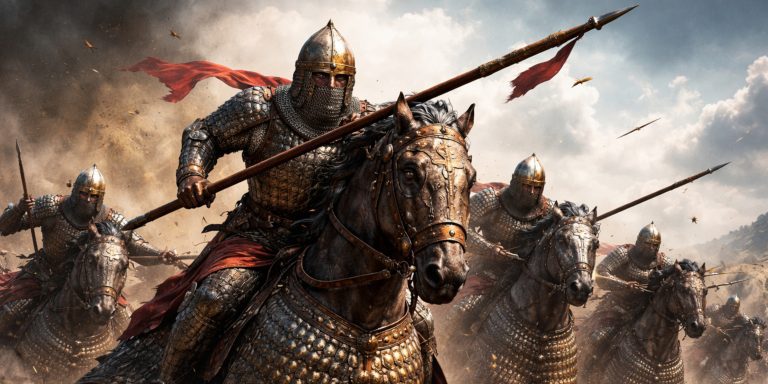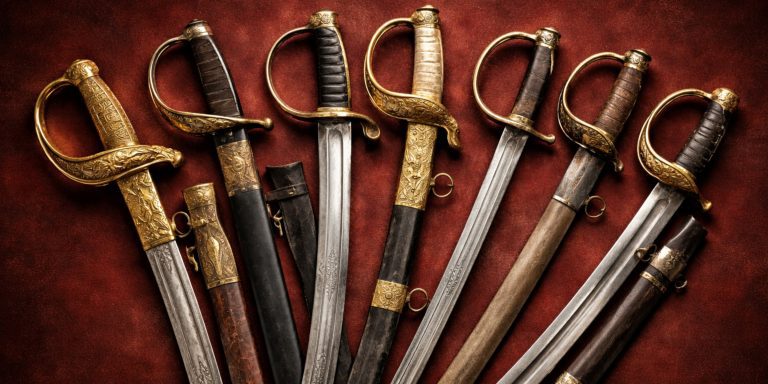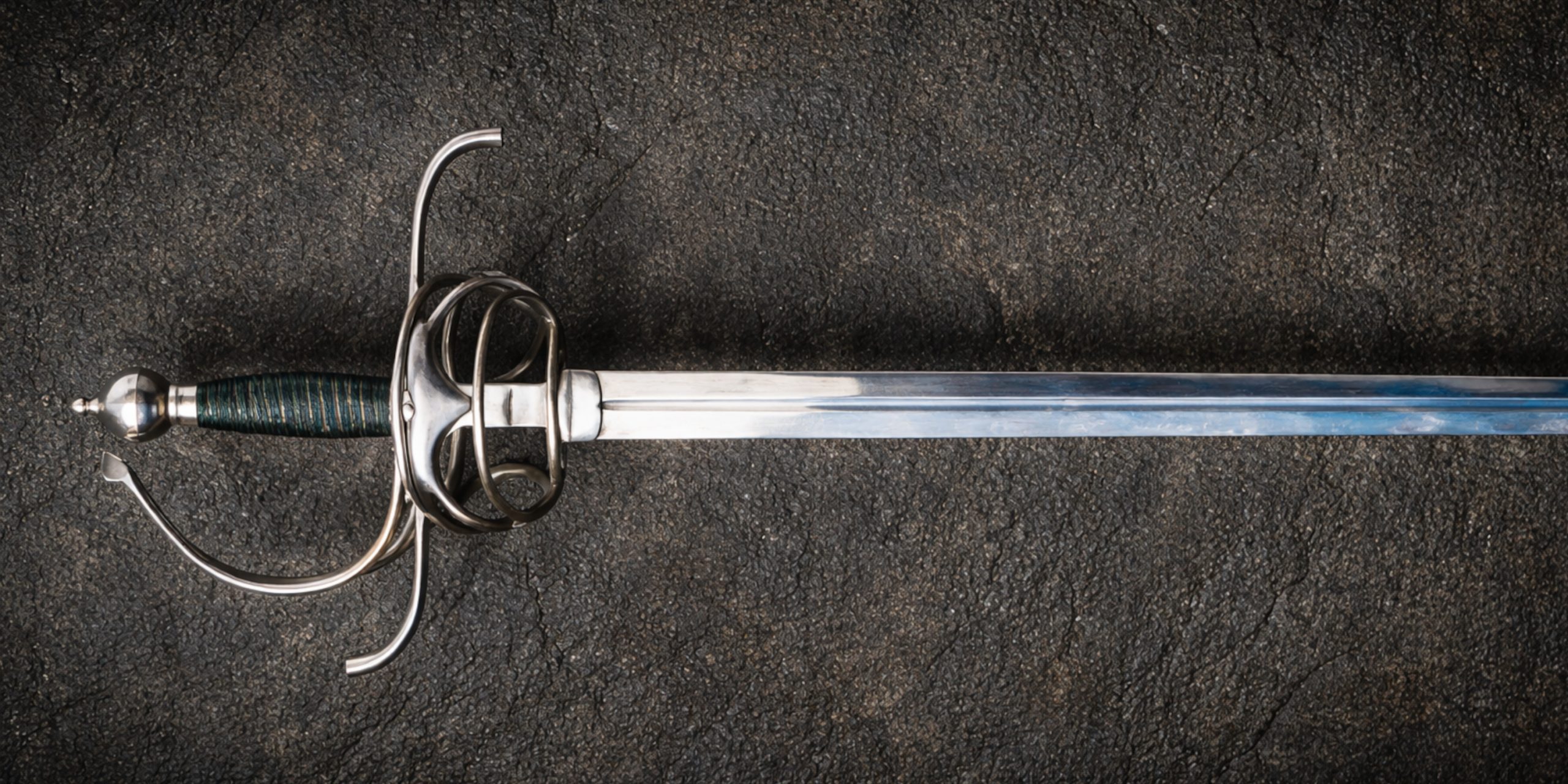
The sword carried by the Spanish conquistador was not a delicate court blade, nor quite the heavy knightly weapon of the late Middle Ages. It sat between worlds. Broad enough to cleave, pointed enough to thrust, and refined enough to reflect the fencing culture of Renaissance Spain, it was a practical instrument for men who expected resistance in armour, jungle, street, and saddle.
Often described as an early espada ropera or simply a cut and thrust sword, it became one of the defining European weapons of the sixteenth century. In the Americas it met obsidian-edged macuahuitl, hardened cotton armour, and steel weapons taken as trophies from fallen enemies. In those encounters, its design proved brutally effective.
Specifications
While there was no single pattern, surviving examples share consistent features.
| Feature | Typical Characteristics |
|---|---|
| Overall length | 95 to 115 cm |
| Blade length | 75 to 95 cm |
| Blade type | Straight, double edged, moderate taper |
| Cross section | Lenticular or flattened diamond |
| Weight | 1 to 1.4 kg |
| Hilt | Straight crossguard, side rings or early swept elements |
| Grip | Wood core with leather wrap, often wire bound |
| Pommel | Wheel, scent stopper, or faceted form |
Key identifying points:
- A blade broad enough for decisive cuts
- A pronounced thrusting point
- Early hand protection, sometimes evolving toward complex hilts
- Balance suited to both cavalry and foot combat
This was a transitional weapon, equally comfortable in a European duel or a colonial campaign.
History and Evolution
The cut and thrust sword of the conquistadors emerged from late medieval arming swords and side swords of Iberia. In the late fifteenth century, as plate armour declined and civilian fencing culture flourished, Spanish bladesmiths began producing narrower, more agile weapons without abandoning cutting capacity.
By the time of Hernán Cortés and Francisco Pizarro, these swords were standard sidearms among officers and mounted troops. Spanish steel, particularly from Toledo, had a reputation for resilience and edge retention. That reputation travelled across the Atlantic.
In the Americas, the sword was used against:
- Indigenous warriors equipped with macuahuitl and spears
- Armoured infantry wearing quilted cotton or leather
- Rival European forces
As the sixteenth century progressed, hilts became more protective. Side rings developed into complex swept guards, leading toward the true rapier. Yet during the height of the conquests, the blade retained a practical breadth. A conquistador needed to cut as often as he thrust.
Advantages and Disadvantages
Advantages
- Versatility in both cut and thrust
- Effective reach compared to indigenous weapons
- Strong, resilient steel from Iberian centres
- Adaptable for cavalry use
In close fighting, the ability to thrust into gaps or cut through lightly protected limbs gave a clear tactical edge.
Disadvantages
- Less specialised than a later rapier in pure thrusting duels
- Not as optimised for heavy armour as earlier knightly swords
- Required training to use effectively in fencing style combat
The weapon rewarded skill. In untrained hands it was simply sharp steel. In trained hands it was decisive.
Comparison with Similar Weapons
| Weapon | Primary Strength | Compared to Conquistador Sword |
|---|---|---|
| Medieval arming sword | Cutting power | Broader and heavier, less refined thrust |
| Early rapier | Thrusting precision | Narrower blade, reduced cutting ability |
| Italian side sword | Civilian fencing versatility | Very similar, often slightly lighter |
| German Katzbalger | Close infantry fighting | Shorter, more cut focused |
The conquistador blade occupies a middle ground. It was not yet the duelling rapier of courtly Europe, nor the pure battlefield cutter of the thirteenth century. It combined both instincts.
Legacy
The cut and thrust sword shaped colonial warfare in the early modern period. It became a symbol of Spanish expansion, carried in depictions of conquest scenes and preserved in European armouries.
Its legacy includes:
- The development of the rapier
- The spread of Spanish fencing traditions
- The elevation of Toledo as a centre of blade production
- The symbolic image of the armoured Spaniard in plumed morion and polished steel
In museums and art, the sword often appears alongside a morion helmet and breastplate. The pairing has become iconic.
Where to See Examples
Authentic sixteenth century Spanish swords can be viewed in several major collections.
Notable institutions include:
- Museo del Ejército
- Real Armería de Madrid
- The Wallace Collection
- The Metropolitan Museum of Art
These collections display both military and civilian examples, illustrating the gradual shift toward the rapier.
Collector’s Guide
Authentic conquistador era swords are rare and command serious prices. Condition, provenance, and blade originality matter enormously.
What Collectors Look For
- Confirmed sixteenth century Spanish origin
- Toledo blade markings
- Original hilt components
- Absence of excessive restoration
- Clear documentation of provenance
Auction Prices
| Condition and Provenance | Estimated Price Range |
|---|---|
| Fragmentary blade only | £4,000 to £8,000 |
| Complete but restored example | £12,000 to £25,000 |
| Fine condition, documented Spanish origin | £30,000 to £60,000 |
| Exceptional museum grade example | £70,000 plus |
Prices fluctuate with market demand and attribution certainty. Reproductions are widely available for under £1,000, but these should not be confused with period originals.
Serious buyers should consult reputable auction houses and independent arms specialists. As ever in arms collecting, if the story seems too dramatic, it probably is.