The Chokwe people of central and southern Africa produced some of the most distinctive edged weapons on the continent. Their Chokwe warrior sword is instantly recognisable, shaped with an artistic confidence that speaks to both utility and status. This guide lays out the essential details so the reader gains a solid grasp of what the weapon is, how it developed, and why it remains culturally significant.
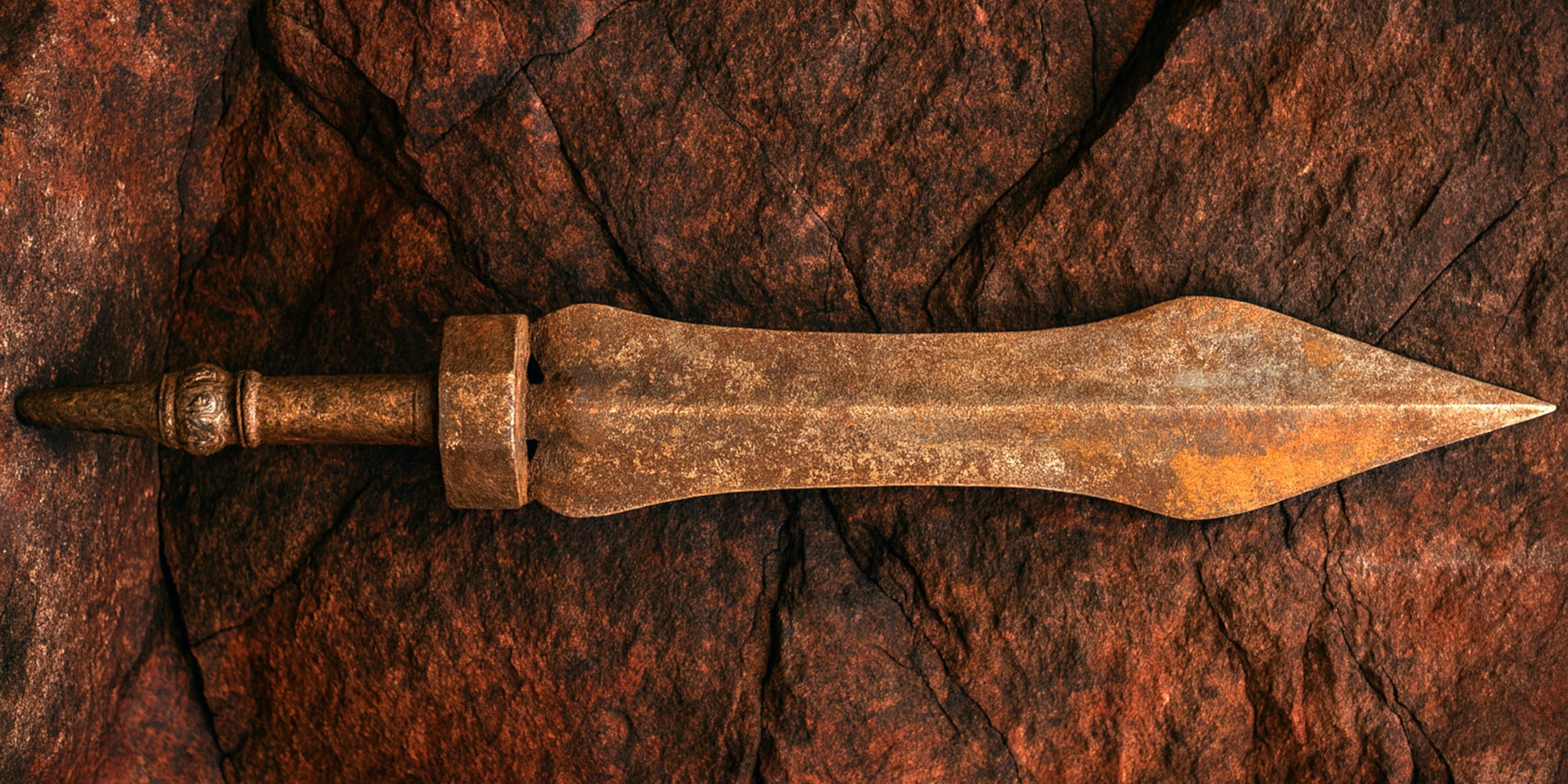
The Chokwe warrior sword, sometimes called a ceremonial short sword, comes from the regions of present day Angola, the Democratic Republic of Congo, and Zambia. It served as a practical cutting weapon but also carried symbolic weight. Its carved hilts, geometric blades, and strong lines reflect the wider Chokwe artistic tradition that appears in masks, stools, and metalwork. Although Europeans sometimes mislabelled these swords as purely ceremonial, they had a definite martial role among warrior elites.
Specification
The sword varies in size and exact shape, although the typical measurements below give a reliable overview.
Typical Dimensions
| Feature | Approximate Measurement |
|---|---|
| Overall length | 35 to 50 cm |
| Blade length | 20 to 35 cm |
| Blade width | Broadening toward mid section, often 5 to 9 cm |
| Blade profile | Leaf shaped or flared geometric form |
| Materials | Iron blade, wooden hilt, rattan or fibre binding |
Key Design Points
- Distinctive flared or angular blade profile.
- Forged iron often decorated with incised lines.
- Wooden handle carved in rounded or faceted forms.
- Light, balanced feel suited to quick strikes.
History and Evolution
The Chokwe developed a strong warrior culture connected to regional trade networks. Their blacksmiths produced iron blades at village and clan level, blending utility with refined craftsmanship. During the fifteenth to nineteenth centuries the weapon took on a dual function, one for close range fighting and another for signalling rank.
As firearms spread across central Africa, edged weapons did not vanish. Instead, the Chokwe sword evolved into a prestige object for leaders, dancers, and hunters. Nineteenth century examples show increased decoration, especially on the blade surface and hilt. Twentieth century pieces were still produced, although many catered to collectors rather than battlefield use.
Advantages and Disadvantages
Advantages
- Quick, agile weapon for close combat.
- Wide cutting area due to flared profile.
- Elegant design that also worked as a status symbol.
- Robust iron construction that endured rough handling.
Disadvantages
- Limited reach compared with spears or longer swords.
- Not ideal against heavily protected opponents.
- Variation in quality due to local forging methods.
- Decorative versions sometimes impractical for actual fighting.
Comparison with Similar Weapons
The Chokwe sword fits within a broader family of central African edged weapons. Some comparisons help place it in context.
| Weapon | Region | Key Differences |
|---|---|---|
| Ngombe execution sword | Congo Basin | Heavier, more exaggerated form, largely ceremonial or judicial. |
| Yaka short sword | Congo | Straighter and narrower, less emphasis on flared geometry. |
| Luba knife sword | Katanga | More curved designs, often used as prestige currency. |
| Konda sword | Congo | Typically longer with extended grip and straighter blade form. |
The Chokwe type stands apart for its balanced middle ground between artistry and combat practicality.
Legacy
The sword reflects Chokwe identity, social structure, and artistic philosophy. It reveals an appreciation for geometry and symbolism, traits that run through Chokwe sculpture and mask making. Today the weapon appears in ethnographic collections across the world, valued as both a martial artefact and an example of highly developed African metalwork.
Collectors appreciate the way each blade tells its own story through forging marks and carved hilts. Museums use them to explain regional history, trade, and the rhythm of daily life in Chokwe communities.
Where to See
You can view Chokwe swords in several major collections.
- British Museum, London
- Royal Museum for Central Africa, Tervuren
- Metropolitan Museum of Art, New York
- National Museum of Angola
- Smithsonian National Museum of African Art, Washington DC
Many regional museums with ethnographic departments also display examples.
Collectors Guide and Auction Prices
Interest in central African weapons has grown over the last several decades. Authentic nineteenth century Chokwe swords remain accessible, although high quality examples attract strong bidding.
What Collectors Look For
- Provenance, especially pieces acquired before the mid twentieth century.
- Well preserved blade shape without major corrosion.
- Carved hilt with intact binding.
- Forge marks and traditional incised decoration.
- Signs of genuine age rather than modern reproduction.
Typical Market Range
| Condition | Price Range |
|---|---|
| Museum grade with strong provenance | £1,500 to £3,500 |
| High quality nineteenth century example | £600 to £1,200 |
| Average twentieth century piece | £150 to £400 |
| Tourist or reproduction item | £40 to £120 |
Prices vary widely depending on rarity, dealer, and documentation.
Buying Advice
- Consult established dealers in African arms and ethnographic material.
- Request close photographs of blade and hilt.
- Check for modern grinding marks that indicate recent manufacture.
- Ask for any export permits when buying internationally.