Who Were the Bohemian Hussite Infantry?
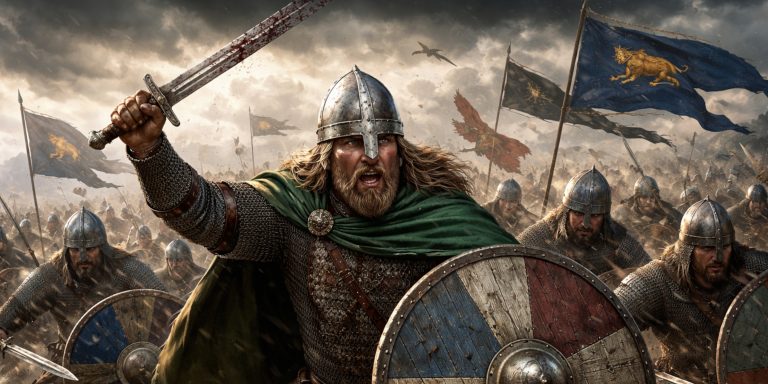
The Bohemian Hussite infantry of the 15th century were among the most unusual and effective foot soldiers in medieval Europe. They were not professional knights raised from noble families. Most were townsmen, miners, craftsmen, peasants and local militia drawn together by religion, politics and a fierce dislike of being told what to do by kings, bishops and foreign crusaders.
The movement emerged after the execution of Jan Hus in 1415. His death turned anger into rebellion, and rebellion into one of the most remarkable military forces of the late Middle Ages. Between 1419 and 1434, Hussite armies repeatedly defeated crusading armies sent against Bohemia by the Holy Roman Emperor and the Pope.
At first glance, this should not have happened. The crusading forces often had more cavalry, more nobles and far more expensive armour. The Hussites, meanwhile, frequently arrived with farm tools, battered shields and a suspicious quantity of wagons.
Then Jan Žižka and his successors turned those wagons into moving fortresses and turned ordinary infantry into something far more dangerous.
Why Hussite Infantry Were So Effective
The genius of Hussite infantry lay in discipline and organisation. Unlike many medieval armies, which could descend into an expensive and noisy argument between noblemen on horseback, Hussite infantry fought as a coordinated force.
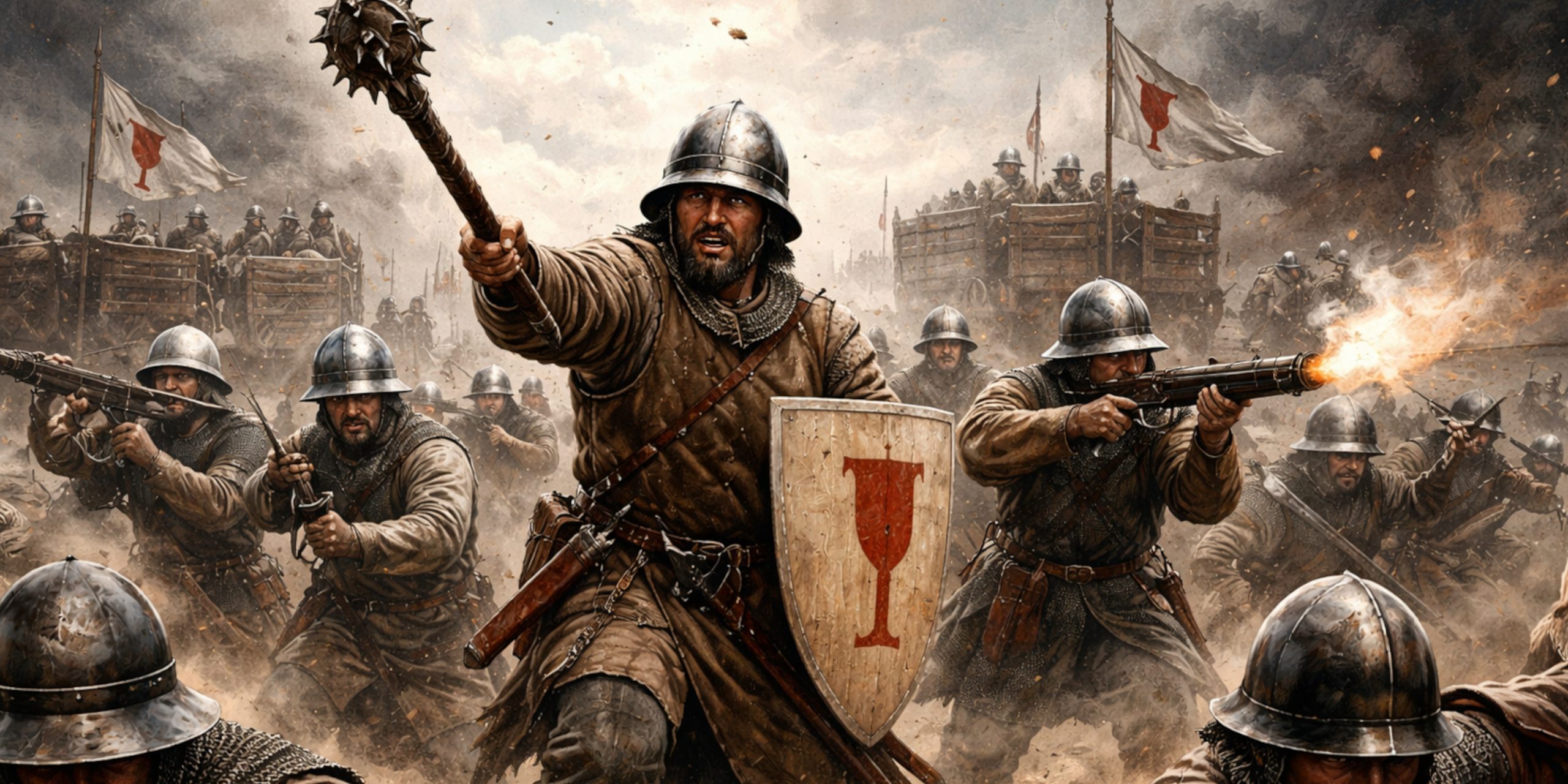
Their armies were usually built around the wagon fort, or wagenburg. Heavy wagons were chained together into a defensive line or square. Between and behind the wagons stood infantry armed with polearms, flails, crossbows and increasingly, firearms.
A typical formation included:
- Crossbowmen and handgunners firing from behind the wagons
- Spearmen and halberdiers protecting the gaps between them
- Men armed with war flails waiting to smash any knight foolish enough to get close
- Reserve infantry ready to counterattack once the enemy line broke
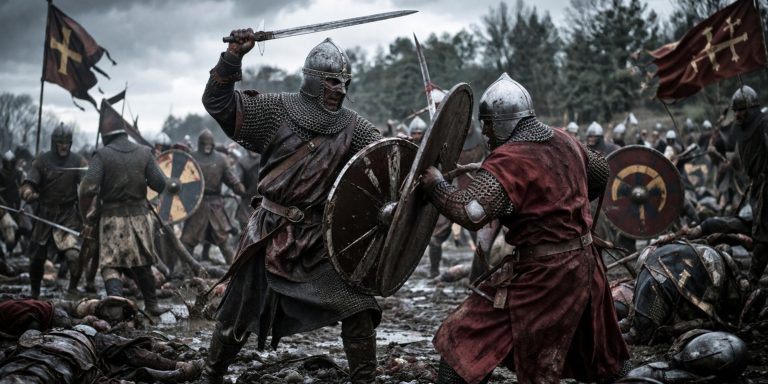
The result was brutally effective. Enemy cavalry charged the wagon line, became trapped or disorganised, and were then attacked from every side. Medieval knights were still terrifying, but even the finest armoured horseman becomes rather less impressive when dragged from his saddle by a hook and hit repeatedly with an iron-shod flail.
Arms and Armour
Hussite infantry used a mixture of improvised weapons, captured equipment and locally made arms. The army was never completely uniform. One man might wear a padded coat and carry a peasant flail, while the soldier next to him wore a captured mail shirt and wielded a fine German sword taken from an unfortunate crusader.
Main Weapons
| Weapon | Description | Typical Use |
|---|---|---|
| War Flail | Adapted from an agricultural threshing flail, often fitted with iron bands or spikes | Used against cavalry and heavily armoured troops |
| Spear | Simple and cheap infantry weapon | Defensive fighting around wagons |
| Halberd | Polearm with axe blade and spike | Pulling riders from horses and breaking armour |
| Crossbow | Common ranged weapon among townsmen | Fired from behind pavises and wagons |
| Handgonne | Early firearm, slow but intimidating | Used to frighten horses and pierce armour |
| Pavise Shield | Large rectangular shield | Protected crossbowmen and handgunners |
The war flail became particularly associated with the Hussites. Chroniclers mention them repeatedly. They were cheap, easy to produce and horrifyingly effective. A knight might survive a sword cut or spear thrust. A flail smashing into his helmet from the side was a rather different matter.
Specific Sword Types Used
Hussite infantry often carried swords as secondary weapons rather than primary battlefield arms. These were usually shorter, cheaper and practical.
Common sword types included:
- Falchions, single-edged cutting swords popular among infantry
- Messer-style swords, especially among German and Bohemian troops
- Arming swords of late medieval European type
- Baselards and long fighting knives
- Captured knightly swords taken from defeated crusaders
The falchion was particularly common because it was cheaper than a double-edged knightly sword and easier to use. A Hussite foot soldier did not need an elegant weapon for a duel in a castle courtyard. He needed something sturdy enough to finish off a fallen man-at-arms while standing knee-deep in mud beside a wagon.
Armour
Most Hussite infantry wore practical protection rather than full plate armour.
Typical armour included:
- Thick padded gambesons or quilted jerkins
- Mail shirts or mail coifs captured from enemy soldiers
- Kettle hats with broad brims
- Simple iron helmets
- Brigandines and coat-of-plates for wealthier soldiers
- Partial plate armour on arms and legs
| Armour Item | Typical Wearer |
| Gambeson | Ordinary infantryman |
| Kettle Hat | Most Hussite foot soldiers |
| Mail Shirt | Better-equipped infantry or veterans |
| Brigandine | Wealthier soldiers and officers |
| Full Plate | Rare, usually worn by captured or allied nobles |
The kettle hat became almost iconic. Its wide brim gave protection from arrows and blows, while also making the wearer look faintly like an angry iron mushroom.
Firearms and the Hussite Revolution
The Hussites were among the first European armies to make extensive use of firearms in the field.
Their handgunners used primitive handgonnes and small cannon mounted on wagons. These weapons were inaccurate and slow to reload, but accuracy mattered less when firing into a mass of advancing cavalry.
The psychological effect was enormous. Horses often panicked at the noise and smoke. A charge that looked unstoppable a moment earlier could collapse into confusion within seconds.
By the 1420s, Hussite armies were using firearms on a scale that was genuinely new for Europe. They combined guns with crossbows, polearms and defensive formations in a way that feels surprisingly modern.
There is a temptation to think of medieval warfare as endless cavalry charges and banners flapping nobly in the wind. The Hussites are a useful reminder that war was already changing. Gunpowder had arrived, and the knightly age was beginning to look slightly nervous.
Daily Life of a Hussite Infantryman
Life for the ordinary Hussite infantryman was harsh. Campaigns involved long marches, poor weather, shortages of food and frequent sieges. Soldiers often lived from what they could carry or seize.
Most infantrymen travelled with:
- A weapon and spare ammunition
- Food for several days
- A blanket or cloak
- Tools for repairing wagons and defences
- Religious symbols, especially the chalice emblem of the Hussite movement
The Hussite army was deeply religious. Soldiers often sang hymns before battle. One of the best known was Ktož jsú boží bojovníci or Ye Who Are Warriors of God. It served partly as a marching song and partly as a declaration that they intended to fight very hard indeed.
Contemporary accounts describe the singing of Hussite troops as deeply unsettling to their enemies. Medieval soldiers were accustomed to war cries. A disciplined wall of infantry advancing while singing in unison was another matter entirely.
Archaeology and Surviving Evidence
Archaeology has revealed a great deal about Hussite infantry, although much remains frustratingly incomplete.
Excavations at former Hussite battlefields and camps, especially around Tábor and Sudoměř, have uncovered:
- Crossbow bolts
- Lead bullets and early gunshot
- Fragments of wagon fittings and chains
- Iron flail heads
- Sword fragments
- Pieces of helmets and mail
Several excavated flail heads show iron reinforcement and sometimes spikes, confirming that these were purpose-built weapons rather than simple farm tools carried onto the battlefield in a panic.
Archaeologists have also found evidence of early firearms workshops in Bohemia. The scale of production suggests that the Hussites were manufacturing weapons in significant numbers rather than relying entirely on captured equipment.
One of the most fascinating discoveries has been the remains of wagon fortifications. Iron chains, wagon fittings and defensive earthworks have helped historians reconstruct how Hussite wagenburgs actually worked in battle.
Even so, many details remain uncertain. Medieval chroniclers loved describing victories and divine favour, but were often rather less interested in explaining where exactly someone had left their helmet or what sort of sword they were carrying. Historians are left piecing together the puzzle from fragments of iron, scattered bones and the occasional suspiciously enthusiastic monk.
Contemporary Quotes
Several contemporary writers left vivid descriptions of Hussite infantry and their fighting style.
“The peasants armed with flails struck down knights and nobles as if they were cutting grain.”
This hostile description from a Catholic chronicler says quite a lot, even if one suspects he was not writing in a particularly cheerful mood.
“Their wagons stood as walls, and from them came arrows, stones and fire.”
Another chronicler described the shock of facing a Hussite wagenburg during the crusades against Bohemia.
Aeneas Sylvius Piccolomini, later Pope Pius II, wrote of the Hussites with reluctant admiration:
“No nation was more skilled in the art of war.”
Praise from a future pope was not handed out lightly, especially not to people his side had spent years trying to defeat.
Legacy of the Hussite Infantry
The Bohemian Hussite infantry changed warfare in Europe.
They showed that disciplined infantry could defeat heavily armoured cavalry. They demonstrated the value of field fortifications, combined arms tactics and firearms. In many ways, they anticipated developments that would later appear in Swiss, German and early modern armies.
The Hussites did not destroy the medieval knight overnight. Knights remained important for another century and more. Yet after the Hussite Wars, it was harder to believe that cavalry alone could dominate the battlefield.
The age of the armoured noble charging gloriously across the field was beginning to fade. The future belonged increasingly to organised infantry, gunpowder and men who knew how to chain a line of wagons together and make life deeply unpleasant for everyone in front of them.
For a historian, that is one of the most fascinating things about the Hussites. They sit awkwardly between two worlds. One foot remains planted in the Middle Ages, armed with flails and mail shirts. The other is already stepping into the early modern age, carrying guns, field artillery and the grim realisation that warfare was changing forever.