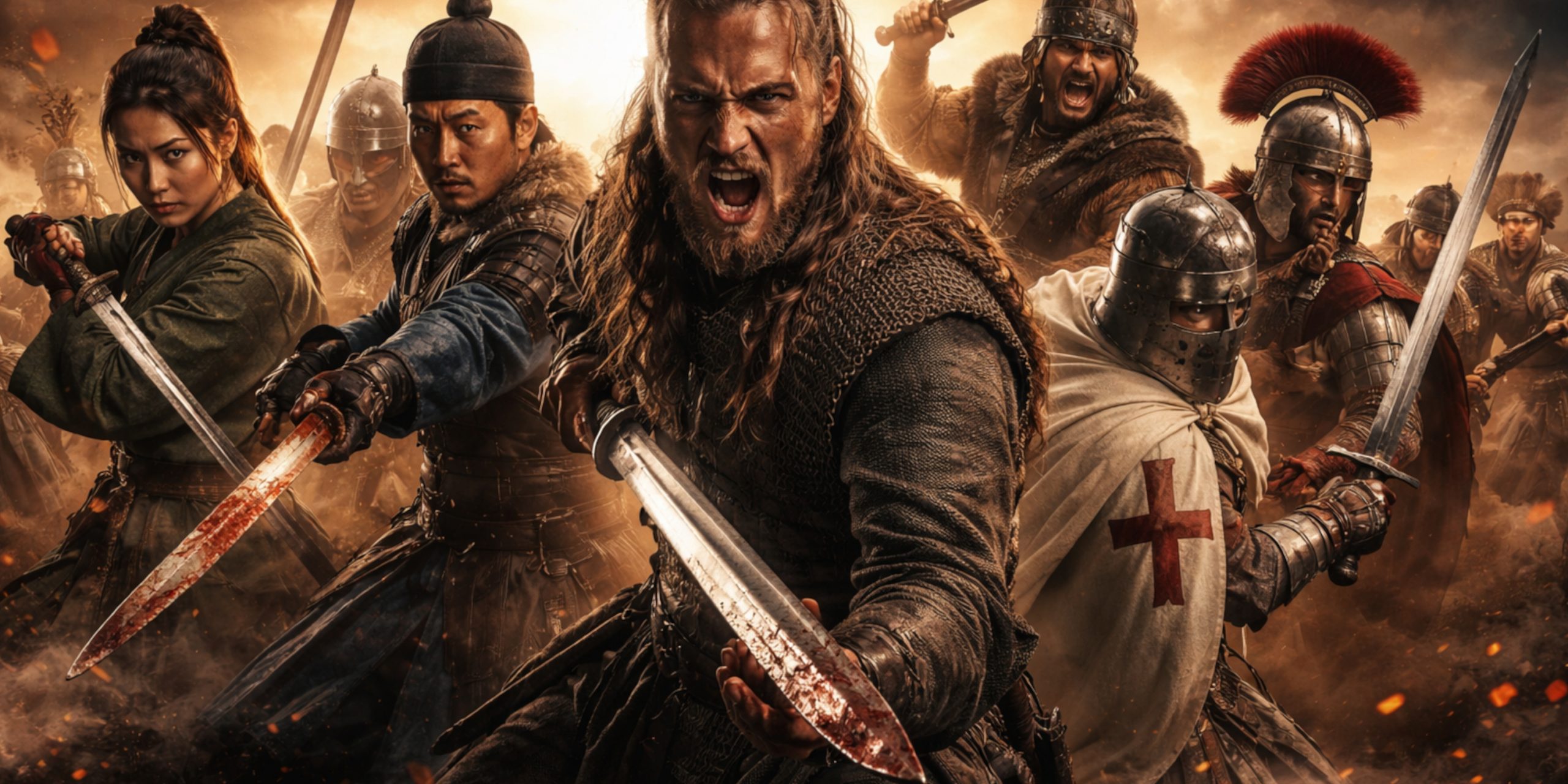
Netflix still treats historical drama like a rotating display cabinet. Titles arrive, disappear, and occasionally return just after you have recommended them to someone else. As of 2026, though, its swordplay catalogue remains deeper than most expect.
The Last Kingdom

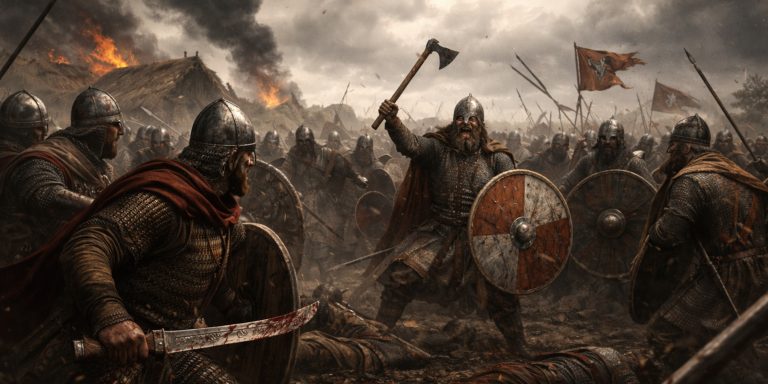
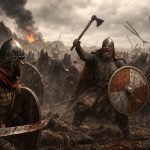
If you care about swordplay as something shaped by culture, training, and ugly necessity, this remains Netflix’s strongest offering. The combat avoids theatrical fencing for the most part and leans into shield walls, short violent exchanges, and blades used as tools rather than fashion accessories.
The swords themselves feel right. Broad Anglo-Saxon blades, practical Viking swords, and occasional seaxes appear battered, nicked, and heavy. Choreography focuses on pressure and positioning rather than flourishes. You can almost feel the weight in the wrists.
By 2026, its influence is obvious. Many later series borrowed its tone without matching its discipline. This one still feels grounded, even when the plot gets ambitious.
Swordplay highlights
Blades treated as valuable, personal objects
Shield wall fighting that looks exhausting rather than elegant
Emphasis on timing, grappling, and close-range cuts
Vikings Valhalla

Why it works, and where it slips
This series trades some of the raw grime of its predecessor for scale and polish. The swordplay is sharper, cleaner, and more cinematic, sometimes to its own detriment. Fighters survive exchanges they probably should not, but the choreography remains muscular and readable.
Weapons lean later than early Viking material, which fits the period. Swords are longer, shields slightly less dominant, and armour is more consistent. It feels like a world in transition, which is historically fair.
By 2026 standards, it is not subtle, but it knows what it is doing.
Swordplay highlights
Naval boarding fights that make good use of confined space
Broader use of armour and longer swords
Duels framed as character moments rather than pure spectacle
Knightfall
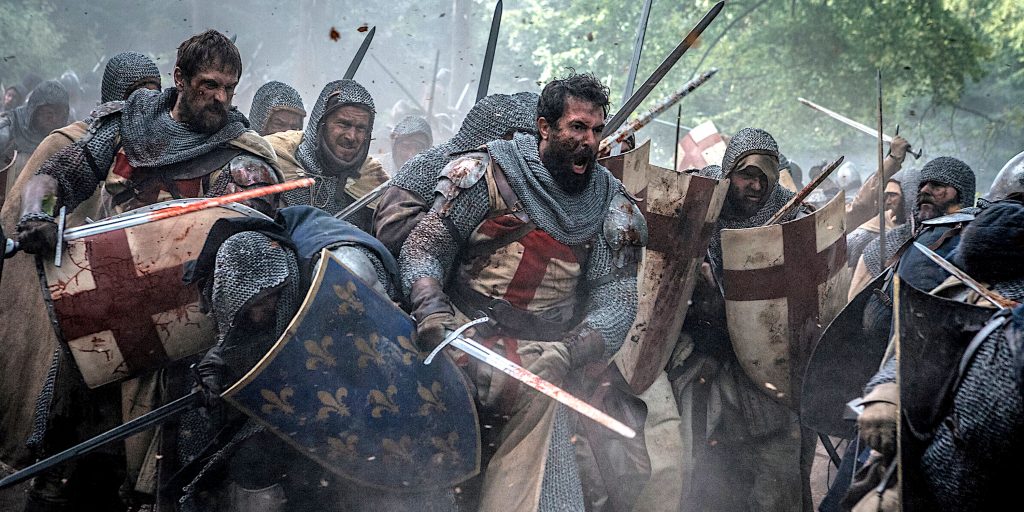
Knightfall has aged better than expected. Viewed now, it feels like a serious attempt to depict professional medieval warriors rather than romantic myths.
The swordplay is deliberate and weighty. Armour affects movement. Shields are used properly. Helmets appear with refreshing regularity. Season two, in particular, improves discipline and choreography, with tournaments and training sequences that feel structured rather than decorative.
It is uneven television, but its approach to knightly combat earns respect.
Kingdom

This series blends historical drama with horror, which oddly improves its swordplay. Characters do not posture. They strike, retreat, panic, and conserve energy. Swords are fast, practical, and often used in desperation.
The Korean blades are well represented, with emphasis on cutting efficiency and footwork. Armour is lighter, movement quicker, and the choreography reflects that difference clearly.
By 2026, it stands out as one of Netflix’s best examples of non-Western sword combat done seriously.
Swordplay highlights
Clear distinction between trained fighters and civilians
Fast, economical cuts
Realistic fatigue and fear
Barbarians

Messy, violent, and historically interesting
This series is rough around the edges, but its violence feels appropriate. Swordplay is chaotic, shield-heavy, and often ugly. Roman discipline clashes with Germanic aggression in a way that makes tactical sense.
Swords are short, stabbing weapons rather than long slashing blades, and the series remembers that formations matter more than individual heroics.
It is not refined, but that is partly the point.
Swordplay highlights
Emphasis on terrain and ambush
Roman gladius use in formation
Brutal close-quarter fighting
Marco Polo

This series never quite got the credit it deserved, largely because it arrived before audiences were ready to forgive ambitious historical drama for narrative missteps. From a weapons perspective, it remains fascinating.
You see sabres, straight swords, polearms, and battlefield tactics shaped by steppe warfare rather than European traditions. Swordplay is often secondary to archery and cavalry, which feels honest.
It is not perfect, but in 2026 it feels refreshingly different from endless shield-and-sword European settings.
Swordplay highlights
Cultural variety in arms and fighting styles
Curved blades used from horseback
Mixed weapon combat rather than sword-only fights
Heirs to the Land
A quieter inclusion, but an important one. Set in medieval Spain, this series focuses more on social tension than battlefield spectacle, yet when swords appear, they feel grounded.
Street violence, ambushes, and restrained duels dominate. Armour is limited, movement is cautious, and blades are drawn reluctantly rather than theatrically.
It is a reminder that most historical swordplay happened away from banners and speeches.
Blue Eye Samurai
Animated, yes, but too good to ignore. This series treats swordsmanship with a seriousness many live-action dramas fail to reach.
Duels are brutal, tactical, and psychologically charged. The animation allows techniques, timing, and blade damage to be shown clearly without drifting into fantasy nonsense. Fatigue, injury, and consequence are central themes.
For sword enthusiasts, this is one of Netflix’s strongest offerings, regardless of medium.
Rise of Empires Ottoman
For context as much as combat
This is not a pure drama, but it earns a place here because it treats weapons seriously. Swordplay is brief but grounded, and the broader military context adds weight to every clash.
Ottoman blades, European swords, and early firearms coexist, showing a world where swords are still deadly but no longer dominant.
In 2026, it works well as a companion watch rather than a standalone action fix.
Swordplay highlights
Short, decisive engagements
Transitional warfare between medieval and early modern
Heavy armour influencing fighting styles
What Netflix Gets Right About Swordplay in 2026
There is clear improvement. Less spinning. Fewer pointless flourishes. More respect for weight, fear, and fatigue. Shields have returned. Helmets appear more often, though still not often enough.
The remaining weakness is length. Too many duels run past the point where either fighter should reasonably be standing. Still, compared to five years ago, progress is obvious.
Where to Start if You Care About Swords
For grounded realism, The Last Kingdom and Kingdom remain the safest bets.
For knightly combat and armour, Knightfall offers something few others attempt.
For variety and global perspectives, Marco Polo and Blue Eye Samurai stand out.
Each of these series treats the sword as a product of culture and necessity, not just a prop for dramatic posing.