The Battle of the Helgeå was one of the most important clashes of the early eleventh century. Fought probably in 1026 near the mouth of the River Helgeå in Scania, it brought together some of the most powerful rulers in northern Europe. On one side stood Cnut the Great, already king of England and Denmark. On the other stood Olaf Haraldsson of Norway and Anund Jacob of Sweden, who were trying to stop him from tightening his grip on Scandinavia.
It is not the easiest battle to reconstruct. The sources are uneven, partisan and occasionally about as cooperative as a wet shield in winter. Even so, the broad picture is clear enough. Helgeå mattered because it helped confirm Cnut as the dominant political force in the north, while Olaf’s position continued to weaken.
For anyone interested in Viking Age warfare, kingship and the messy business of building empires, Helgeå deserves more attention than it usually gets.
Where and when was the Battle of the Helgeå fought?
The battle was probably fought in 1026 near the River Helgeå in Scania, then part of the Danish sphere. The exact location remains debated, but most historians place it close to the river mouth, in a landscape well suited to fleet manoeuvres, ambushes and the kind of confusion that medieval chroniclers rarely bother to explain properly.
The date is usually given as 1026, although some discussion has existed around the chronology. Even with those debates, 1026 remains the standard date in modern historical writing.
Why the battle is remembered
Helgeå was not an isolated raid or a local feud inflated by later legend. It sat within a larger struggle for control of Scandinavia and the Baltic world.
By the mid-1020s, Cnut had already built an impressive power base. He ruled England and Denmark, and his influence stretched across the North Sea. That made him dangerous to neighbouring kings. Olaf Haraldsson of Norway and Anund Jacob of Sweden had good reason to cooperate against him. If they did nothing, Cnut would become the unchallenged master of the region.
That, more or less, is what happened.
The battle appears to have ended in Cnut’s favour, whether through battlefield success, superior recovery, or simply emerging with the stronger political hand. In medieval warfare, the man left standing was important. The man left looking inevitable was even more important.
The leaders
| Side | Leader | Position | Role |
|---|---|---|---|
| Anglo-Danish | Cnut the Great | King of England and Denmark | Sought to crush resistance and secure dominance in Scandinavia |
| Norwegian-Swedish alliance | Olaf Haraldsson | King of Norway | Opposed Cnut’s expansion and defended Norwegian independence |
| Norwegian-Swedish alliance | Anund Jacob | King of Sweden | Allied with Olaf against Cnut |
These were serious rulers with real fleets, real resources and real political stakes. Helgeå was not a border squabble. It was a contest between kings.
Forces
Exact troop numbers are not securely known, and any source that gives a suspiciously tidy figure should be handled with caution. Medieval chroniclers had many talents, but careful military accounting was not always one of them.
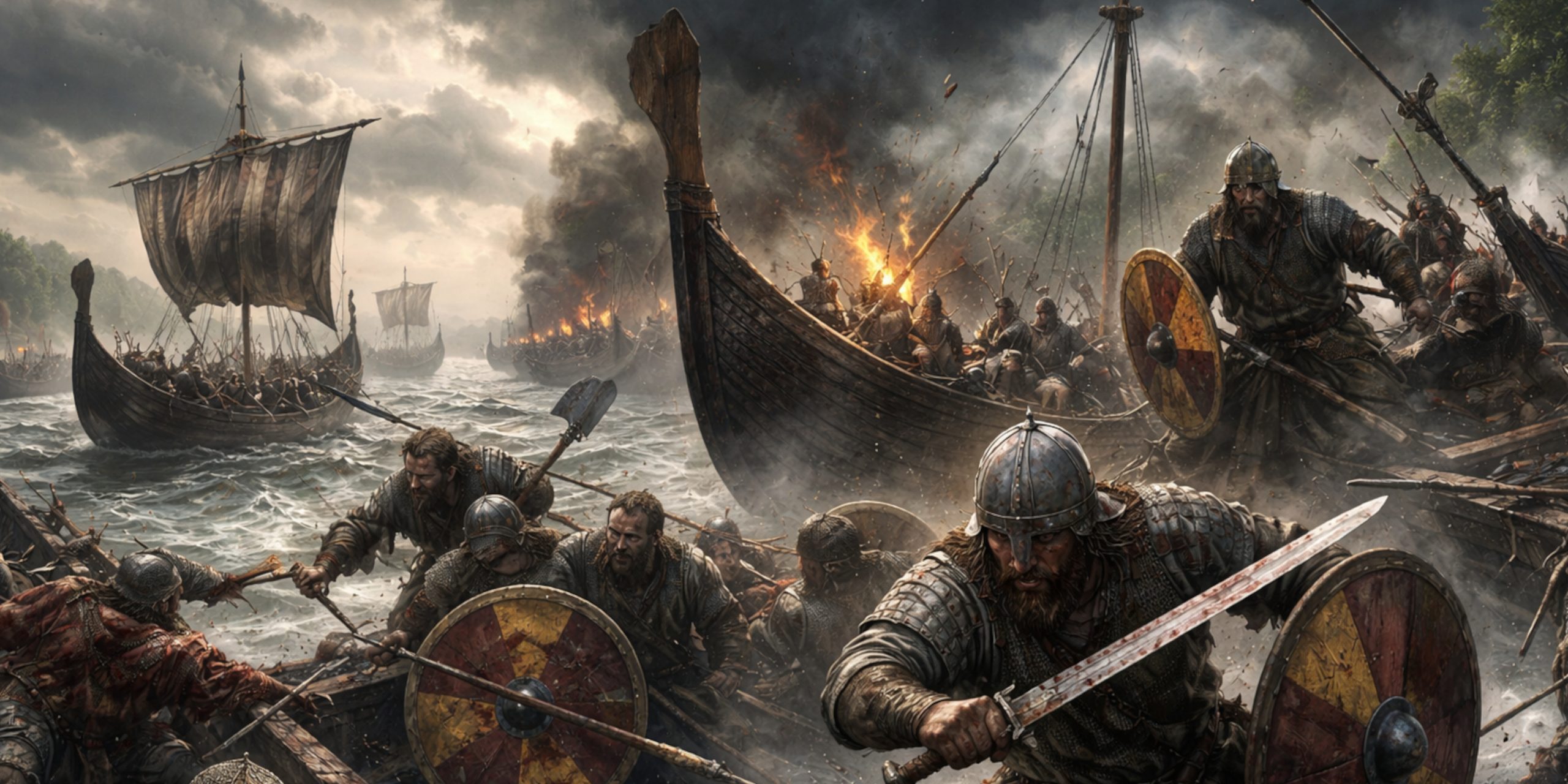
What can be said with confidence is that this was a major fleet-based confrontation, involving warships, royal household warriors, levies and noble retainers.
Likely force structure
| Side | Likely composition | Notes |
|---|---|---|
| Cnut’s forces | Danish fleet, royal household troops, levies, veteran mariners | Likely better financed and logistically stronger |
| Olaf and Anund’s forces | Norwegian and Swedish fleet, royal retainers, regional levies | Strong coalition force, though probably less unified politically |
Likely troop composition
- Royal household troops
Elite retainers attached directly to kings and major nobles. These men were probably the best armed and best protected on the field. - Ship crews and fighting mariners
Warriors who could row, sail and fight. In Viking Age warfare, those jobs were not neatly separated. - Regional levies
Men called up through local obligation, varying in experience and equipment. - Noble retinues
Smaller, more cohesive forces led by jarls and regional magnates.
Because the battle took place in a coastal and riverine setting, mobility and seamanship mattered a great deal. A fleet that could hold formation, adapt quickly and land men effectively had a major advantage.
Arms and armour
Late Viking Age warfare relied on a fairly consistent set of weapons, though quality varied sharply depending on wealth and status. Kings and their close followers had access to good equipment. Poorer warriors made do with whatever kept them alive for one more afternoon.
Main weapons likely used
| Weapon | Role in battle | Notes |
|---|---|---|
| Spear | Thrusting and throwing | Probably the most common weapon present |
| Viking Sword | Elite sidearm | Expensive, prestigious and effective in close combat |
| Battle axe | Close fighting and boarding | Widely used, especially in compact fighting |
| Seax or knife | Secondary weapon | Useful when things became painfully personal |
| Bow | Missile fire | Effective from ships, riverbanks and before close engagement |
Specific sword types likely used
No surviving source gives us an inventory of swords at Helgeå, which is rude but unsurprising. Based on the date and region, the most likely blades in use would have included:
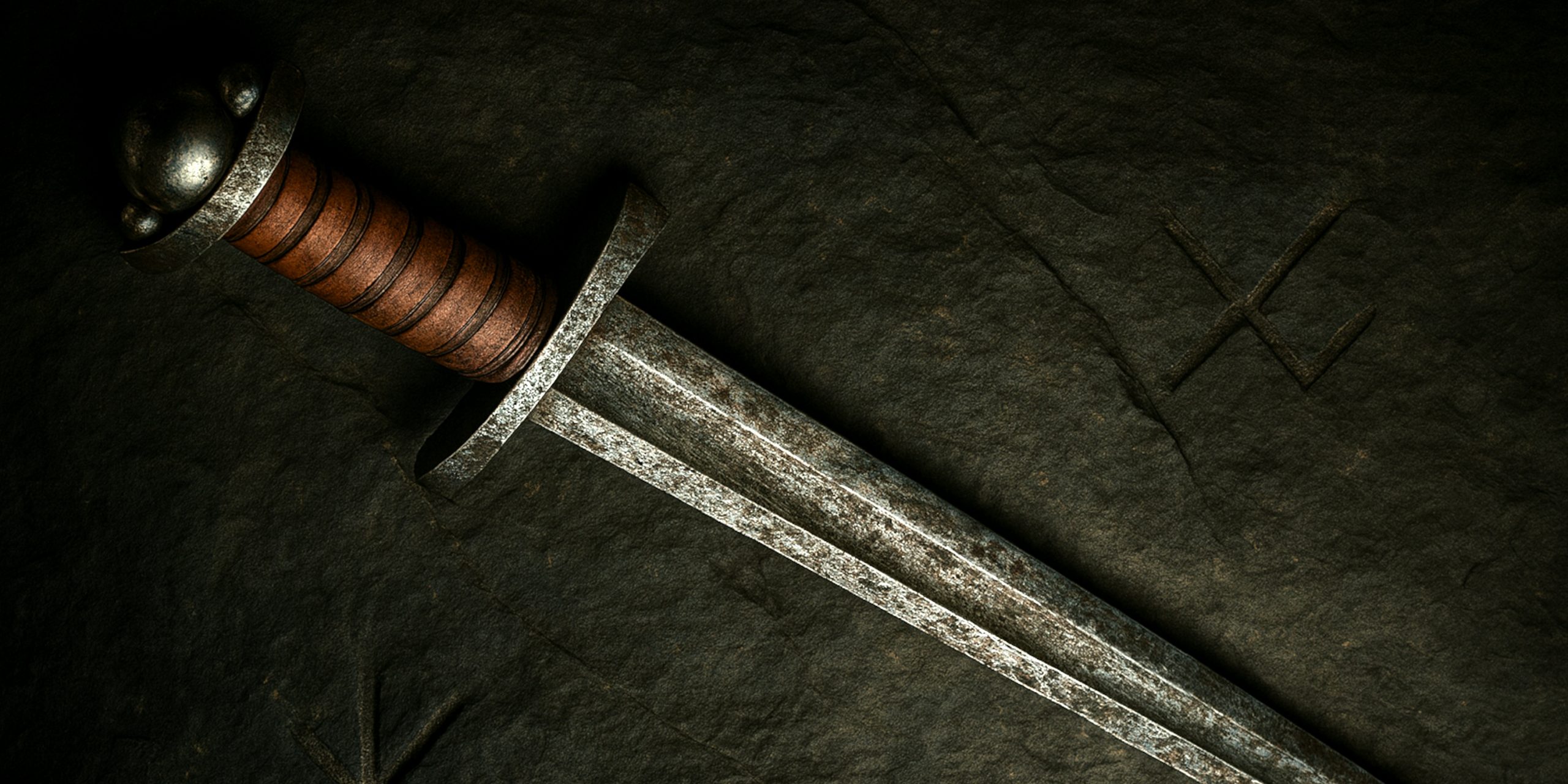
- Late Viking Age double-edged swords
- Pettersen Type S and related hilt forms
- Other late Viking hilt types common in the early eleventh century
- High-status imported or locally finished blades, some with advanced steel construction rather than older pattern-welded forms
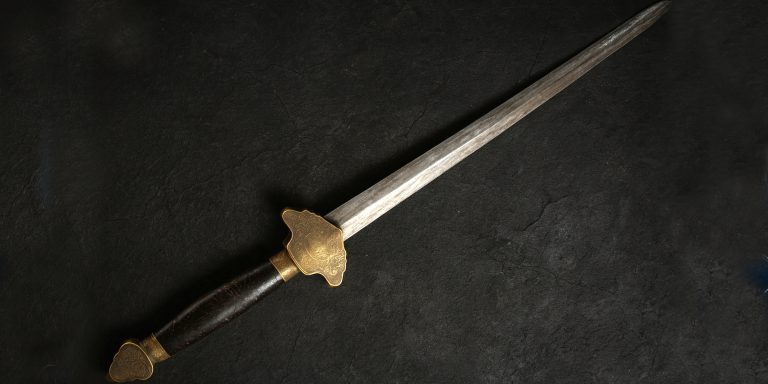
These swords were generally broad, double-edged weapons designed for cutting and close combat. Most had simple guards and pommels in forms common to the period. They were not fantasy relics humming with destiny. They were practical, expensive killing tools, and that is quite enough romance for one article.
Armour and protection
| Equipment | Likely users | Notes |
|---|---|---|
| Mail shirt | Kings, nobles, elite retainers | Valuable and not universal |
| Helmet | Better-equipped warriors | Conical helmets with nasal protection are plausible |
| Round shield | Most combatants | Essential for ship fighting and close infantry combat |
| Padded clothing or layered garments | Ordinary warriors | Likely more common than full mail |
Shields were especially important. In fleet combat and fighting near landing zones, a round shield was not just useful. It was the difference between surviving the first impact and becoming a lesson for the next man in line.
How the battle may have unfolded
The battle was probably shaped by the landscape around the Helgeå river mouth. That matters because rivers, shallows and channels could make a fleet vulnerable if caught in the wrong place.
Some later traditions suggest that Olaf and Anund tried to use the river environment to trap or disrupt Cnut’s fleet, perhaps with obstructions or a prepared surprise. The exact details remain uncertain, and later sources do have a habit of improving stories after the fact. Still, the broad idea is plausible.
A likely reconstruction looks something like this:
- Fleets manoeuvred near the river mouth and surrounding coastal waters
- Missile exchanges began the engagement
- Close fighting followed, possibly including boarding actions
- The allied force failed to achieve a decisive success
- Cnut emerged with the stronger political and strategic position
Even where the tactical detail remains blurred, the wider outcome is hard to miss. Helgeå strengthened Cnut. That, in the end, is the point.
Battle timeline
Before the battle
| Date | Event |
|---|---|
| Early 1020s | Cnut strengthens his rule in England and Denmark |
| Mid-1020s | Olaf Haraldsson and Anund Jacob cooperate against Cnut’s growing power |
| 1026 | Rival fleets converge near the Helgeå in Scania |
During the battle
| Phase | What happened |
|---|---|
| Manoeuvre | Fleets moved into position near the river mouth |
| Opening attacks | Missile fire and attempts to break enemy formation likely began the clash |
| Close combat | Boarding and short-range fighting probably decided the engagement |
| Resolution | The allied Norwegian-Swedish effort failed to stop Cnut |
After the battle
| Date | Event |
|---|---|
| Immediate aftermath | Cnut’s prestige rose sharply |
| Following years | Olaf’s position weakened further |
| Early 1030s | Cnut secured control of Norway |
Archaeology and battlefield evidence
Archaeology has helped scholars understand the broader environment of the battle, even if it has not handed us a tidy labelled battlefield with a sword planted in the ground and a sign saying, yes, right here.
What archaeology does support is the importance of the Helgeå region as a strategic maritime zone. The waterways, coastal access and navigable approaches all fit the kind of fleet action described in the sources. More broadly, ship finds and maritime studies from the Viking Age reinforce the scale and sophistication of royal naval operations in this period.
What archaeology helps confirm
- The Helgeå area was suitable for major fleet movement
- River mouths and coastal channels could shape battlefield tactics
- Early eleventh-century Scandinavian warfare depended heavily on ships and maritime mobility
- The battle belongs within a wider landscape of royal naval power
What archaeology does not yet prove conclusively
- The exact point of engagement
- The full tactical sequence of the battle
- Whether later stories about traps or obstructions reflect real events
That mixture of useful evidence and irritating gaps is very typical of early medieval battle studies. Historians learn patience, or at least learn to perform it convincingly.
Contemporary quotes and source tradition
The battle is not richly described by an eyewitness account in the way one might wish. Instead, Helgeå survives through a patchwork of near-contemporary and later texts, each with its own political angle.
Key written sources
- Encomium Emmae Reginae
A work written in praise of the court around Cnut and Emma. It presents Cnut in a highly favourable light and is useful precisely because it shows how his rule was being celebrated. - Anglo-Saxon Chronicle tradition
Important for the wider context of Cnut’s northern power and the political memory of his success. - Later saga material
Valuable for tradition and narrative colour, but later and more difficult to treat as straightforward battlefield reporting.
Representative contemporary sentiment
The surviving material presents Cnut as a ruler whose enemies were overcome by his strength, authority and fortune. It does not always supply the clean battlefield detail modern readers would like, but it leaves little doubt about how his triumph was understood.
In other words, the sources do not give us every spear thrust and shouted insult. They do make one thing plain. Cnut came away stronger, and everyone else had to live with it.
Historical assessment
The Battle of the Helgeå was a turning point in the contest for Scandinavia. It mattered because it helped transform Cnut from a powerful king into the dominant political force of the northern world.
Olaf Haraldsson and Anund Jacob were formidable opponents, and their alliance made strategic sense. But it failed to halt Cnut’s rise. Within a few years, Norway too would fall under his control.
From a military perspective, Helgeå also captures the character of late Viking Age warfare rather well:
- fleets and waterways were central
- elite retinues mattered
- personal arms and protection could be decisive in close combat
- political consequences mattered as much as the immediate fighting
This was not just a battle. It was part of the mechanism by which an empire was held together.
Takeaway
Helgeå deserves to be better known. It lacks the immediate fame of Stamford Bridge or Hastings, but its consequences were profound. This was a clash between kings, fought in a strategic maritime corridor, with the future of Scandinavian power hanging in the balance.
It also reminds us of something important about the early medieval world. Battles were not always remembered because chroniclers loved clarity. They were remembered because they changed who ruled, who obeyed and who got written up as victorious afterwards.
Cnut won that argument. The rest is the historian’s pleasant misery.
Quick facts
| Topic | Detail |
|---|---|
| Battle | Battle of the Helgeå |
| Probable date | 1026 |
| Location | Near the River Helgeå, Scania |
| Main commanders | Cnut the Great, Olaf Haraldsson, Anund Jacob |
| Type of battle | Fleet-based and coastal engagement |
| Result | Strategic and political advantage for Cnut |
| Historical significance | Helped secure Cnut’s dominance in Scandinavia |