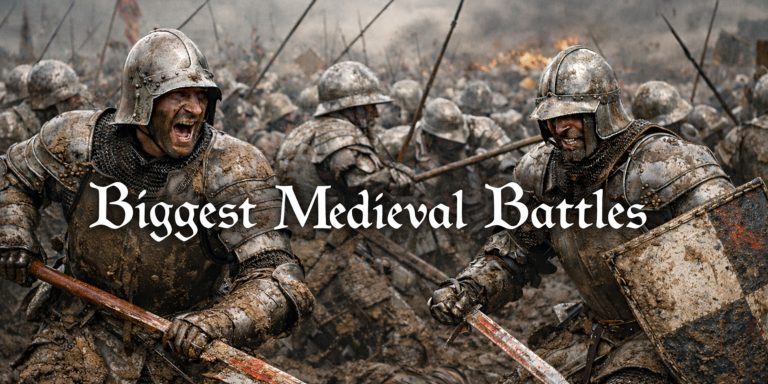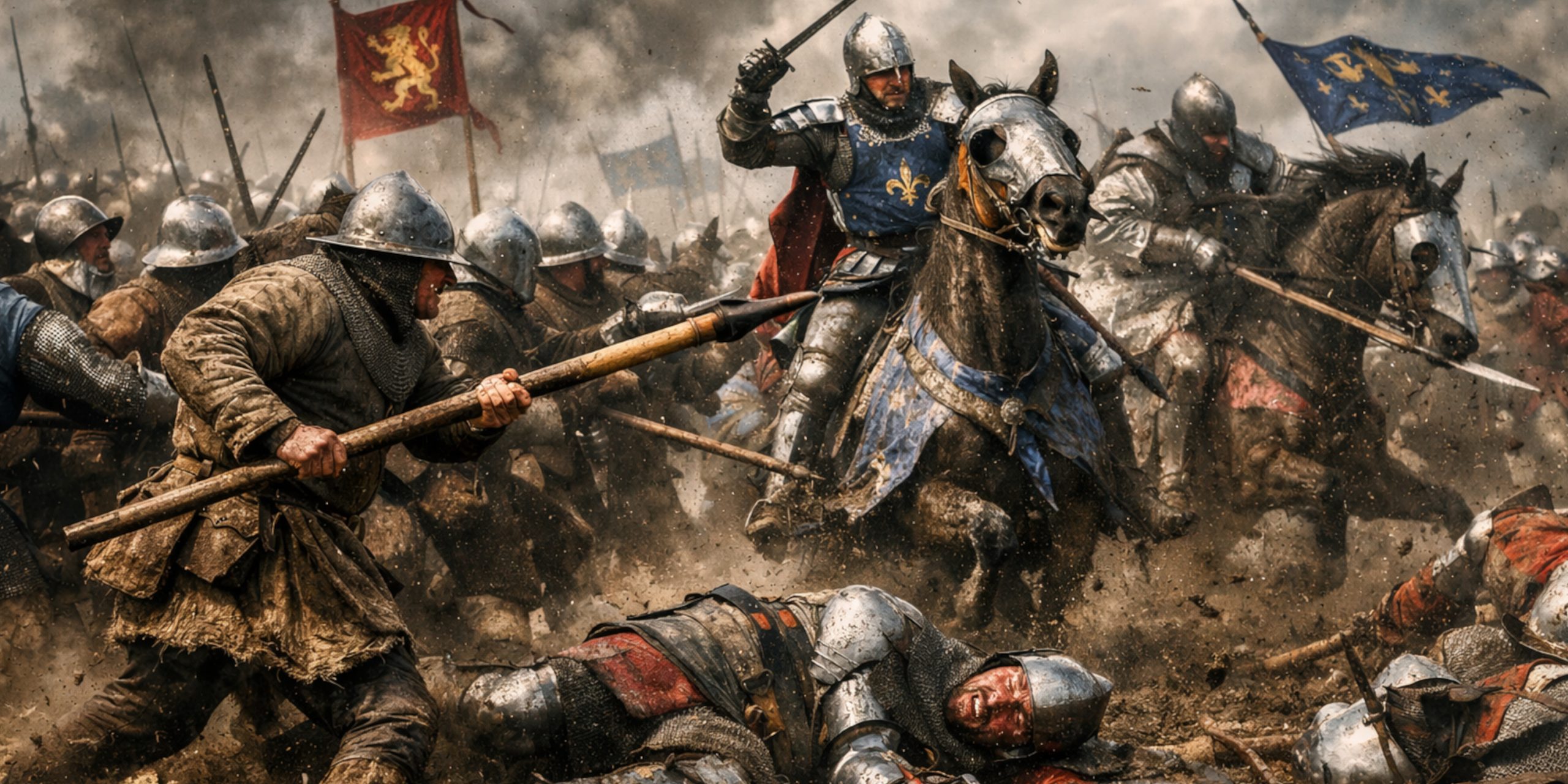
The Battle of the Golden Spurs was fought on 11 July 1302 outside Kortrijk and it still unsettles anyone who thinks medieval war was decided by shiny armour and good breeding. Flemish town militias, on foot and stubborn by habit, stood their ground against the mounted nobility of France. The result was a defeat so sharp that chroniclers could not help but count the spurs taken from fallen knights. History does not always reward elegance.
Background
Flanders in the late thirteenth century was wealthy, urban, and restless. Its towns produced cloth for half of Europe and bristled at French overlordship. Tension hardened into open revolt in 1302 after arrests and reprisals. Paris answered with an army that expected to teach the towns a lesson. The towns answered with ditches, stakes, and a plan that did not involve charging.
Forces
Flemish Militia
| Element | Details |
|---|---|
| Estimated strength | 8,000 to 10,000 |
| Core troops | Urban militias from Bruges, Ghent, Ypres |
| Command | Collective leadership under town captains |
These were craftsmen and merchants with training, discipline, and a keen sense of what losing would mean to their livelihoods.
French Royal Army
| Element | Details |
|---|---|
| Estimated strength | 7,000 to 8,000 |
| Core troops | Heavy cavalry supported by infantry |
| Command | Royal officers under a feudal hierarchy |
France fielded Europe’s most prestigious knights, confident that massed cavalry would settle matters quickly.
Leaders
Flemish
- William of Jülich, one of the principal battlefield leaders
- Jan van Renesse, experienced organiser and tactician
French
- Robert II of Artois, cousin of the French king and commander in the field
Arms and Armour
Flemish Equipment and Weapons
- Goedendag, a stout pole weapon with a metal spike, ideal for stopping horses
- Spears and pikes, used in dense formations
- Short swords and falchion-type blades, practical sidearms for close work
- Quilted jacks and mail where available, helmets of varied quality
French Equipment and Weapons
- Arming swords of knightly pattern, optimised for cut and thrust
- Lances for the charge, devastating on open ground
- Mail hauberks with emerging plate elements, heavy helms and shields
The contrast mattered. Flemish weapons were chosen for utility, not ceremony. French kit assumed momentum and space. The ground offered neither.
The Battlefield and Tactics
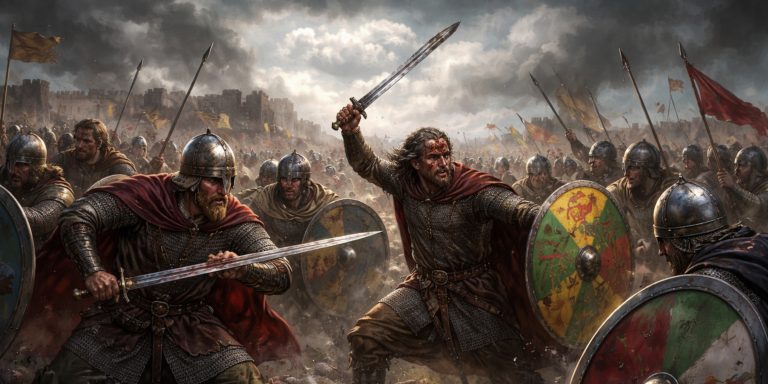
The fighting took place on marshy fields cut by ditches near the Groeningekouter. Flemish troops anchored their line behind obstacles and refused to advance. French cavalry charged anyway. Horses faltered, riders fell, and formations collapsed into a mêlée where foot soldiers had the advantage. Courage did not fail the French. Geometry did.
Battle Timeline
- Early morning: French army deploys and prepares cavalry assaults
- Mid-morning: Initial charges break apart on ditches and packed infantry
- Late morning: Repeated attacks devolve into close combat
- Early afternoon: Death of Robert of Artois shatters French command
- Afternoon: French forces withdraw in disorder, leaving the field to Flanders
Archaeology
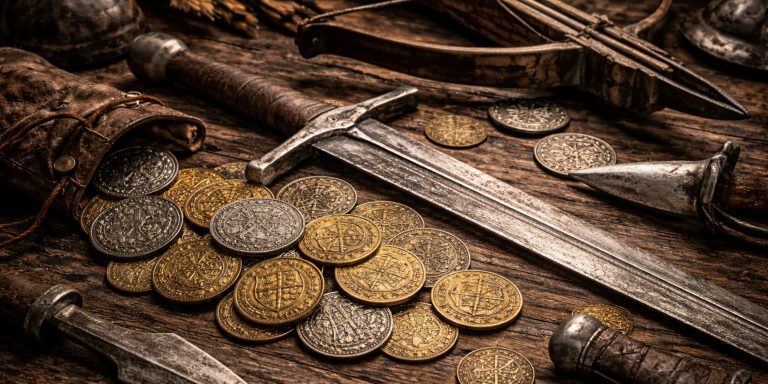
Excavations around Kortrijk have recovered weapon fragments, spurs, and human remains consistent with close-quarters fighting. Spurs, in particular, became the battle’s symbol. Chroniclers reported hundreds collected from the fallen. The finds support accounts of heavy cavalry suffering catastrophic losses on unsuitable terrain.
Contemporary Voices
The Flemish chronicler Lodewijk van Velthem noted the aftermath with grim satisfaction, writing that the field was “thick with iron and men together.”
A French source, reflecting on the defeat, lamented that “pride rode faster than prudence,” a line that has aged better than many suits of armour.
Legacy
The Battle of the Golden Spurs did not end French influence in Flanders, but it changed assumptions across Europe. Infantry, properly organised and placed, could defeat knights. Towns learned that preparation beat bravado. Nobles learned, briefly, to look at the ground before charging. It remains one of the clearest reminders that medieval warfare rewarded thinking as much as bloodline.