The Battle of Niså sits in that awkward space between saga legend and hard military reality. It was a grinding naval clash fought off the Halland coast, near the mouth of the River Nissan, where ambition, stubbornness, and a lot of tired oarsmen collided. No heroic single blow, no clean victory parade. Just two Scandinavian kings testing who could bleed the longest.
At its heart were Harald Hardrada of Norway and Sweyn II Estridsson, both claiming mastery of Denmark. Niså did not settle that argument neatly, which is part of why it still matters.
Background
By the early 1060s, Harald Hardrada was an ageing but dangerous ruler. He had fought in Byzantium, crushed rivals at home, and now wanted Denmark as the final line on his résumé. Sweyn Estridsson, younger and more flexible, ruled Denmark but struggled to shake Harald’s repeated invasions.
Their war dragged on through raids, counter raids, and seasonal campaigning. Niså emerged as the largest and most decisive engagement of the conflict, even if neither side wanted to admit how close it came to disaster.
The fighting took place off what is now Niså, near modern Halmstad, with fleets meeting in open water and along the river mouth.
Forces
Commanders
| Side | Leader | Title |
|---|---|---|
| Norway | Harald Hardrada | King of Norway |
| Denmark | Sweyn II Estridsson | King of Denmark |
Estimated Strength
| Side | Ships | Warriors |
|---|---|---|
| Norway | c. 300 | 10,000 to 12,000 |
| Denmark | c. 300 | 10,000 to 12,000 |
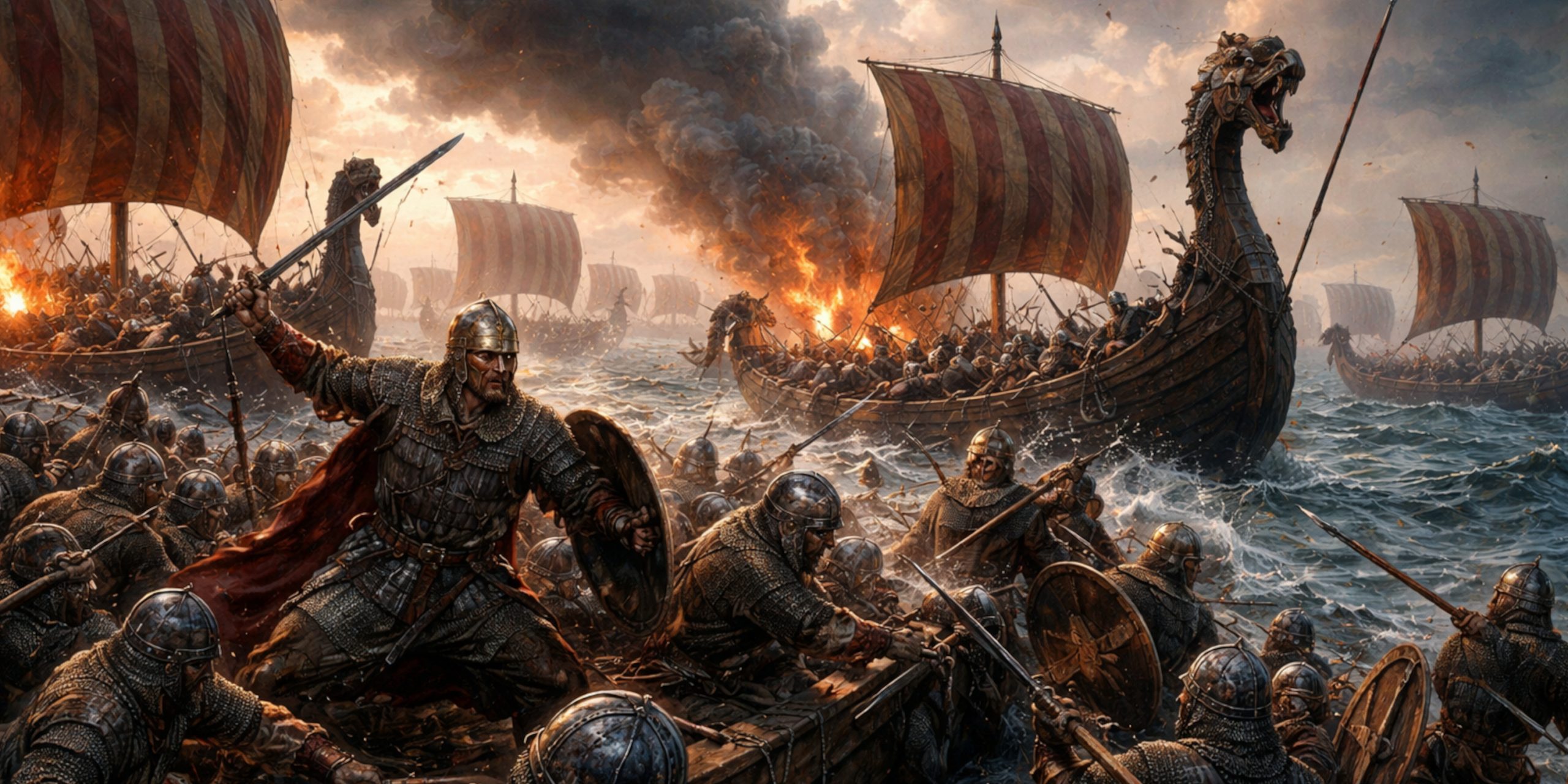
Saga numbers tend to inflate. Even so, this was one of the largest Viking Age naval battles ever recorded. Hundreds of longships locked together in what became less a manoeuvre contest and more a floating street fight.
Arms and Armour
Naval warfare of this period forced a brutal simplicity. Once ships were lashed together, combat resembled a land battle fought on unstable planks with salt water sloshing at your ankles.
Weapons in use included:
- Pattern welded Viking swords, often single handed with broad blades suited for hacking
- Frankish style swords, prized imports with superior steel
- Danish axes, including long handled bearded axes effective for hooking shields
- Spears for thrusting across gunwales
- Seaxes and knives for close quarters when space vanished
Defensive equipment included:
- Round wooden shields with iron bosses
- Mail shirts worn by wealthier warriors
- Helmets, mostly simple spangenhelm types
- Heavy clothing and leather offering limited protection, but better than bare skin
A historian cannot help but note the grim irony. These men invested fortunes in swords and armour, only to drown when a ship broke apart.
The Battle
Fighting began with fleets forming lines offshore before collapsing into chaos. Ships were grappled together, turning the sea into a raft of timber, shields, and corpses.
Harald Hardrada led from the front, as always. His ship pushed deep into the Danish line. Sweyn’s fleet bent under pressure but did not break. As hours passed, exhaustion mattered more than courage.
Late in the day, Sweyn withdrew. Whether this was tactical sense or simple survival instinct remains debated. Harald held the field, but his losses were severe enough to kill any hope of immediate conquest.
Victory, yes. Satisfaction, no.
Battle Timeline
- Morning: Fleets sight each other off the Nissan estuary
- Midday: Longships close, lines collapse into mass boarding actions
- Afternoon: Heavy casualties on both sides, several ships sunk or captured
- Evening: Danish fleet disengages and retreats
- Aftermath: Norwegian fleet remains, but is too battered to exploit success
Archaeology
Direct archaeological evidence from the battle is scarce. This is unsurprising given the shifting coastline and the destructive nature of naval combat.
Finds from the Halland coast include:
- Viking Age weapons recovered from riverbeds
- Ship rivets and iron fittings consistent with longship construction
- Isolated human remains suggesting maritime conflict
None can be tied conclusively to Niså, but the material culture fits the picture painted by written sources. Archaeology confirms what the sagas imply. This coast saw repeated violence at sea.
Contemporary Sources and Quotes
Our main accounts come from later Icelandic saga traditions, particularly Snorri Sturluson. While written decades later, they likely preserve genuine oral memory.
Snorri writes of Harald that he fought “harder that day than ever before, though the sea itself seemed weary of blood.”
Adam of Bremen, writing closer to the events, notes the conflict dragged on without resolution, a rare admission of stalemate in medieval sources.
Even allowing for exaggeration, both sources agree on one point. This was not a clean triumph. It was attrition by oar and blade.
Historical Significance
Niså marked the effective end of Harald Hardrada’s Danish ambitions. He won the battle, but lost the war of endurance. Sweyn survived, learned, and eventually ruled a stable Denmark.
Two years later, Harald would die far from Scandinavian waters at Stamford Bridge. Niså stands as his last great campaign at sea, a reminder that even the most fearsome warriors age, tire, and run out of luck.
Dry humour feels appropriate here. Harald conquered half the known world, then lost Denmark because everyone was simply too exhausted to keep fighting.
Watch the documentary: