The Battle of Memphis sits in that uncomfortable space between recorded history and informed reconstruction. No battlefield markers survive, no victory stele boasts of enemy bodies counted, and yet the event matters. Around 1650 BCE, Memphis, the old administrative heart of Lower Egypt, appears to have fallen to the rising power of the Hyksos. This was not a single cinematic clash but a violent political unravelling that reshaped Egypt for generations.
As a historian, I find Memphis here less heroic last stand and more exhausted capital. Power had already drained south, loyalty had frayed, and the city’s walls were defending tradition more than strategy.
Historical Background
By the mid seventeenth century BCE, Egypt was deep into the Second Intermediate Period. Central authority had weakened. Regional rulers held power in name of pharaohs who barely ruled beyond their immediate estates. Into this vacuum stepped the Hyksos, rulers of mixed Near Eastern origin who brought with them new military tools and sharper political instincts.
Memphis mattered because it symbolised continuity. Whoever controlled it could claim legitimacy over Lower Egypt, tax routes along the Nile Delta, and the ideological inheritance of the Old Kingdom. Losing it was not merely a military failure. It was an admission that the old order had run out of momentum.
Forces
Egyptian Defenders
| Element | Details |
|---|---|
| Political Authority | Late 13th Dynasty officials or local governors |
| Core Troops | Town militias and royal retainers |
| Equipment Quality | Traditional, locally produced |
| Morale | Likely fragile, authority contested |
Hyksos Attackers
| Element | Details |
|---|---|
| Political Authority | Early Hyksos rulers consolidating Delta control |
| Core Troops | Retainer warbands and allied Levantine fighters |
| Equipment Quality | Technologically varied and often superior |
| Morale | High, expansionist |
The Hyksos were not a massive invading army. They were efficient, aggressive, and well aware that Egypt’s political spine had softened.
Arms and Armour
Egyptian Equipment
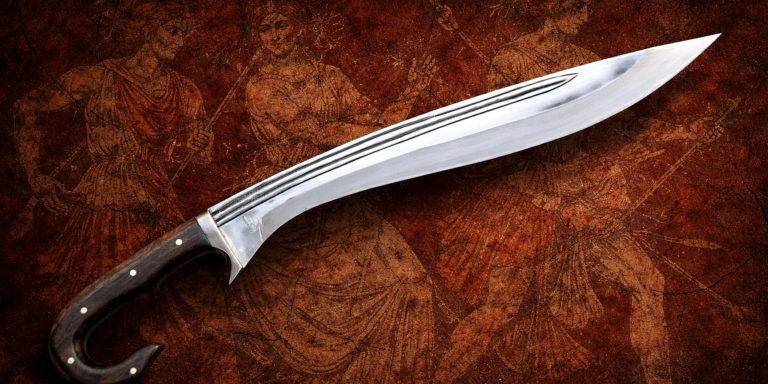
- Khopesh sword with crescent blade for chopping at close range
- Straight copper or early bronze daggers carried by officers
- Wooden shields with rawhide covering
- Simple leather helmets or padded linen caps
Hyksos Equipment
- Straight bronze swords of Levantine type with thrusting emphasis
- Composite bows offering greater power and range than Egyptian self bows
- Scale armour in limited use among elites
- Bronze socketed spearheads with improved penetration
The irony is hard to miss. Egypt, once the technological leader of the region, was now defending its capital with tools that had barely changed in centuries.
Likely Course of the Battle
This was not a grand open field engagement. Memphis was taken through pressure, manoeuvre, and probably betrayal rather than heroic slaughter.
Battle Timeline
- Phase One
Hyksos forces secure Nile approaches north of Memphis, disrupting supply and communication - Phase Two
Skirmishing outside the city walls tests defenders and identifies weak gates - Phase Three
Negotiation or defection by local elites reduces organised resistance - Phase Four
Entry into Memphis, followed by swift seizure of administrative quarters - Phase Five
Establishment of Hyksos authority and installation of compliant officials
If there was a last stand, it left no trace. History tends to remember speeches better than compromises, but compromises win cities.
Contemporary Voices
No direct battlefield account survives, but later Egyptian texts carry a bitterness that speaks volumes.
A fragment attributed to the later Theban tradition reflects on the period:
“Foreigners ruled the North, and none could raise his head against them.”
Another text laments the loss of order rather than territory:
“The land was upside down, and the laws were forgotten.”
As propaganda, these lines are blunt. As emotional reactions, they ring painfully true.
Archaeology
Archaeology at Memphis offers frustration rather than clarity. Continuous occupation has buried the seventeenth century BCE under later dynasties like sediment after a flood.
What we do have includes:
- Levantine style weapons appearing in Delta contexts
- Shifts in administrative seals and material culture
- Disruption layers that suggest political upheaval rather than natural disaster
There is no neat destruction horizon, which reinforces the idea of takeover rather than annihilation.
Consequences and Legacy
The fall of Memphis marked the effective Hyksos dominance of Lower Egypt. From their capital at Avaris, they ruled not as temporary occupiers but as kings who adopted Egyptian titles and rituals.
Yet the memory of Memphis lingered. It became a wound that southern rulers would not stop picking. The wars of reunification that followed were fuelled as much by humiliation as ambition.
In dry historical terms, this battle shifted power. In human terms, it was the moment Egypt realised it could be beaten.
Final Thoughts from the Historian’s Desk
There is a temptation to romanticise defeat, but Memphis likely fell quietly, through tired guards, compromised officials, and a population that preferred stability over loyalty. It is less stirring than heroic collapse, but far more believable.
History often turns not on decisive blows, but on doors opened at the wrong moment.
Watch the documentary: