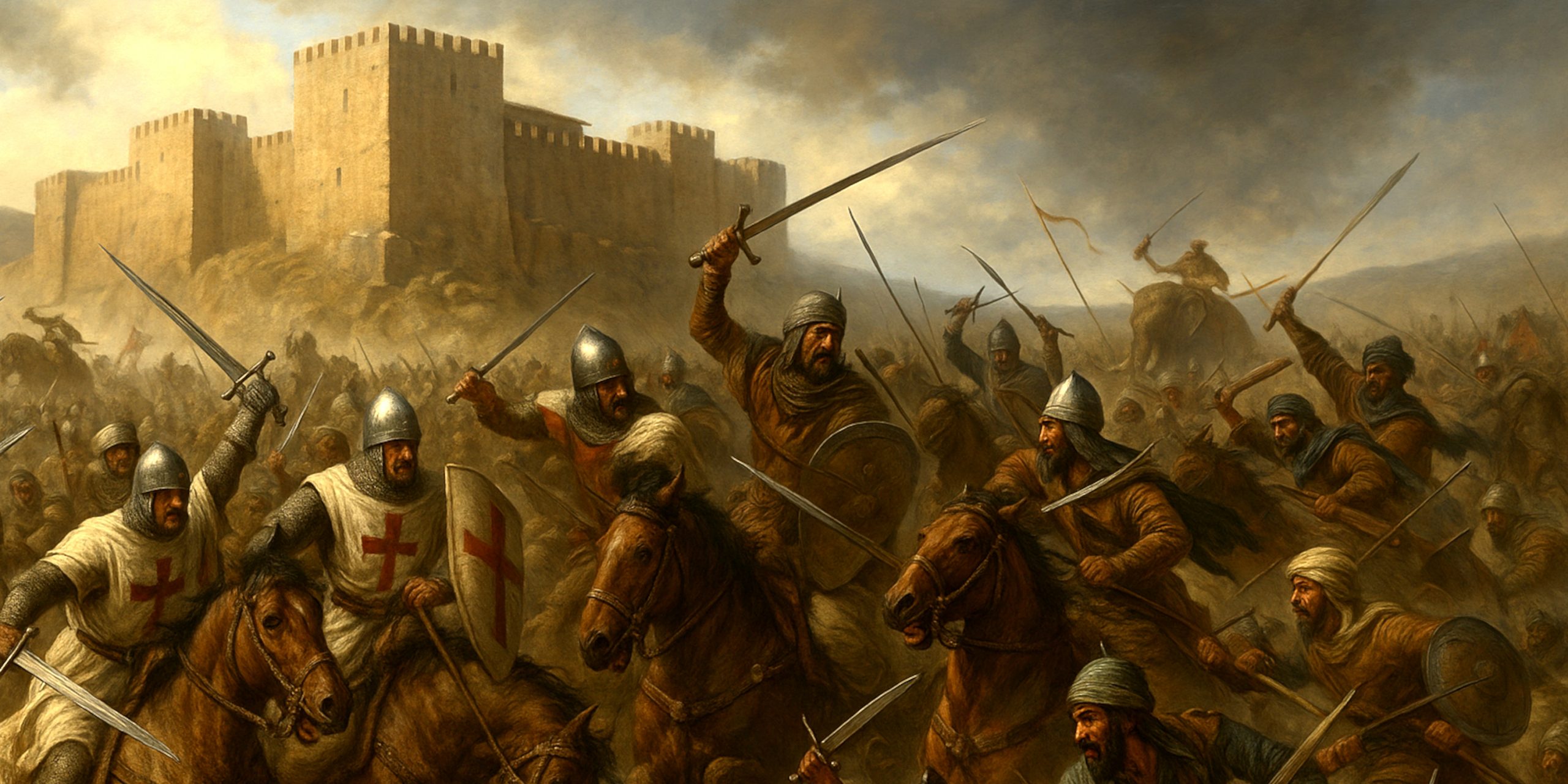
The Battle of Alarcos, fought on 19 July 1195, was one of the most brutal clashes of the Reconquista. On the plains near Ciudad Real, the forces of King Alfonso VIII of Castile collided with the Almohad Caliphate under Caliph Abu Yusuf Yaqub al-Mansur. The encounter ended in catastrophe for Castile, halting Christian advances into Muslim territory and showing the limits of crusading zeal when pitted against superior organisation and numbers.
Background
Alfonso VIII, emboldened by papal support and his own ambitions, launched an offensive into Almohad territory. His siege of Alarcos Castle, however, brought him directly into the path of al-Mansur’s host. Instead of retreating, the king opted to face the Almohads in open battle, staking his prestige and perhaps his crown on the gamble.
The result would be remembered for generations, not least because the defeat came with a heavy dose of hubris. One chronicler dryly noted that Alfonso “trusted more in the size of his horsemen than in the will of God”, which, in medieval Spain, was as close as a historian got to saying “he really should have known better.”
Forces
The confrontation at Alarcos was defined by the imbalance in scale and composition. Castile relied on its knightly cavalry and feudal levies, while the Almohads fielded a disciplined mix of infantry, cavalry, and Berber auxiliaries.
Leaders and Commanders
| Side | Leader | Notes |
|---|---|---|
| Kingdom of Castile | King Alfonso VIII | Personally commanded his knights |
| Almohad Caliphate | Caliph Abu Yusuf Yaqub al-Mansur | Directed forces with seasoned commanders and disciplined ranks |
Troop Composition
- Castile
- 8,000 knights and cavalry (heavily armoured, many in mail hauberks)
- 20,000 infantry (less disciplined, local levies and militias)
- Knights Templar and Knights of Calatrava in support
- Almohads
- 30,000 infantry (Berber, Andalusian, and North African)
- 10,000 cavalry (including disciplined light horse and elite guards)
- War elephants from North Africa, though limited in number and effect
Arms and Armour
Weapons and armour at Alarcos reflected both sides’ traditions.
- Castilian knights
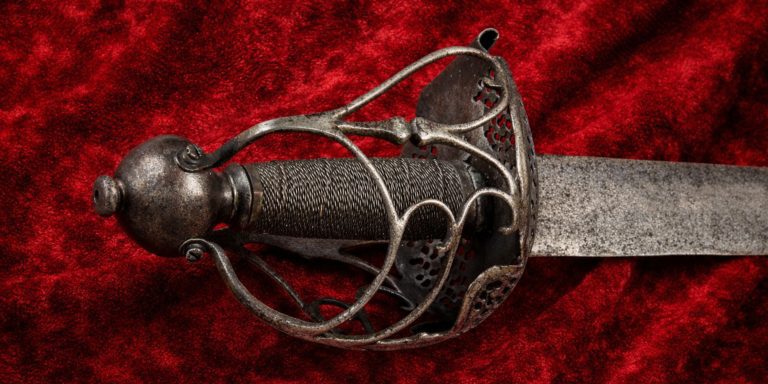
- Wielded arming swords and lances
- Mail hauberks, iron helms, large kite shields
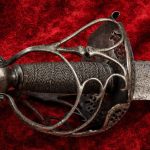
- Favoured spathas of Toledo steel, highly prized for their balance and edge
- Castilian infantry
- Spears, crossbows, and falchions (early Iberian forms, heavy chopping blades)
- Poorly equipped compared to the cavalry
- Almohad forces
- Infantry used spears, javelins, and curved swords resembling the Maghrebi nimcha
- Cavalry deployed long lances and composite bows
- Commanders often carried finely made saifs with ornate guards
- Armour lighter but more mobile, favouring quilted protection and small round shields
This clash of styles, heavy knightly charge against fluid mobile defence, was decisive. The Castilian knights’ swords and lances were lethal in close quarters but blunted by sheer weight of numbers and tactical encirclement.
The Battle
The fighting began with the Castilian cavalry charging headlong into Almohad lines. Initially, they broke through the first ranks, driving deep into the enemy. Yet discipline faltered as Almohad wings enveloped the flanks.
Alfonso’s infantry, already wavering, crumbled under pressure. The Almohads counter-attacked, using light cavalry to harass and elephants to cause confusion. The knights, surrounded and exhausted, were picked off.
By sunset, the Castilian army was shattered. Thousands of knights lay dead, and the survivors, including Alfonso himself, fled in disarray. The loss was compounded by the massacre of many Knights of Calatrava, which left the order gravely weakened.
Archaeology
The battlefield near Alarcos has yielded evidence of the encounter. Excavations at the castle site uncovered arrowheads, fragments of mail, and weapon fittings consistent with both European and North African design. The nearby mass graves suggest hurried burials, testimony to the scale of the slaughter.
The castle ruins themselves still loom above the plain, a reminder that medieval warfare was as much about stubborn walls as open fields.
Timeline of the Battle
- Spring 1195: Alfonso VIII marches south and lays siege to Alarcos Castle.
- Early July: Almohad reinforcements cross from North Africa under al-Mansur.
- 19 July: Battle of Alarcos. Initial Castilian charge successful but collapses under counter-attacks.
- Evening 19 July: Castilian forces routed; Alfonso escapes with remnants of his knights.
- Aftermath: Almohads advance deep into Castile, raiding unopposed until 1197.
Contemporary Quotes
- Latin chronicler Rodrigo Jiménez de Rada: “The Lord permitted the pride of Castile to be broken, that the people might repent of their sins.”
- Arabic chronicler Ibn Idhari: “The Christians were crushed, as a vase is broken against a rock.”
Both writers, in their own way, delighted in stating the obvious: the Castilians had been well and truly thrashed.
Legacy
The defeat at Alarcos checked Christian expansion and emboldened the Almohads. For Alfonso VIII, it was a humiliation that would haunt his reign until the decisive reversal at Las Navas de Tolosa in 1212.
Alarcos also exposed the limitations of knightly warfare when pitted against disciplined armies. Heavy cavalry might carry prestige, but without proper support, it was about as useful as a jousting lance in a street brawl.
The Seven Swords Takeaway
The Battle of Alarcos remains a study in medieval overconfidence. Castile’s finest were undone not by poor steel but by poor judgement. For historians, the site tells us much about the ebb and flow of the Reconquista, and for the knights who fought there, it taught a bitter lesson: faith, steel, and valour cannot always compensate for numbers, planning, and a general with a cool head.
Watch the documentary: