What you can legally own, buy, sell, and display
Antique swords are weapons by definition, artefacts by intent, and family heirlooms by habit. Most collectors never plan to use them for anything more violent than an argument with a display cabinet, yet the legal framework is written to control harm, not hobbyists.
This guide updates the legal position for 2026 and explains what is allowed, what is restricted, and where collectors still trip up. It is written from the point of view of a historian who has spent too long in auction rooms and too much time explaining to customs officers why a blade with no edge is not a threat to civilisation.
What counts as an antique sword in UK law
In UK legislation, an antique is not defined by romance or rarity. It is defined by age and intent.
An antique sword is generally understood as:
- Manufactured before 1950
- Kept or sold as a collector’s item, decorative object, or historical artefact
- Not intended for modern combat, training, or reenactment use
That final point matters more than people realise. A sword can be old and still fall foul of the law if it is presented or modified for practical use.
From a legal perspective, intent often outweighs aesthetics.
The core law that affects antique swords
UK sword ownership is shaped by several overlapping laws, with the most important being post 2000 legislation designed to reduce knife crime. Antique swords survive within this framework through exemptions, not through blanket approval.
The key principles collectors should understand:
- Swords are classed as offensive weapons by default
- Certain sword types are restricted unless exempt
- Antiques benefit from age based exemptions, with conditions
- Sale and delivery are more regulated than ownership
Owning a compliant antique sword in your home is usually lawful. Buying, selling, importing, or posting one is where problems begin.
Curved swords and the antique exemption
Curved swords are the most misunderstood category. This includes:
- Cavalry sabres
- Naval cutlasses
- Middle Eastern shamshirs and nimchas
- Indo Persian and Ottoman blades
Modern curved swords are restricted. Antique curved swords are exempt if they meet the age requirement and are genuinely historical.
In practical terms, this means:
- An 1820 light cavalry sabre is legal to own and sell
- A modern reproduction sabre is restricted
- A sword that looks antique but was made recently is not protected
Auction houses rely heavily on provenance for this reason. Private sellers often do not, which is where buyers should slow down.
Straight swords and medieval blades
Straight bladed swords face fewer legal obstacles, but they are not unregulated.
Examples include:
- Medieval arming swords
- Longswords
- Rapiers
- Small swords
These are generally legal to own as antiques. However:
- Modern replicas may still be restricted depending on design
- Sharpening or modifying an antique can undermine its status
- Carrying one in public without lawful reason is an offence
Collectors should remember that legality ends at the front door. There is no historical cosplay exemption in Tesco.
Japanese swords and pre 1954 blades
Japanese swords deserve their own section because they are frequently misunderstood.
Antique Japanese swords made before 1954 are legal to own and sell, provided they are traditionally made and properly classified as antiques.
This includes:
- Katana
- Wakizashi
- Tanto
What matters is:
- Date of manufacture
- Method of manufacture
- Documentation or expert attribution
Modern mass produced Japanese style swords do not qualify, even if they are marketed as traditional.
If a seller cannot explain how a Japanese blade was made, assume the law will not be sympathetic.
Buying antique swords in the UK
Buying within the UK is usually straightforward when dealing with reputable dealers.
Best practice for buyers:
- Use established auction houses or recognised specialists
- Ask for written confirmation of age and classification
- Keep invoices and descriptions for your records
- Avoid social media sales with vague listings
Many legal disputes begin with the phrase “it was described as antique”. Description matters.
Selling antique swords legally
Selling is where collectors are most exposed to legal trouble.
Key points for sellers in 2026:
- You must be confident the sword qualifies as an antique
- Online marketplaces often ban sword sales regardless of legality
- Age verification is essential
- Mislabelled listings can attract criminal liability
Auction houses act as a legal buffer because they conduct due diligence. Private sellers do not have that safety net.
If in doubt, consign rather than self sell.
Posting and delivery restrictions
Even legal antique swords cannot be posted casually.
Courier rules often exceed legal requirements.
Common issues include:
- Many couriers refuse to transport swords of any kind
- Clear labelling and documentation is required
- International shipping adds customs scrutiny
- Improper packaging can lead to seizure
In 2026, the safest option remains specialist couriers familiar with arms and antiques.
Yes, they cost more. No, arguing with a depot manager rarely works.
Displaying antique swords at home
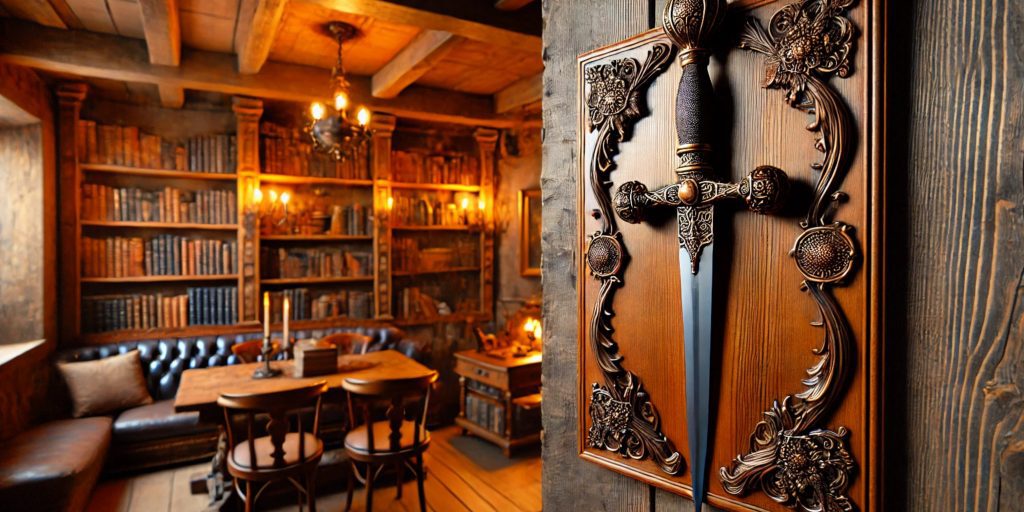
Displaying antique swords is lawful, but common sense applies.
Good practice includes:
- Wall mounts that prevent easy removal
- Cabinets with locking mechanisms
- No public facing displays visible from the street
The law does not require Fort Knox. It does expect reasonable precautions.
Museums influence policy here, and museums love glass.
Carrying swords and public possession
This is simple and absolute.
You cannot carry an antique sword in public without lawful reason.
Lawful reasons are limited and specific:
- Transporting to or from a sale, valuation, or conservation
- Moving house
- Delivering to a museum or auction house
Historical interest is not a lawful reason. Neither is showing your mates.
Transport should be direct, discreet, and properly packaged.
Common myths that still cause trouble
A few persistent misconceptions.
- “It is over 100 years old so it is always legal”
Not true. Design and intent still matter. - “If it is blunt, it is legal”
Sharpness is irrelevant to classification. - “Antique means Victorian”
The legal definition is not that romantic. - “Police will not care if it is decorative”
They will care. They just may not agree with you.
Where the law may tighten next
Looking ahead, most pressure in UK weapons law focuses on online sales and delivery, not private ownership.
Areas collectors should watch:
- Tighter marketplace restrictions
- Courier compliance checks
- Stronger age verification enforcement
- Greater scrutiny of imported blades
Antique exemptions are politically safe for now, but they rely on collectors behaving like custodians, not loophole hunters.
Final thoughts from a historian
Britain has always collected swords. We dig them up, hang them on walls, argue about them, and occasionally ban them in a panic. Antique swords survive legally because they are understood as history, not hardware.
Treat them as such.
Know what you own. Document it properly. Move it carefully. Sell it responsibly.
Do that, and the law in 2026 remains workable, even if it is not always graceful.
Further Resources
- GOV.UK Guidance: Offensive weapons law
- Royal Armouries: Certification and appraisal services.
- Antique Arms & Armour Society (AAAS): Networking and legal advice for collectors.
“A sword’s history is written in steel, but its future depends on those who steward it wisely.”