For all their philosophy and politics, the ancient Greeks were never far from a touch of sorcery. Behind the marble temples and reasoned debate lay a world where gods were not distant abstractions but active forces that listened, bargained, and, if you were lucky, answered. Greek religion was not just a matter of worship; it was a negotiation. And sometimes, it took magic to get the gods’ attention.
The Divine Hotline: Ritual as Communication
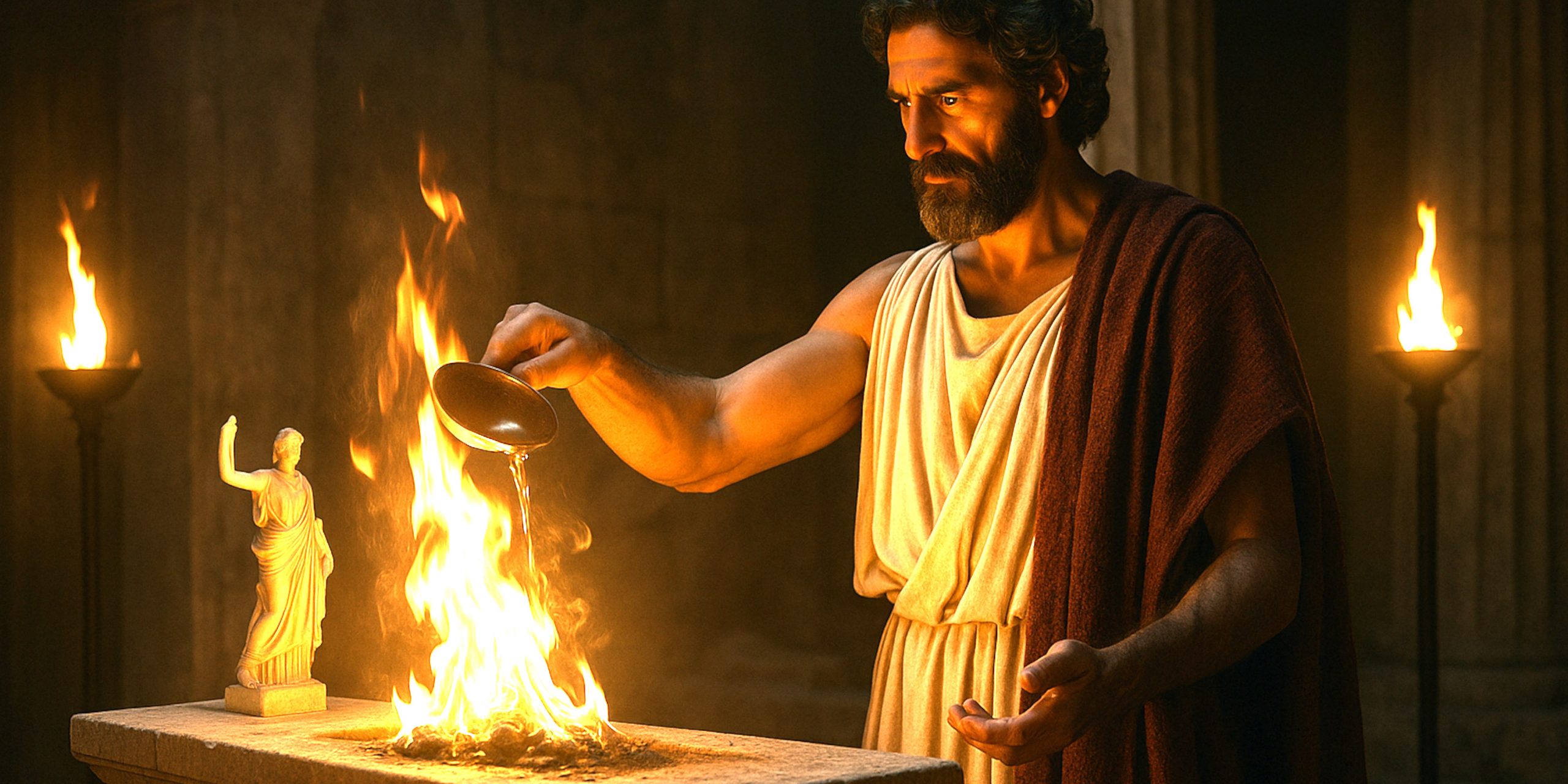
Before magic was magic, it was ritual. Greeks believed the gods required proper channels of contact, and they had no patience for sloppy etiquette. Libations of wine, offerings of honey, and the careful timing of prayers were essential. Each deity had preferences: Athena liked wisdom and olive oil, while Ares preferred blood and noise.
Temples acted as both holy sites and practical communication hubs. Priests didn’t interpret divine will for fun; they performed the cosmic equivalent of customer service. Sacrifices were the receipts. Smoke rising from an altar was thought to carry your words skyward, though whether the message arrived depended on your devotion, or the quality of your goat.
The Oracles: Godly Gossip Columns
If you wanted more direct advice, you went to the professionals. The Oracle of Delphi was the most famous, a high priestess called the Pythia who delivered Apollo’s will between bouts of divine possession.
Visitors travelled for weeks, bearing gifts and questions. They left with riddles. The Pythia’s prophecies were notoriously vague, often phrased to ensure the gods were never wrong, only misinterpreted. Croesus learned this the hard way when he was told that if he attacked Persia, he would destroy a great empire. He did. His own.
Other oracles dotted the Greek world: Dodona for Zeus, Trophonius for those brave enough to descend underground. Each had its rituals, its mysteries, and its occasional whiff of sulphur.
Spells, Curses, and Binding Magic
Magic, in the practical sense, was where religion met desperation. When prayer failed, people turned to charms and curse tablets, known as defixiones. These were thin sheets of lead etched with names and requests, folded, pierced with nails, and buried in graves or wells.
A typical curse might read something like, “Bind the tongue and strength of my rival in court.” Not exactly noble, but highly relatable. Love spells were common too, and usually quite obsessive, wax figures, hair clippings, and whispered invocations under the moonlight. Nothing says romance like summoning Hecate to ruin someone’s marriage.
Women, slaves, and the poor often turned to such private rites. Magic was the people’s religion, less about piety and more about power. The elite might sneer, but even philosophers like Plato admitted the gods were not immune to persuasion.
The Gods’ Middle Management: Daemons and Spirits
Between mortals and gods existed a bustling spiritual bureaucracy. Daemons (not quite demons, despite the name) acted as intermediaries, personal spirits guiding fate and fortune. Socrates famously claimed to have one that whispered moral warnings.
These beings could be benevolent or troublesome, depending on your behaviour and their mood. They also blurred the lines between religion and magic, turning personal piety into something closer to diplomacy. Offer them a bit of incense and perhaps they’d nudge Zeus on your behalf.
Objects of Power and Protection
Amulets, charms, and inscriptions protected the wearer from harm or divine neglect. The Gorgoneion, bearing the petrifying face of Medusa, was one of the most popular protective symbols. Soldiers wore it on shields, mothers tied it around infants, and sculptors carved it onto doorways to ward off envy and misfortune.
Other talismans invoked lesser-known deities and local spirits. Archaeologists have found rings inscribed with magical formulae, pottery shards with invocation symbols, and even dolls used in binding rituals. The Greeks may have loved logic, but they hedged their bets with a good charm.
Faith, Fear, and the Fine Line Between
It’s tempting to dismiss ancient magic as superstition, but for the Greeks, it was an extension of faith. The world was alive with divine presence, and every action, pouring wine, tossing salt, whispering a prayer, was a potential conversation with the gods.
Magic offered a way to act when life felt uncontrollable. It could soothe grief, express love, or seek justice when mortal courts failed. In that sense, it was democracy for the divine: a way for anyone, not just priests and kings, to speak to power.
Legacy of Greek Pagan Magic
Even after Christianity rose and the temples fell silent, echoes of Greek magic lingered. Byzantine charms, medieval grimoires, and Renaissance scholars all borrowed from Hellenic practices. The idea that words, symbols, and ritual could shape reality never really disappeared, it simply changed languages.
Today, when we talk about “manifesting” or “sending energy into the universe,” we’re unknowingly echoing Greek ideas about divine reciprocity. The gods might have changed names, but the impulse remains the same: to reach beyond the human and make something listen.
The Seven Swords Takeaway
The Greeks did not see magic as rebellion against the gods; they saw it as persuasion. They believed the divine could be swayed, reasoned with, even charmed. And if the gods occasionally ignored them, well, that was only to be expected. After all, even immortals enjoy a bit of mystery.
For all our supposed progress, we haven’t stopped trying to talk to something bigger than ourselves. The Greeks just did it with more ceremony, better poetry, and a far superior wardrobe.
Watch the documentary: