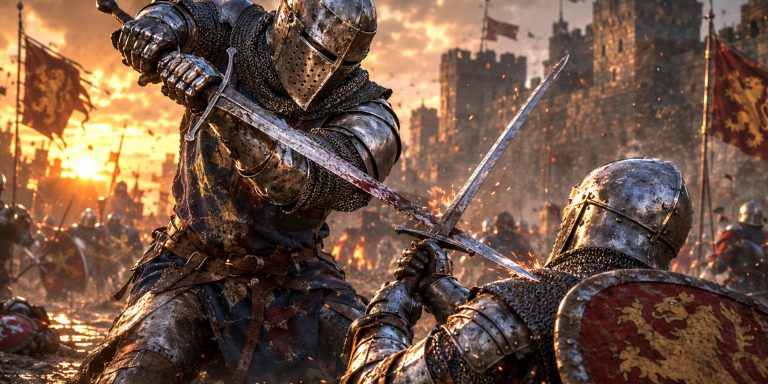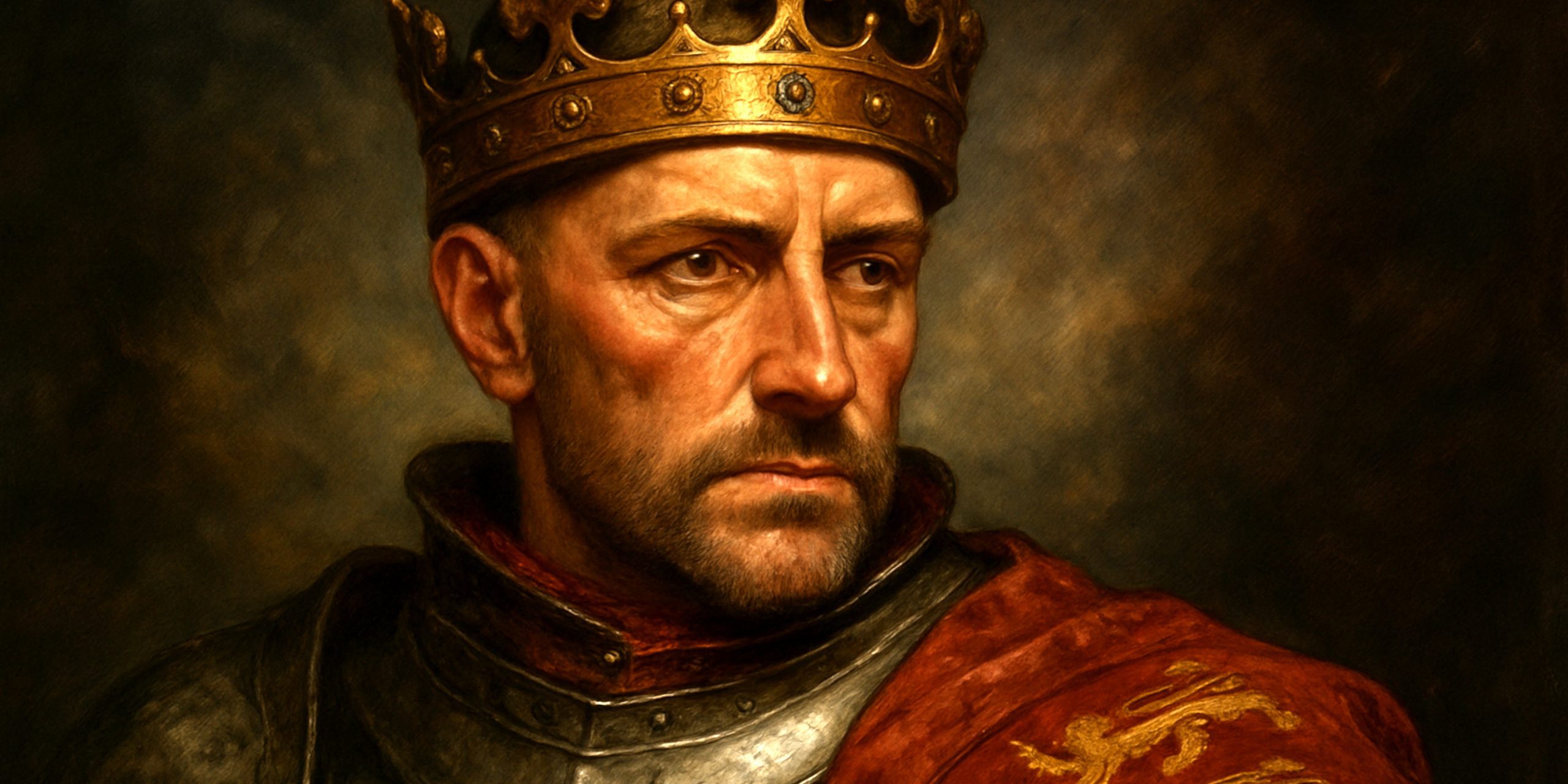
Henry V sits in that curious pocket of English memory where schoolroom tales, Shakespearean theatre and the occasional pub argument fuse together. The real king tends to be buried under patriotic varnish and the odd theatrical flourish. The following overview untangles some of that clutter while keeping an eye on what the chronicles actually say. A little honesty never hurts a medieval reputation as sturdy as his.
Facts about Henry V
Fact 1: Henry was an experienced soldier long before he became king
By the time he took the throne in 1413, Henry had already commanded armies in Wales and fought at Shrewsbury. There is something rather disarming about a monarch who could lead a campaign without requiring someone to explain which end of the lance to hold.
Fact 2: He genuinely pursued reform at home
Henry inherited a kingdom that was tired, fractious and occasionally rather moody with its own institutions. He pushed for more efficient administration, restored some respect to royal finances and showed an interest in justice that went beyond scribbles on parchment.
Fact 3: Henry restored stability after Richard II and the turbulence under Henry IV
His father’s reign had been overshadowed by rebellions, illness and anxiety about legitimacy. Henry stepped into the crown with a surer hand and did more than simply enjoy the improved lighting. His political skill steadied a shaky throne.
Fact 4: Agincourt really was a remarkable victory
Historians love to remind students that battles are complicated affairs, but Agincourt still earns its reputation. English archers, French missteps and Henry’s discipline produced an outcome that shocked Europe. It is possible to admire the brilliance without buying the more theatrical retellings.
Fact 5: He strengthened his claim to France through diplomacy as well as war
The Treaty of Troyes in 1420 recognised him as heir to the French throne and regent of France. For a man often painted as a pure battlefield champion, his political negotiation was just as impressive.
Fact 6: Henry was deeply religious in a way that shaped policy
This was not surface piety. It coloured decisions, his sense of responsibility and the image he cultivated. Whether this made him a model of virtue is another question, best left to theologians and the occasional exasperated medievalist.
Fact 7: His early death changed the trajectory of the Hundred Years War
Henry died in 1422 at the age of thirty six. His son was an infant and the regency that followed lacked Henry’s authority. Without him, the English position in France slowly crumbled. A longer life might have produced a very different Europe, though counterfactual history is a dangerous game unless one enjoys raised eyebrows from colleagues.
Myths about Henry V
Myth 1: Henry was a wild, reckless youth who transformed overnight into a saintly king
This popular image owes much to Shakespeare. The historical Henry did enjoy a lively youth and the occasional misjudgement, but the idea of a sudden saintly awakening at accession belongs firmly to the stage, not the archives.
Myth 2: He won Agincourt purely because of English genius
English longbowmen played a major role, but mud, cramped terrain and French tactical errors deserve their fair share of credit. The victory was brilliant, yet not the product of divine favour or uniquely English cleverness. Medieval warfare was rarely that tidy.
Myth 3: Henry was universally loved in England
Admired, yes. Revered, often. Universally adored, no. Taxation grumbled through the shires and some clerics were unimpressed by his handling of heresy. Popularity in medieval chronicles usually tells you more about the chronicler than the public.
Myth 4: Henry was a proto modern patriot fighting for England alone
He operated within medieval ideas of kingship, dynastic right and the tangled claims to French territory. Imagining him as a flag waving national hero misses the point and probably makes him spin in his tomb at Westminster Abbey.
Myth 5: He intended to conquer all of France permanently
Henry wanted to secure the crown of France for his line and stabilise the territories under English control. Whether he planned a full permanent conquest is doubtful. Medieval kings tended not to think in tidy colour coded maps.
Myth 6: Henry was a harsh and joyless ruler
His piety and seriousness often overshadow the fact that he enjoyed music, theatre and good company. He was disciplined, not dour. Medieval kings could pray earnestly, wage war and still have a social life.
Myth 7: Henry died from a heroic battlefield wound
It makes a fine story but it is almost certainly untrue. He likely died of illness, possibly dysentery. Medieval armies were close packed, badly supplied and rather fond of spreading disease. Even kings were not immune.
Watch the documentary: