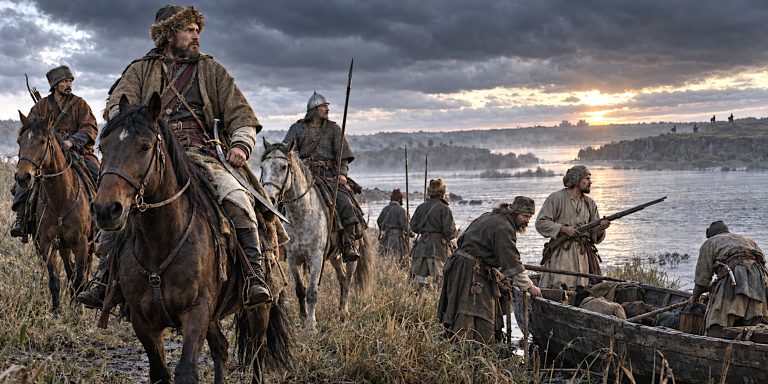
Szigetvár sits in that uneasy corner of Central Europe where the Habsburgs and Ottomans continually tried to solve their differences with force instead of conversation. In 1566 it became the stage for one of the most astonishing defensive battles of the early modern world.
It was not a simple clash. It was a grinding test of will. The Ottomans wanted momentum after decades of territorial success. The Habsburg frontier wanted breathing space. At the heart of it all stood Nikola Zrínyi, a man whose stubborn defiance makes even seasoned historians pause.
Szigetvár fell, but it did so in a way that threw the Ottoman timetable into complete disarray and may have saved Vienna. There are few sieges that carry this mix of tragedy, pride, and tactical ingenuity.
Forces
Commanders
| Side | Commander | Notes |
|---|---|---|
| Ottoman Empire | Sultan Suleiman I and Grand Vizier Sokollu Mehmed Pasha | Suleiman died during the siege. His death was kept secret to maintain morale. |
| Habsburg Croatian Defence | Nikola Zrínyi (Miklós Zrínyi) | Led the garrison with a sense of fatalistic courage that still startles. |
Estimated Troop Numbers
| Side | Strength | Composition |
|---|---|---|
| Ottoman | 90,000 to 100,000 | Janissaries, sipahi cavalry, artillery corps, irregular akıncı raiders, auxiliary Balkan units |
| Szigetvár Garrison | 2,500 to 3,000 | Hungarians, Croats, German mercenaries |
Troop Composition and Arms
Ottoman Forces
- Janissaries
Elite infantry armed with matchlock arquebuses, kilij sabres and large shields in earlier phases. - Sipahis
Cavalry equipped with composite bows, kilij sabres, spears and mail reinforced with laminar plates. - Artillery Corps
Heavy bombards, medium field guns and specialist engineers. - Support and irregular units
Akıncı light cavalry, Balkan auxiliaries with hand axes, spears and simple curved sabres.
Habsburg Croatian Garrison
- Infantry
Pike, halberd, crossbow remnants, arquebuses and long knives. Many carried broad sabres in the Hungarian style. - Armoured troops
Mail, half plate and brigandine, depending on wealth. Officers often carried estocs or long double edged swords suited for thrusting. - Engineers and gunners
Light field pieces, improvised grenade makers and defenders armed with firepots.
Arms and Armour Table
| Faction | Armour | Primary Weapons | Notable Sword Types |
|---|---|---|---|
| Ottoman | Mail with plate reinforcements, leather lamellar for light troops | Arquebus, spear, bow, shields, artillery | Kilij, Yatagan |
| Habsburg Croatian Defence | Mail, half plate, brigandine, kettle helms | Pike, halberd, arquebus, light cannon | Hungarian sabre, Estoc |
History and Course of the Siege
Suleiman I, by then an ageing ruler, wanted one final campaign. His army crossed the frontier with impressive speed, although one suspects the engineers wished the Sultan had retired gracefully instead of dragging every artillery piece in Europe behind him.
Zrínyi knew the numbers were hopeless. His letters reveal a blend of fatalism and sharp anger at Habsburg politics. He resolved to fight anyway, which is usually the moment in a story where a historian leans back and sighs.
The Ottomans pounded the outer works with artillery. The defenders withdrew from the Old City to the New City, then finally into the inner citadel. Every line fell only after brutal close combat.
Suleiman died in his tent during the siege. Court officials kept the news quiet, which was a sensible decision given the psychological warfare affecting both armies. Sokollu Mehmed Pasha pushed on, determined to finish the job.
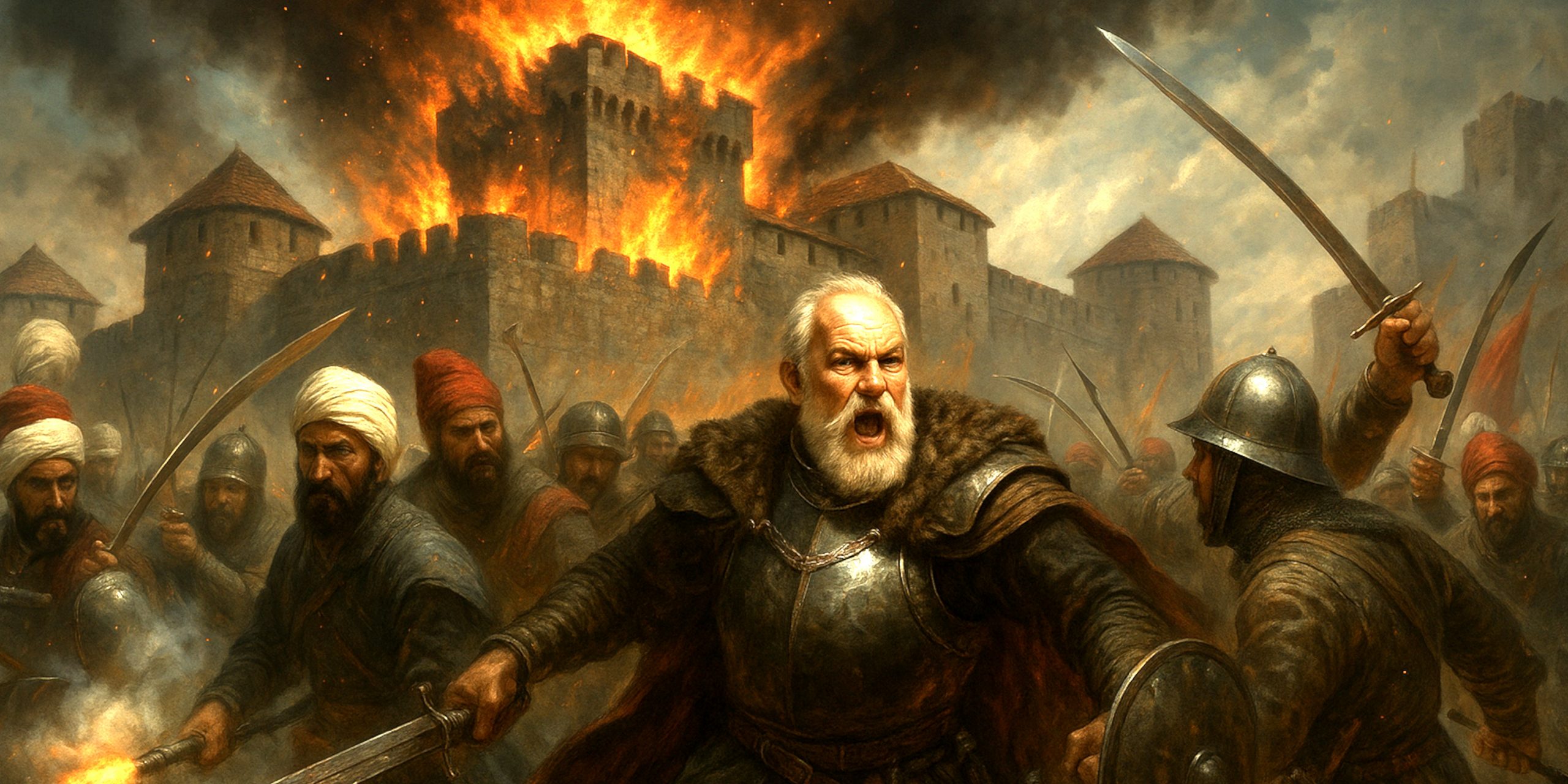
On 7 September 1566, with the fortress burning, Zrínyi donned ceremonial armour, opened the gates and led a final charge. He died almost instantly. The courtyard battle was short and murderous. The magazine exploded soon after, killing hundreds of Ottoman soldiers.
The Ottomans had taken Szigetvár, but at a cost that left their great campaign stalled.
Archaeology
Recent archaeological work at Szigetvár has been unusually fruitful. Excavations have found:
- Fragments of Ottoman artillery rounds, including stone shot and iron cannonballs.
- Remains of the wooden palisades that once held the marshland defences together.
- Burn layers corresponding to the final fires that swept the citadel.
- Personal items such as belt mounts, spur fragments, knife fittings and broken sabres.
The most intriguing discovery relates to Turbek, a site believed to be associated with Suleiman’s temporary mausoleum. Although contested, excavation there has revealed Ottoman style building foundations and artefacts that fit the period. The idea that his internal organs were buried near Szigetvár adds a strange and almost poetic footnote to the siege.
Contemporary Quotes
From Zrínyi, in his final letter:
“I shall not surrender… I will hold until my last breath.”
The sort of line that makes other generals look slightly underdressed.
From Ottoman chronicler Selânik:
“The earth shook with the thunder of the guns and the stubbornness of the infidel.”
From a Habsburg report after the fall:
“The fire took the fortress even as the Turk claimed it.”
Battle Timeline
| Date | Event |
|---|---|
| 5 August 1566 | Ottoman army arrives at Szigetvár and surrounds the outer town. |
| Early August | Heavy bombardment begins. Outer works collapse. |
| Late August | Defenders withdraw to the New Town. Daily assaults continue. |
| Early September | New Town falls after fierce fighting. Garrison retreats to inner citadel. |
| 6 September | Large scale fires break out. Sultan Suleiman dies in his campaign tent. |
| 7 September | Zrínyi leads final sortie. Garrison destroyed. Magazine explosion kills many Ottoman soldiers. Fortress captured. |
Legacy
Szigetvár is remembered not because it changed borders but because it altered momentum. The Ottoman advance stalled for more than a year. Vienna, once again, was spared the uncomfortable experience of being directly threatened.
Zrínyi became a symbol of Croatian and Hungarian resistance, although this reputation conveniently ignores the fact he also spent a good portion of his life criticising the Habsburgs. History loves a heroic figure and rarely checks their receipts.
For the Ottomans, the siege stood as a victory tinged with sorrow. They had lost their Sultan, one of the greatest rulers in their history, and gained a smouldering ruin.
The Seven Swords Takeaway
The Siege of Szigetvár remains one of the most extraordinary examples of early modern defensive warfare. Its mixture of stubborn defence, political tension and raw human courage gives it an emotional charge that few sieges can match.
As a historian, I find Szigetvár a reminder that numbers alone do not decide a siege. Determination, terrain and sheer bloody-mindedness can stretch the story far beyond the point where logic tells it to end.
Watch the documentary: