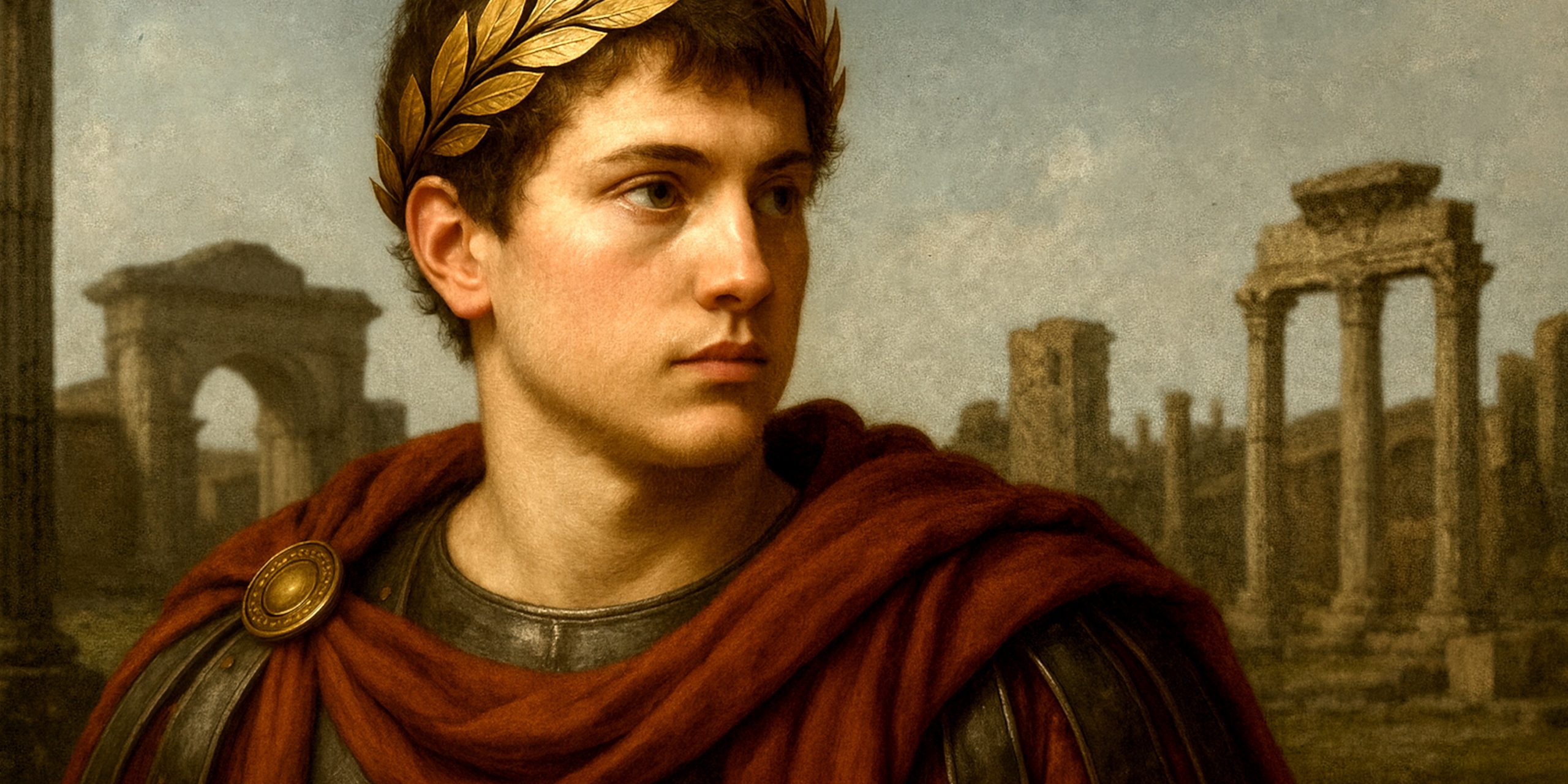
Honorius is one of those rulers who tends to shuffle in the background of late Roman history, yet the empire he inherited was already beginning to list in the wind. His life reads less like the stride of a confident ruler and more like a young man carried along by stronger personalities, shifting fortunes, and the slow tightening of the world around him. As a historian, I have always found him a surprisingly human figure. For all the criticism he receives, he lived through crises that would have strained even the sharpest mind.
Early Life and Accession
Born in 384 as the younger son of Theodosius I, Honorius was elevated early to the purple and became Western Emperor in 393 while still a child. The machinery of the Western court settled around him and never really let go. His reign, which lasted until 423, unfolded in a world of powerful generals, aggressive frontier pressures, and a court more interested in ritual safety than strategic clarity.
His move to Ravenna in 402, often painted as a retreat, reflects a reasonable attempt to find a defensible capital in a dangerous time. That decision alone tells us something about his temperament. He seemed to prefer caution over drama, stability over heroics.
Arms and Armour of the Honorian Period
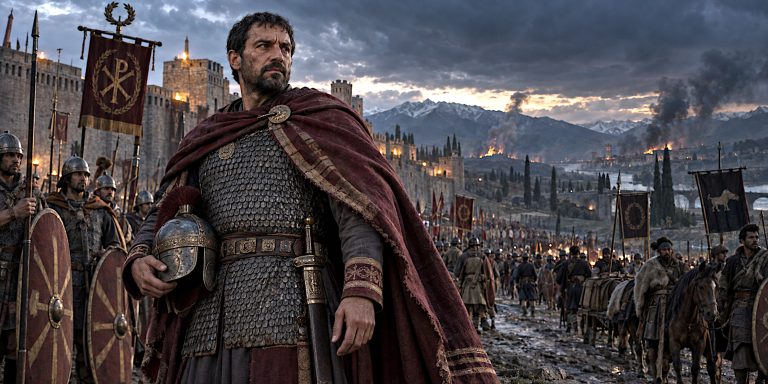
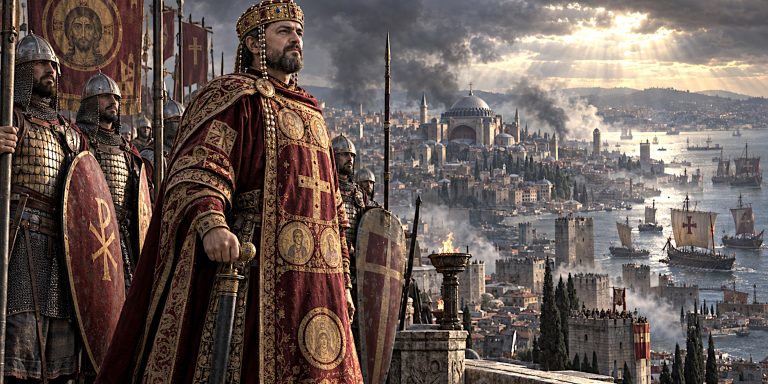
The emperor himself is unlikely to have worn armour regularly. Court representation at the time emphasised ceremonial splendour rather than martial presence. Even so, the armies that fought in his name had a distinctive material culture.
Typical arms and armour in Honorius’s Western armies
- Spatha long infantry and cavalry sword with a straight blade and modest guard
- Spathae of Germanic style becoming more common as federate troops rose in number
- Spears and heavy thrusting lances widely used by both Roman and allied units
- Oval shields decorated with the richly patterned designs recorded in the Notitia Dignitatum
- Scale armour and mail shirts gradually declining in issue, though still used by some field units
- Intercisa style helmets segmented bowl helmets associated with late Roman troops
- Simple composite bows used by cavalry contingents, especially Hunnic and Alan auxiliaries
One cannot help but notice the growing patchwork quality of military equipment in this period. It reflects a world trying to hold together disparate forces under an imperial banner that no longer carried the fearsome weight it once did.
Battles and Military Acumen
Honorius did not lead armies in person. His military legacy is bound to the careers of Stilicho, Constantius, and various generals who shouldered the fighting while the emperor worked within the palace world.
Key conflicts of his reign
- Gothic War of 401 to 403
Alaric’s first invasion of Italy forced Honorius to retreat northwards for safety. Stilicho delivered victories at Pollentia and Verona. These kept the Western Empire alive, though they did not remove the Gothic threat. Honorius’s contribution was passive but understandable for his age and role. - Revolt of Constantine III
Britain, Gaul, and part of Spain passed to the usurper Constantine. Honorius relied on generals like Constantius to claw back control. The emperor again appears as a figure reacting to events rather than driving them. - Siege and Sack of Rome in 410
Alaric’s final approach culminated in the sack. Honorius remained in Ravenna, protected by marshes and walls. He was by no means indifferent, but he was powerless to alter the course of events. This remains the central criticism of his reign. - Suppression of Jovinus, Sebastianus, and other usurpers
The stability of the West depended heavily on generals willing to act in his name. Honorius’s military decisions usually took place through appointments and court manoeuvring rather than battlefield clarity.
As a historian, I find his supposed incompetence overstated. He grew up in a world where emperors no longer rode at the head of armies. His hesitancy reflects the political culture of the Western court rather than personal weakness alone.
Honorius as a Political and Military Figure
Calling him a poor ruler is easy enough, but too simplistic. Honorius worked within a narrow corridor of action, hemmed in by court factions, military strongmen, and external pressures. His judgement was not strategic, but he had a knack for survival. He held the throne for thirty years, something many sharper rulers failed to do.
If one looks for a defining quality, it is this steady, somewhat resigned persistence. The West did not fall during his lifetime, although it groaned heavily under the weight of strain.
Where to See Artifacts from His Reign
The surviving objects from his reign tend to be administrative, ceremonial, or military rather than personal. They allow us to feel the texture of his world more than his character.
Notable locations
- Ravenna, Italy
The city is a vast archive of late antique culture. The Mausoleum of Galla Placidia and the Arian Baptistery preserve mosaics from the decades surrounding Honorius’s rule. They give a vivid sense of imperial ideology in his environment. - The British Museum, London
Holds late Roman helmets, belt fittings, and military gear from the fourth and fifth centuries, including pieces contemporary with Honorius. - Museo Nazionale Romano, Rome
Displays late Roman inscriptions, statuary, and military equipment that frame the material culture of his era. - Musée de Cluny, Paris
Exhibits late antique metalwork and military items similar to those used by Western field armies of the period. - Römisch Germanisches Museum, Cologne
Contains late Roman frontier equipment and weapons which illustrate the mixed Roman and Germanic forces active in the West.
Latest Archaeology Connected to His Period
Recent archaeology often focuses on frontier collapse, settlement shifts, and the changing structure of late Roman military installations. These give indirect but valuable insight into Honorius’s world.
- Excavations in Britain
Evidence of a rapid decline in urban maintenance and garrison withdrawal aligns with the political messages sent during Honorius’s reign, especially the famous rescript telling British cities to look to their own defence. - Ravenna’s port area at Classe
Ongoing excavations show the bustling military and naval structures that supported the imperial court, adding context to Honorius’s chosen capital. - German frontier sites
Archaeologists have traced the movement of federate groups and Roman units, revealing how the West increasingly relied on non Roman manpower. - Southern Gaul and Spain
Traces of Visigothic settlement patterns help explain the negotiated coexistence that eventually replaced open conflict. These settlements emerged directly from the political choices taken under Honorius.
The most striking thing about the archaeology of his time is how much improvisation it reveals. Walls repaired with whatever materials were at hand, military camps merging with civilian settlements, and reoccupied hillforts all speak to a society adapting under pressure.
Legacy
Honorius leaves a mixed legacy. The Western Empire eroded significantly while he was emperor, but it is unfair to place the burden entirely on him. He inherited an empire stretched thin and constrained by decades of structural weakness. His weaknesses as a ruler were real, though they sit within a larger story of institutional fatigue and shifting populations.
When I look at Honorius, I see a young man raised for power but not shaped for crisis. His reign shows us the limits of imperial authority in a world that no longer responded to imperial will. Yet he remains a necessary figure for understanding the path that led from late Rome to the early medieval kingdoms.
Watch the documentary: