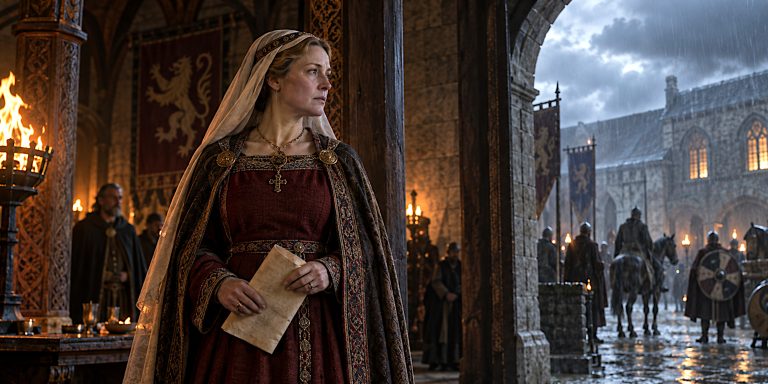
Otumba sits in that uncomfortable category of battles that look impossible on paper yet somehow happened anyway. In the summer of 1520 Hernán Cortés staggered out of Tenochtitlan with a half-ruined army, exhausted allies, and morale that would politely be described as fragile. The Aztec Empire sensed an opportunity and moved to finish the intruders on the plains near Otumba. What followed was a violent, chaotic and strangely decisive clash that still has historians raising an eyebro
The battle has often been romanticised as a heroic Spanish triumph. The truth is far more tangled. It was a case of one side stumbling and the other hesitating at precisely the wrong moment. Otumba was shaped by luck, leadership, and a cavalry charge that Cortés later described with all the modesty of a man writing his own legend.
Background
In June 1520 the retreat from Tenochtitlan, known to the Spanish as La Noche Triste, left the conquistadors shredded. Hundreds were killed or drowned during the escape, and the survivors limped east with their Tlaxcalan allies. The Aztec commander Matlatzincatzin assembled a large force to trap them on the Otumba plain. He had the numbers, the terrain and arguably most of the morale. What he did not have was the ability to deliver a killing blow before the Spanish cavalry found its target.
Forces
The estimates vary wildly, largely because Spanish chroniclers enjoyed rounding numbers up and Aztec scribes had their own motives. The figures below represent cautious approximations accepted by most historians.
Spanish and Tlaxcalan Forces
| Force | Estimated Number | Notes |
|---|---|---|
| Spanish infantry | 400 to 450 | Many wounded from the retreat |
| Spanish cavalry | 20 to 25 | The decisive arm of the army |
| Crossbowmen and arquebusiers | 30 to 40 | Ammunition limited |
| Tlaxcalan allies | 3,000 to 4,000 | Exhausted but loyal |
| Artillery | None | Lost during the escape |
Aztec and Allied Forces
| Force | Estimated Number | Notes |
|---|---|---|
| Aztec warriors | 20,000 to 30,000 | Drawn from several altepetl |
| Elite Eagle and Jaguar warriors | Several hundred | Aimed at capturing nobles |
| Command staff and standard bearers | Dozens | Critical symbols of control |
Leaders
Spanish
Hernán Cortés, Captain General
Pedro de Alvarado, infantry commander
Cristóbal de Olid, cavalry
Gonzalo de Sandoval, rear guard
Aztec
Matlatzincatzin, Aztec commander at Otumba
Eagle and Jaguar captains whose names were recorded inconsistently but who acted as elite shock leaders
Arms and Armour
The two armies brought entirely different military cultures to the field. Otumba is often taught as a moment when European steel met Indigenous ingenuity. Both sides fought with skill, although the battlefield created advantages and pitfalls that neither side fully controlled.
Spanish Equipment
| Item | Description |
|---|---|
| Steel swords | Primarily side-swords and short thrusting blades suited for close combat |
| Lances | The cavalry carried long lances that proved decisive in the charge |
| Crossbows and arquebuses | Powerful but few in number and short on ammunition |
| Steel helmets and breastplates | Many soldiers retained only partial armour after the retreat |
| Horses | The psychological effect on Aztec warriors was still significant |
Aztec Equipment
| Item | Description |
|---|---|
| Macuahuitl | Wooden swords edged with obsidian, brutally sharp and capable of severe lacerations |
| Tepoztopilli | Spear with obsidian blades, used by elite formations |
| Atlatl | Spear-throwers that extended range |
| Quilted ichcahuipilli armour | Effective against cutting blows, less so against steel thrusts |
| Shields and brightly coloured standards | Key for signalling and morale |
Course of the Battle
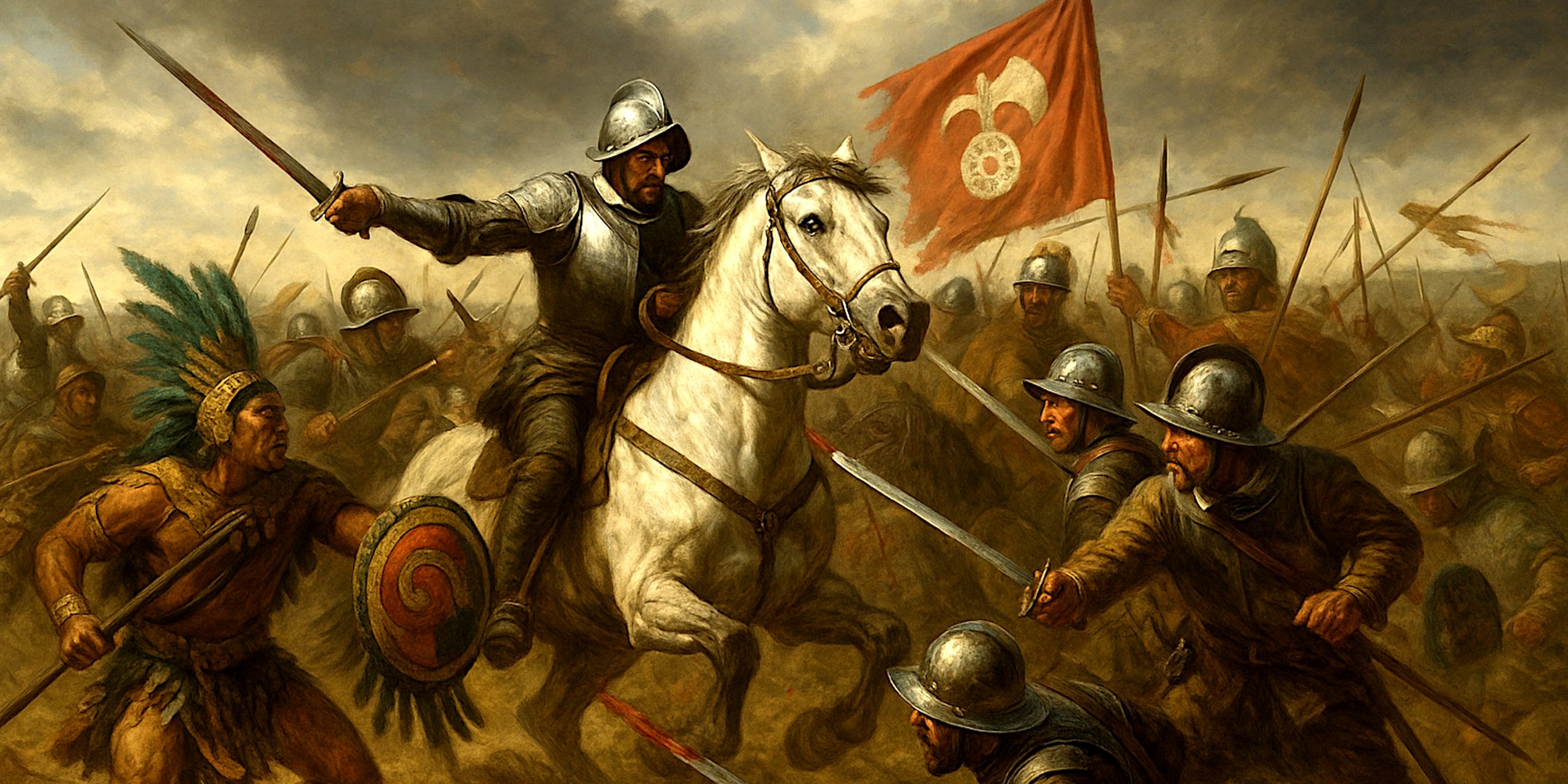
The crucial moment came when Cortés spotted the Aztec commander’s standard. In Aztec warfare the fall of a commander or loss of a major banner could shatter cohesion. Taking an outrageous gamble, Cortés led the small cavalry force straight into the thickest part of the Aztec line. Chroniclers describe it as a daring charge. A more honest summary might call it desperate optimism mixed with a remarkable sense of direction.
Cortés and his riders reached the command staff, killed the bearer and seized the standard. Aztec morale collapsed. Troops broke away, the encirclement dissolved and the entire force began to fall back. The Spanish, stunned to still be alive, pushed through the gap and continued their retreat to Tlaxcala.
Contemporary Quotes
Bernal Díaz del Castillo later wrote:
“We struck at them until the banner fell and then their hearts turned to water.”
Cortés put it less poetically but with his usual confidence:
“God was pleased to favour us, for once the commander was struck down they did not dare to continue the fight.”
An anonymous Nahua account preserved in later codices says:
“The earth trembled with hooves, and the standard was lost. Then the warriors withdrew for the day had turned against us.”
Archaeology
Otumba has not produced the rich material finds that romantic retellings promise. The battle took place on open plains that have seen centuries of agriculture, erosion and settlement. Archaeologists have uncovered obsidian fragments, worked stone blades and occasional metal items that may relate to the retreat rather than the battle itself.
Local surveys have attempted to map the likely course of the Spanish withdrawal and Aztec attack corridors. Soil analysis suggests trampled earth in bands that support historical descriptions of envelopment tactics. It is thin evidence but enough to keep field archaeologists satisfied that Otumba did occur broadly where chroniclers claimed.
Battle Timeline
1520, late June to July
Retreat from Tenochtitlan begins.
Spanish survivors join with remaining Tlaxcalan allies.
7 July 1520
Aztec forces shadow the retreat and prepare to cut the column off on the Otumba plain.
Morning
Initial Aztec attack forms a wide arc around the Spanish and Tlaxcalans.
Heavy close combat across the line, particularly on the flanks.
Midday
Spanish cavalry regroup for a single concentrated strike.
Cortés identifies the Aztec command standard.
Early afternoon
Cavalry breaks through and kills the standard bearer.
Aztec forces begin to withdraw in confusion.
Later afternoon
Spanish column pushes through the gap and continues toward Tlaxcala.
Legacy
Otumba did not end the war, but it prevented the Spanish campaign from collapsing altogether. It gave Cortés room to rebuild and recruit, and it proved that morale could swing violently in either direction when symbolic targets were hit. For the Aztec Empire it was a bitter moment in a struggle that otherwise seemed to be leaning their way.
For military historians, Otumba is a case study in command psychology. It reminds us that an army with every advantage can still unravel if its leadership centre is struck. In other words, sometimes the difference between victory and disaster really is one unlucky banner bearer.
Watch the documentary: