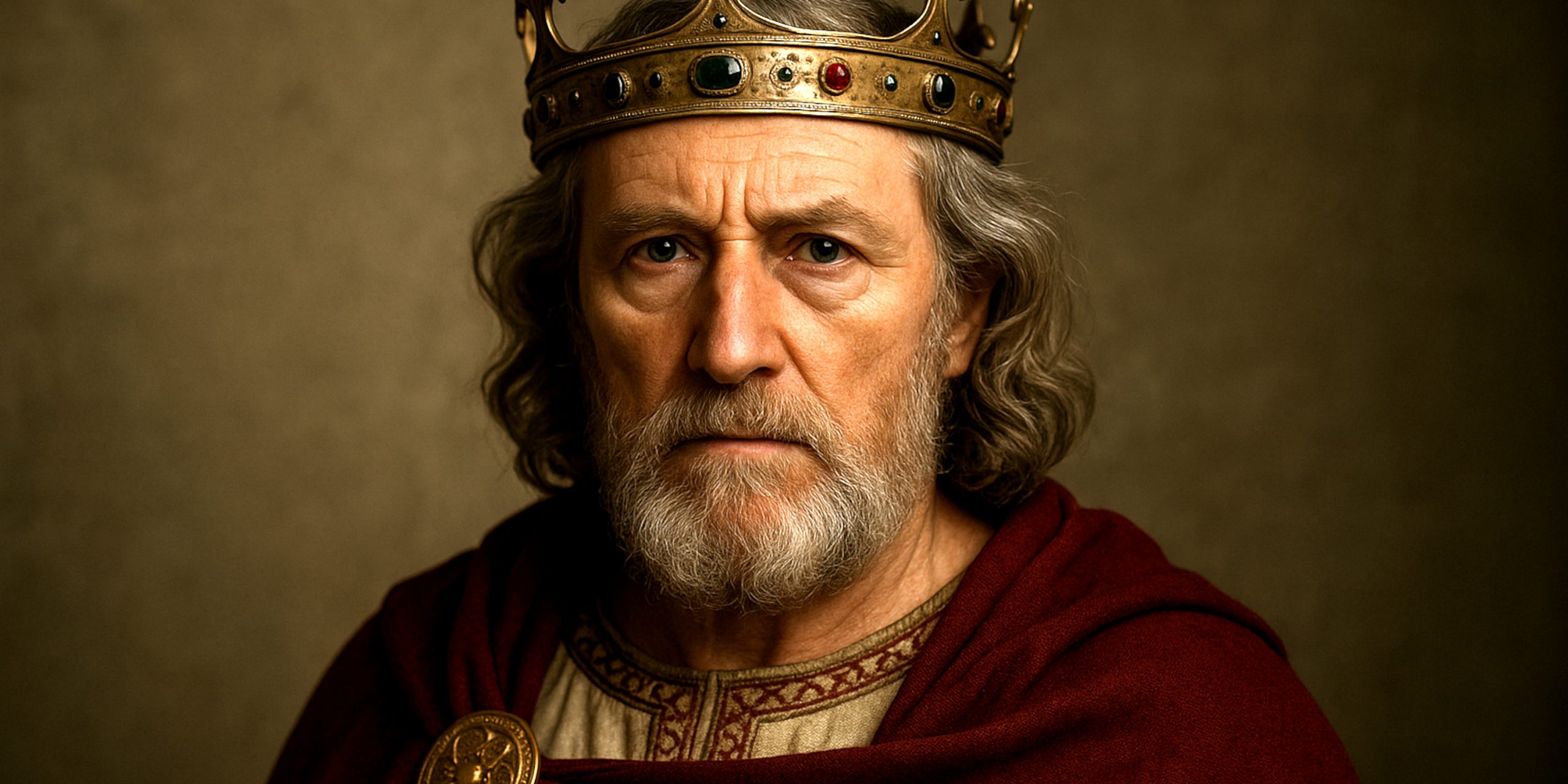
Edward the Confessor sits at the threshold between early medieval England and the incoming Norman age, and he often feels like a figure trapped between two worlds. His life is wrapped in piety, exile, uneasy politics, and a legacy that ended up shaping the arguments for 1066. When you try to pin him down, he slips away again, partly because his contemporaries worked hard to turn him into a saint rather than a statesman. Still, we can draw out the strands that matter, the ones that tell us who he was, what he ruled with, and how people in his lifetime understood power.
Edward ruled England from 1042 until 1066. Born in Wessex but raised in Normandy after his family’s fall, he returned as a king who often seemed more comfortable with churchmen than with warlords. Yet he held together one of Europe’s most fractious kingdoms during a period defined by ambition, betrayal, and shifting loyalties. He was no heroic warrior king, and that is exactly what makes him intriguing. His reign is a window into the late Anglo Saxon political machine that eventually collapsed under the weight of competing claims.
Arms and Armour
Edward was not a king known for personal battlefield exploits, so we do not have tales of him charging with a great spear or swinging a pattern welded blade. What we can do is reconstruct the equipment expected of an eleventh century Anglo Saxon ruler and his household.
Typical equipment associated with his court would include:
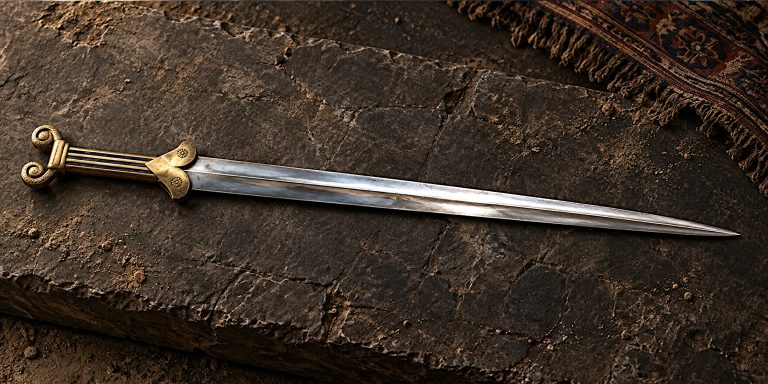
- Swords: Late Anglo Saxon pattern welded blades with broad fullers. These were still derived from the classic migration era styles, although more refined by this point. Hilts tended to be simple compared to earlier centuries.
- Spears: The core battlefield weapon of the English, including long thrusting spears and shorter throwing types.
- Shields: Round, wooden, often covered in leather with a central iron boss. Kite shields arrived gradually, especially among men with Norman ties, which makes their presence at Edward’s court quite plausible.
- Mail hauberks: Long mail shirts with coifs and vented skirts were standard elite armour.
- Helms: Nasal helms with conical tops, and possibly some richer examples inspired by Scandinavian designs.
- Horse gear: While Anglo Saxon warfare was mainly infantry based, a king and his guard used horses for mobility and status.
I sometimes imagine Edward in full armour and it always feels slightly theatrical. He strikes me as a man who would wear a hauberk because the world required it, not because he relished the chance to use it.
Battles and Military Acumen
Edward was not a warrior king in the style of Aethelstan or Cnut. That does not make him weak minded, only different. He ruled through alliances, patronage, and a careful balancing of great families, especially the Godwins, who alternated between being his greatest asset and greatest menace.
Key points of military relevance:
- No major campaigns led personally by Edward: His reign is largely absent of king led field armies.
- Reliance on earls: Earls like Godwin, Harold, and Leofric carried out military duties. They dealt with Welsh incursions, Scandinavian threats, and internal disputes.
- Naval interests: Edward invested in the English fleet, although chroniclers tend to exaggerate its size for political reasons.
- Political warfare: He used exile, land confiscation, and church patronage as weapons. In the eleventh century, these could wound more effectively than spears.
His military acumen lay in understanding how power moved among nobles and how to keep the kingdom from fracturing. Some historians paint him as naïve, but I find him more subtle. He understood that he lacked the force to dominate the realm, so he leaned into moral authority and foreign alliances.
Where to See Artefacts from His Reign
None of Edward’s personal weapons or armour survive, but objects linked to his court, his church, and his political world are still accessible.
Westminster Abbey, London:
The burial place of Edward, and the site he rebuilt almost entirely. The Norman style church he initiated set architectural standards for centuries. Although much altered, it is still the most important site for anyone studying his reign.
The Bayeux Tapestry, Bayeux Museum:
Created after his death, but it preserves scenes of Edward, including his meeting with Harold. It captures clothing, courtly settings, and weapon types from his era.
The British Museum:
Hosts Anglo Saxon swords, spears, shield bosses, and helms that represent the equipment of elite warriors under Edward. Nothing is personally labelled as his, but they illustrate the world he governed.
Winchester Cathedral and City Museum:
Winchester remained a cultural and administrative centre, filled with material from the late Anglo Saxon elite, including manuscripts from the period.
Latest Archaeological Findings
Archaeology from Edward’s reign often comes from settlements, churches, and burials rather than great battlefields. Several trends stand out.
- Monastic building surveys: Excavations at Westminster have revealed foundation layers related to Edward’s reconstruction, offering clues about royal patronage and imported styles from Normandy.
- Late Anglo Saxon elite burials: Finds of high status mail rings, sword fittings, and decorated strap ends give insight into the military class Edward relied on.
- Landscape studies: Work on pre Conquest London and Winchester continues to show how aggressively England was urbanising. This tells us something about Edward’s administrative environment.
- Harold Godwinson’s estates: Research on Godwin family lands sheds light on the power blocs Edward navigated, which in turn shaped the politics of his court.
Nothing earth shattering has appeared recently, but archaeology keeps refining the context of Edward’s life. The story grows richer in texture, even if the man himself remains stubbornly elusive.
Legacy
Edward’s legacy is complicated, which is usually a sign of a figure who mattered. His piety shaped his posthumous reputation. His childlessness shaped the crisis that followed. His court fostered Norman influence, willingly or not. His reforms contributed to the growth of royal administration that later kings relied upon.
The sainthood that followed turned him into something almost weightless. As a historian, I think the real Edward was far more interesting, a man trying to rule a kingdom full of strong personalities and stronger ambitions with the tools of diplomacy, ritual, and moral authority. It worked until the moment it did not, and that broken moment in January 1066 changed England for good.
Watch the documentary: