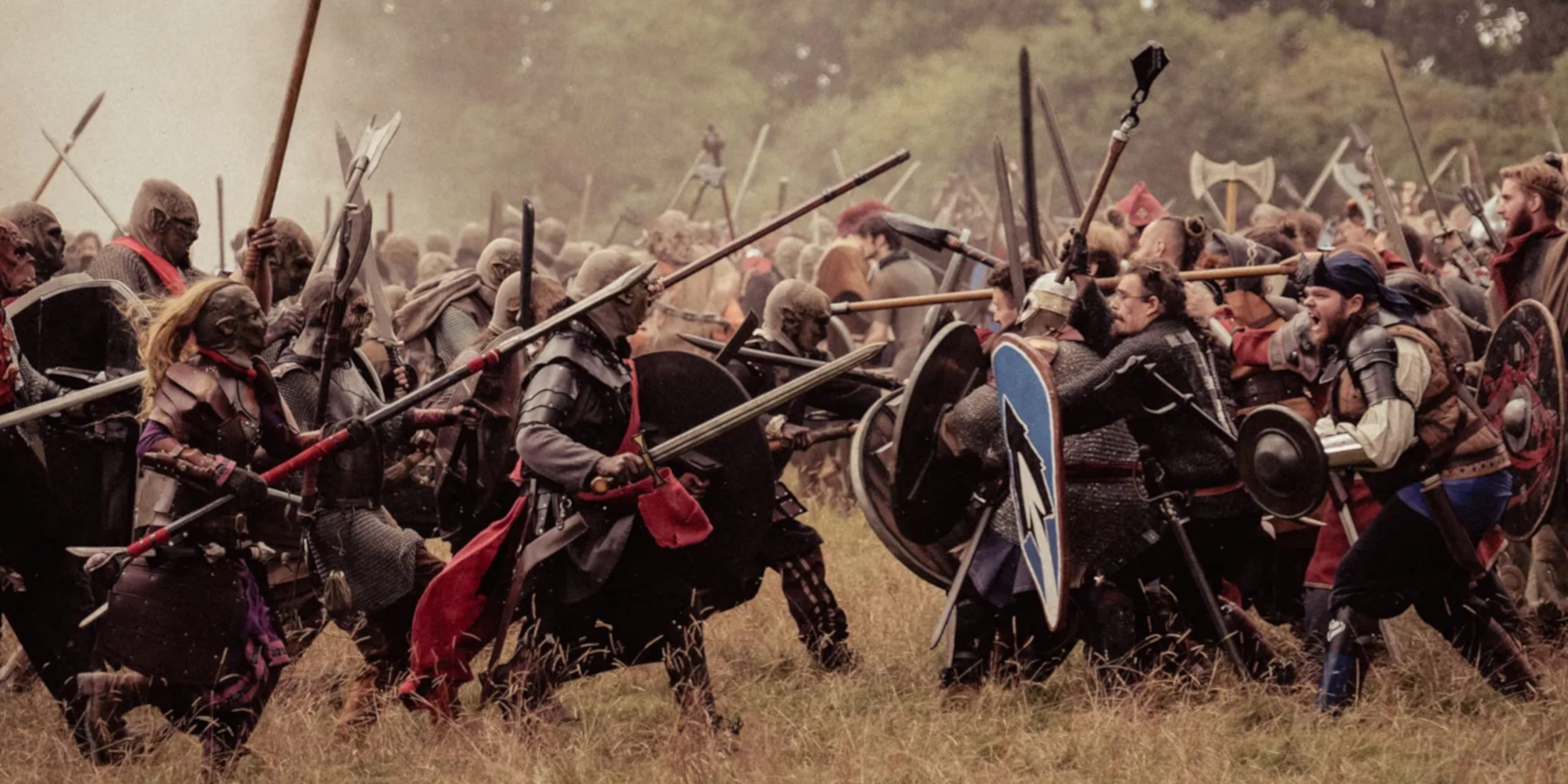
Live Action Roleplaying, or LARP, has evolved far beyond its niche origins. Across Europe and North America, thousands gather each year to step into immersive worlds, from high fantasy and historical drama to post-apocalyptic wastelands and gothic horror.
Live Action Roleplay lives or dies on context. The setting matters. The scale matters. A field with twenty people can feel intense, but a forest full of hundreds moving under the same rules hits very differently. What follows focuses on events that deliver a clear genre, a strong sense of place, and enough critical mass to feel like a living world rather than a dressed-up skirmish.
This guide focuses on some of the most respected and enduring LARP events scheduled or expected to return in 2026, highlighting both scale and substance. Whether you’re new to LARP or a seasoned player looking for your next challenge, these events represent some of the finest the hobby has to offer. Check out LARP event dates guide to book your adventure!

Empire Wicker Man | Credit: Tom Garnett
Drachenfest (Germany)
Genre: High fantasy, faction rivalry, emergent politics
Location: Brandenburg, Germany
Typical size: 3,000 to 4,000 players
DrachenFest sits between intimate political play and mass warfare, and that balance is what makes it distinctive. Players align with colour-coded factions, each representing a dragon aspect with its own values, leadership structures, and internal culture. These factions function almost like small nations, complete with internal disputes and power struggles.
The site allows for semi-permanent camps that feel lived in rather than temporary. Over the course of the event, these spaces become social hubs, defensive positions, and symbols of faction identity. The geography supports both large battles and smaller raids, ambushes, and diplomatic meetings away from the main fields.
What sets DrachenFest apart is how much of the story emerges from player action. While there is an overarching framework, alliances shift rapidly, leadership changes hands, and plans collapse in unpredictable ways. Rituals, dragon interactions, and symbolic objectives create pressure points that factions compete over rather than simple kill counts.
Combat is regular and often intense, but social play carries equal weight. Negotiators, spies, traders, and ritual specialists can influence the direction of the event just as much as battlefield commanders. DrachenFest rewards adaptability and group cohesion more than individual heroics.
https://www.drachenfest-larp.info/en
ConQuest of Mythodea (Germany)
Genre: Epic fantasy, mythic warfare, high spectacle
Location: Rural sites in Saxony-Anhalt, Germany
Typical size: 7,000 to 10,000 players
ConQuest of Mythodea is scale taken seriously. The site is vast, open, and designed to support enormous battle lines, siege engines, and ritual spaces that can accommodate hundreds at once. This is not subtle fantasy. It is gods, cults, corrupted lands, and apocalyptic threats played at full volume.
The setting revolves around the continent of Mythodea, with players divided into cultural camps rather than simple factions. Each camp has its own visual language, customs, and approach to war and magic. The enemy forces, often portrayed by dedicated non-player groups, provide a constant external pressure that drives cooperation and large-scale planning.
Combat is frequent and visually impressive, with thousands taking part in coordinated assaults. At the same time, the event is structured to allow deep specialisation. Healers, engineers, ritualists, commanders, and logistics players all have defined roles that matter to the outcome. You can spend the entire event contributing without ever standing in the front rank.
The sheer size can feel overwhelming, especially for first-timers, but that sense of being one person in a vast conflict is intentional. ConQuest feels less like a story about you and more like a chapter in a myth that happens to include you.
Empire (United Kingdom)
Genre: Political fantasy, ritual magic, national identity
Location: Steeplechase LRP Centre, near Cottenham, Cambridgeshire (New site)
Typical size: 2,500 to 3,500 players
Empire is built around politics first and combat second. The setting centres on a single imperial state made up of distinct nations, each with its own culture, aesthetics, military traditions, and internal politics. You are not fighting to conquer the world. You are trying to shape how it is run.
The physical site is deliberately compact compared to continental mega-events. This forces interaction. Camps are close, councils are crowded, and reputations travel fast. The heart of the game is the senate and associated assemblies, where laws are proposed, resources allocated, wars declared, and magical policy decided. These sessions are loud, messy, and genuinely consequential.
Magic is formalised and public. Large rituals require planning, materials, and political approval, which means casters are deeply embedded in the social game. Battles do occur, often daily, but they are framed as military actions tied to wider strategy rather than isolated skirmishes. Victory or defeat affects supply lines, morale, and future options.
Empire suits players who enjoy negotiation, speechmaking, and long-term planning. Characters develop over seasons rather than events, and the game rewards memory, alliances, and grudges. It feels closer to running a state than playing a hero.

College of Wizardry (Poland)
Genre: Dark academia fantasy, political drama
Location: Czocha Castle, Poland
Typical size: 120 to 180 players
College of Wizardry is deliberately intimate, and that is its strength. Set entirely within a real medieval castle, the event focuses on education, rivalry, and ambition within a magical academic institution. The genre leans heavily into intrigue, hierarchy, and personal secrets rather than open warfare.
Players are divided into magical houses, academic orders, and political blocs, each with its own traditions and agendas. The castle itself shapes play. Narrow corridors encourage private conversations. Grand halls become stages for public confrontation. Towers and libraries host late-night plotting sessions that feel earned rather than staged.
Because of its limited size, every character matters. You are noticed quickly, for good or ill. College of Wizardry suits players who enjoy slow-building tension, layered roleplay, and character arcs driven by ambition, loyalty, and fear rather than battlefield dominance.
Bicolline (Canada)
Genre: Medieval fantasy, persistent world
Location: Quebec, Canada
Typical size: 2,000 to 3,000 players
Bicolline stands out for its physical environment. The site includes a permanent stone and timber medieval town, complete with walls, streets, taverns, and guild halls. This gives everyday roleplay real weight. Politics happens in buildings that feel legitimate, not temporary tents.
The Grand Battle, held annually, brings thousands together in structured warfare, but much of the draw lies in the persistent economy and social hierarchy. Guilds rise and fall over years. Characters age, retire, or die permanently. It rewards long-term commitment rather than spectacle chasing.
Wasteland Weekend (USA)
Though not a traditional fantasy LARP, Wasteland Weekend in California deserves mention for its fully immersive post-apocalyptic setting. Think Mad Max meets immersive festival. Participants bring their own vehicles, build themed camps, and commit to character for the duration. The line between performance art, roleplay, and real community blurs in a world of barter, survival games, and wild creativity.
Dystopia Rising (USA and Canada)
A networked post-apocalyptic horror LARP with multiple chapters across the US and Canada, Dystopia Rising is designed around ongoing character development and survival themes. Combat is boffer-based, but the real draw is the atmosphere and communal storytelling. Players build networks, face in-game traumas, and navigate morally grey survival scenarios over weekend-long events.
Twin Mask (USA, California)
Set in a high-fantasy world, Twin Mask combines deep character interaction with structured world events. It balances combat with intrigue, magic, and personal arcs. The event uses a modular rules system, allowing for customisation without overcomplication. Storylines unfold over multiple events, and new players are actively integrated into the setting without being overwhelmed.
The LARP scene in 2026 continues to push boundaries, blending theatricality, strategy, and social dynamics. What sets the best events apart is not just size or spectacle but the strength of their community and the depth of their storytelling. Whether you favour field battles, political scheming, or full-immersion narrative, the options across Europe and North America cater to every style of player.
What links these events is not size alone, but coherence. Each knows what it is trying to be. Genre is consistent. Locations are chosen to reinforce tone. Player numbers are large enough to sustain a living society, but structured well enough to avoid chaos.
For newcomers, these events offer clear entry points. For veterans, they provide longevity. You are not just attending a weekend. You are stepping into something that existed before you arrived and will continue after you leave.
We would like thank Clare at Profound Decisions (Empire) and Tom Garnett for their support and kind permission to reproduce their images to illustrate this article. Image credit: Tom Garnett