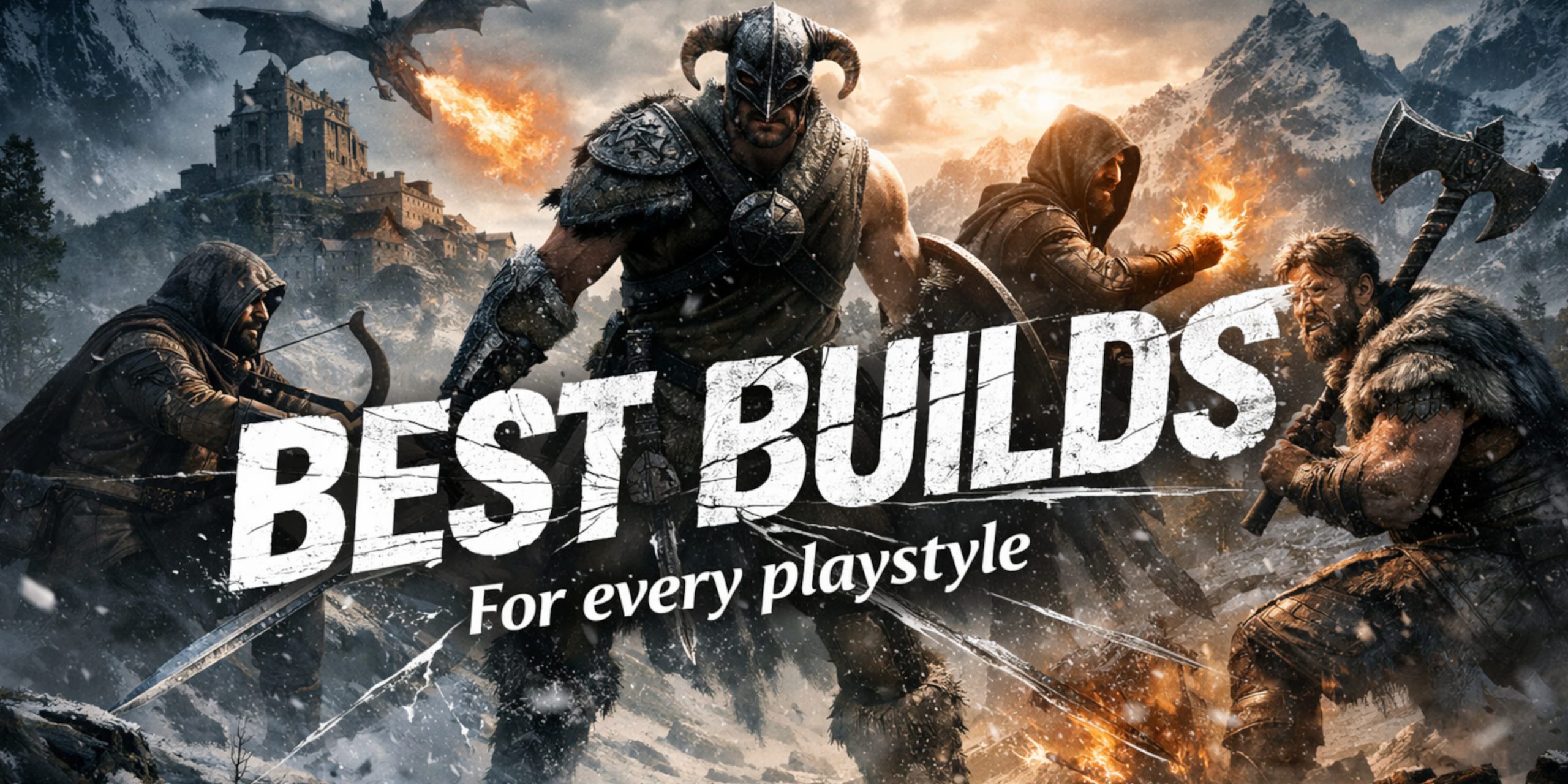
Few games invite obsession quite like The Elder Scrolls V: Skyrim. You boot it up to do one quest, suddenly it is three hours later and you are debating whether frost magic is morally superior to fire. Builds are the reason this game still works. Skyrim does not just let you fight differently, it lets you live differently.
This guide expands on the classic builds and adds more depth to how they actually feel in play. No gimmicks, no fake min max nonsense. Just builds that work, scale well, and stay fun past level 40.
The Stealth Archer (Yes, Still Ridiculous)
Let us get this out of the way. The stealth archer remains absurdly effective because Skyrim rewards patience, positioning, and multipliers like it owes you money.
This build revolves around Sneak, Archery, and Light Armour. The real power spike comes once you unlock the sneak attack bonuses in Archery and stack them with gear enchanted for stealth and bow damage. You are not fast, you are not flashy, but nothing reaches you alive.
Where this build really shines is dungeon control. You decide when fights happen. Add a dagger with the Assassin’s Blade perk for emergencies and you have a clean, efficient predator.
It is overpowered, yes, but also oddly meditative. Skyrim as a slow, quiet puzzle game.
The Sword and Shield Warrior (Reliable for a Reason)
This is the build most people start with and many abandon too early. That is a mistake.
A proper sword and shield character focuses on One Handed, Block, Heavy Armour, and Smithing. The shield is not decoration. Timed blocks, shield bashes, and stamina control turn combat into a rhythm rather than a stat check.
Late game perks like Shield Charge let you knock enemies flat, which never stops being funny. Add crafted and improved gear and you become almost impossible to stagger.
This build feels grounded. You are not a chosen one flinging meteors. You are just very good at not dying.
The Two Handed Berserker (Pure Momentum)
Two handed builds live and die on timing. You trade defence for reach and raw damage, which means mistakes hurt, but clean hits end fights fast.
Focus on Two Handed, Heavy Armour, and Smithing. Enchantments should lean into stamina regen and damage output rather than defence. You are not here to turtle.
This build works best when you embrace aggression. Power attacks, sprinting strikes, and crowd control through sheer force. Against groups, positioning matters more than perks.
It feels chaotic in the best way. Every fight is a gamble, and that keeps things interesting deep into a long save.
The Pure Mage (Hard Start, Incredible Finish)
Pure mage builds scare people because the early game is rough. Stick with it.
You will want to specialise early. Destruction for damage, Conjuration for breathing room, and Alteration for defence. Restoration is not optional, it is survival.
Once your magicka pool grows and cost reduction gear comes online, the build opens up. Paralysis spells, summoned allies, and area damage turn you into battlefield control rather than a glass cannon.
This build rewards knowledge. Understanding spell interactions and enemy resistances matters more than raw numbers. It also feels the most like roleplaying a Dragonborn scholar who actually read the books.
The Spellsword (Best of Both Worlds, If Done Right)
The spellsword is where Skyrim combat gets expressive. One hand casts, the other kills.
This build blends One Handed with Destruction or Restoration, supported by Light Armour or Alteration. The key is balance. You are not a weaker mage or a weaker warrior if you build correctly.
Use magic to soften targets, control crowds, or heal mid fight. Finish with steel. Enchantments should reduce spell costs and boost stamina, keeping both sides online.
This build feels fluid and adaptable. You can switch tactics mid fight without opening a menu, which is oddly satisfying.
The Assassin (Up Close and Personal)
Assassins trade the safety of range for speed and risk. Sneak, One Handed, Light Armour, and Alchemy form the core.
Daggers with sneak bonuses hit ridiculously hard, but positioning is everything. Poison crafting pushes this build from good to unfair. Paralysis poisons turn tough enemies into practice dummies.
This build is intense. Fights are short, mistakes are fatal, and success feels earned. It also pairs beautifully with the Dark Brotherhood questline if you want the full experience.
The Battlemage (Magic First, Violence Second)
Battlemages are often misunderstood. This is not a mage with a sword. It is a mage who uses armour and weapons to survive long enough to cast.
Heavy Armour, Destruction, Conjuration, and One Handed are the backbone. You stand closer to danger than a pure mage but rely on spells to control space.
This build excels in sustained fights. Summons draw attention, armour absorbs mistakes, and spells do the heavy lifting. It is slower than a spellsword but far tougher.
It feels tactical, almost military. Less flair, more discipline.
The Ranger (Underrated and Surprisingly Flexible)
Rangers blend Archery, One Handed, Light Armour, and Alchemy. Think survivalist rather than sniper.
You open fights at range, then finish up close. Traps, poisons, and terrain matter. This build benefits hugely from crafting skills, especially Smithing and Alchemy.
It is not the strongest build on paper, but it adapts to almost any situation. Wilderness combat feels especially good here, where space and movement matter.
This is Skyrim as a travel simulator with teeth.
Choosing the Right Build for You
The best Skyrim build is the one you will still enjoy at level 50. Power matters, but feel matters more.
If you like planning, go mage or battlemage. If you like flow, spellsword. If you want efficiency, stealth archer. If you want drama, berserker or assassin.
Skyrim is forgiving enough that you can pivot mid save. Experiment. Respec if needed. The real mistake is locking yourself into something that stops being fun.
And yes, you will probably end up a stealth archer anyway. We all do.most rewarding playthroughs often emerge from creative hybridisation of these archetypes.
What’s your playstyle?